A presidential Commission of Inquiry (COI) investigating the sinking of the MV Barima ferry has received startling new testimony from Guyana Defence Force (GDF) rescue personnel, revealing that none of the 31 survivors pulled from the Atlantic Ocean were wearing life jackets at the time of their rescue.
The search and rescue operation launched in the early hours of July 19 began after a distress call prompted the GDF Coast Guard to deploy a team from its Ruimveldt headquarters just before midnight on July 18. Leading that deployment, Petty Officer Jerome Agard shared his on-scene account with the COI on Monday, detailing the chaotic conditions rescuers faced in total darkness.
When Agard and his team arrived at the disaster site shortly after 3 a.m., they encountered a harrowing scene: three survivors were clinging to aisle buckets to stay afloat, with only three unused life jackets floating among them. Agard confirmed to the inquiry that he did not observe a single survivor wearing a life vest, despite repeated questioning on this point. The only visible markers in the black water were the reflectors built into the unused life jackets, as no other emergency lighting was activated by passengers or crew.
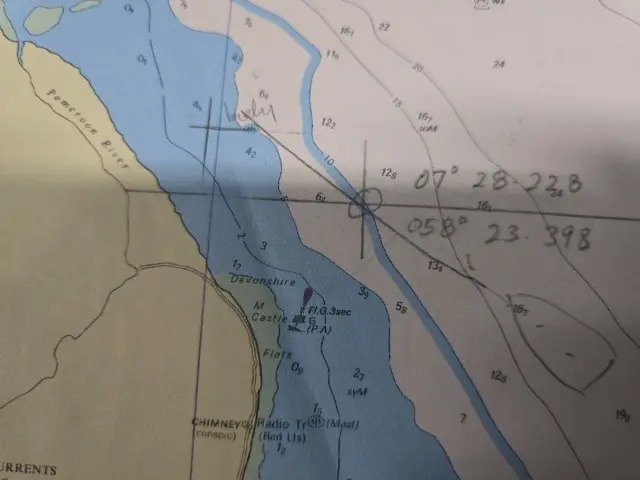
Agard told the commission that rescue crews threw life rings to stranded survivors in the water, pulling them one by one aboard the GDF’s Metal Shark patrol vessel, a high-speed craft powered by three 350-horsepower engines. During the search, crews also spotted multiple empty life rafts adrift with stored cargo alongside them, but no loose life rings were found in the disaster area. Notably, Agard admitted that no official log was created during the operation to record the names of rescued passengers, the total count of people pulled from the water at each location, or the exact GPS coordinates where each rescue occurred.
In additional testimony to the commission, GDF Air Corps Major Lloyden Layne, the pilot who conducted an early aerial search for survivors, shared his own experience from the mission. Responding to an urgent request for air support, Layne piloted a Britten-Norman Islander aircraft to the coordinates provided for the sinking site. Flying at an altitude of just 500 feet over the ocean, Layne spotted a single constant red light in the search zone, and circled the area for 20 to 25 minutes to try to identify the source or locate more survivors. In the pitch-black night, however, he was unable to spot any people or additional emergency markers, and could not confirm what the red signal originated from.
The testimony marks a key development in the ongoing COI investigation into the MV Barima sinking, raising urgent questions about emergency preparedness, passenger safety protocols, and regulatory compliance for domestic ferry operations in Guyana’s coastal waters.