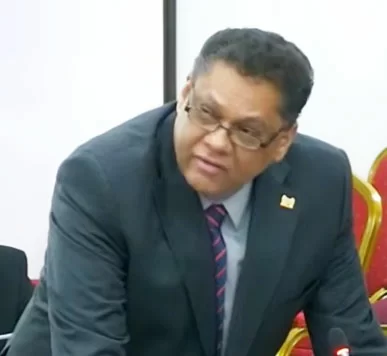
A sitting member of Suriname’s National Assembly (DNA), Vidjaiprekash Thakoer, has issued an urgent call for the Surinamese government to implement immediate, targeted interventions to address the rapidly deteriorating state of public safety across the country. Speaking during a plenary parliamentary session, Thakoer drew lawmakers’ attention to a sharp, sustained uptick in violent incidents, including shootings, missing person cases, and the recovery of unidentifiable bodies in recent months.
Beyond rising violent crime, Thakoer highlighted two other pressing public safety crises that have flown largely under the official radar: a staggering increase in fatal and severe road accidents, and the unnecessary strain placed on Suriname’s national fire department by widespread uncontrolled waste burning.
The parliamentarian emphasized that concerns over the country’s sliding safety standards have been raised repeatedly in legislative chambers in recent months, yet little tangible action has been taken to reverse the trend. For Thakoer, the steady escalation of all these issues warrants growing public and official alarm. He noted in particular that frequent deadly road crashes are slowly becoming normalized, a shift that he calls unacceptable and dangerous for all Surinamese road users.
Turning to the challenges facing the Surinamese Fire Brigade, Thakoer pointed out that the service already operates with chronic shortages of critical equipment, funding, and personnel. Even with these limited resources, firefighters are forced to respond regularly to blazes sparked by uncontrolled residential burning of household waste and dry vegetation. When these unsupervised fires get out of hand, they require full emergency deployment, pulling first responders away from other urgent, life-threatening emergencies.
These preventable blazes do more than stretch the fire service’s already thin capacity, Thakoer explained. They also generate significant air pollution that harms public health, and create persistent nuisance and safety risks for nearby residents.
In response to these interconnected issues, Thakoer has made a formal urgent appeal to the Surinamese government to crack down on irresponsible burning practices that put communities and first responders at risk. He is advocating for a three-pronged approach: expanded public education to promote safe waste management, increased regulatory oversight to curb unsupervised burning, and targeted enforcement action against individuals whose actions put the public’s safety and health at risk.
Thakoer stressed that the top priority must be preventing the unnecessary deployment of the fire brigade’s already limited capacity to incidents that are entirely avoidable through responsible behavior and consistent official oversight.