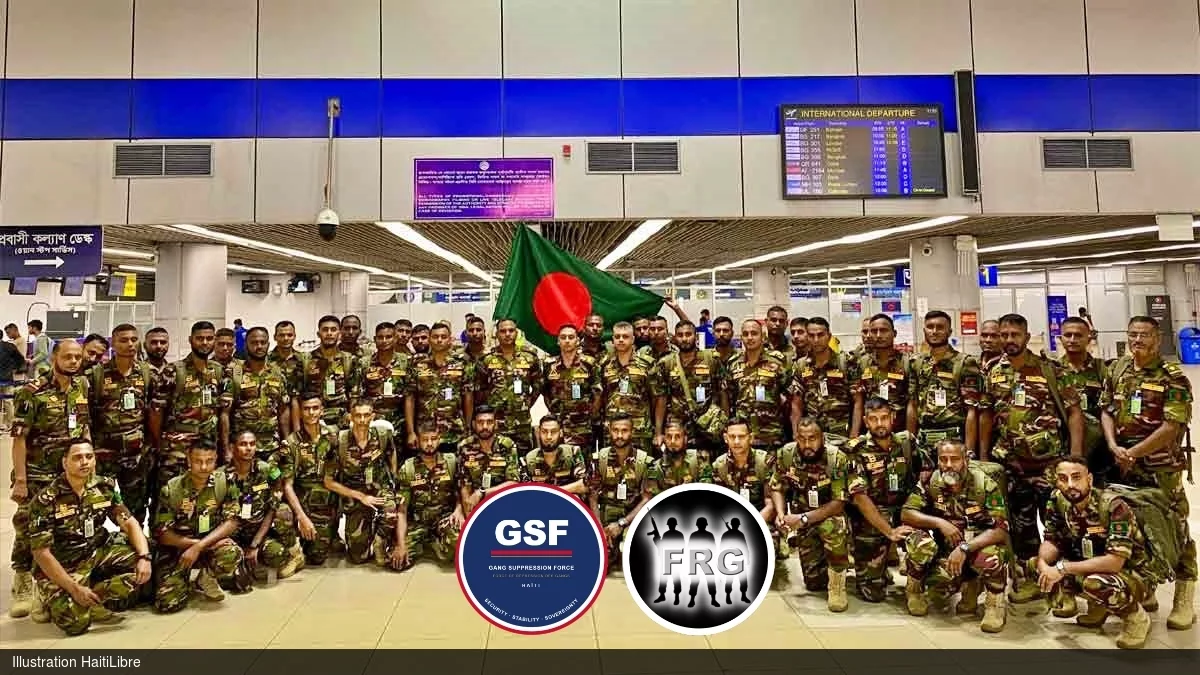
In a major step toward international efforts to stabilize crisis-stricken Haiti, Bangladesh has dispatched a 50-strong advance military vanguard to join the UN-backed Gang Suppression Force (GSF), the South Asian nation’s top military communications body has officially confirmed.
The Inter-Services Public Relations (ISPR) directorate announced that the advance contingent, drawn from five separate Bangladesh Army units, departed Shahjalal International Airport in Dhaka, the country’s capital, on Thursday, October 15, 2026. For operational security purposes, Bangladesh defense officials have declined to release the team’s exact arrival time in Haiti, a common precaution for international peace and security deployments.
Given the long intercontinental route between South Asia and the Caribbean, military transport flights almost always include multiple technical stops for refueling and crew rotation. Such journeys typically take between 24 and 48 hours from departure, which places the vanguard’s expected arrival at Port-au-Prince’s Toussaint Louverture International Airport somewhere between Friday, October 16, and Saturday, October 17, 2026.
The core mission of this initial 50-person team is pre-deployment preparation: they will coordinate logistics, secure base facilities, and align operational plans ahead of the arrival of the full Bangladeshi contingent. The main force, which totals roughly 1,600 combined military and police personnel, is scheduled to deploy to Haiti between mid-October and the end of November 2026.
Before the advance team’s departure, Bangladesh Army Chief of General Staff Lieutenant General Mohammad Mainur Rahman convened a formal briefing with all deploying personnel at Army Headquarters in Dhaka. During the address, the senior officer emphasized three core priorities for the deployment: unwavering professionalism, strict discipline, and constant vigilance throughout the mission. He also stressed that maintaining rigorous personal and operational security would be critical as personnel carry out their assigned duties in Haiti’s volatile security environment.
This deployment forms part of a broader multinational initiative to combat the powerful gang violence that has crippled Haiti’s governance, displaced hundreds of thousands of residents, and left much of the country ungoverned in recent years. Bangladesh’s contribution marks one of the largest national commitments to the international gang suppression effort, signaling continued global commitment to restoring stability in the Caribbean nation.