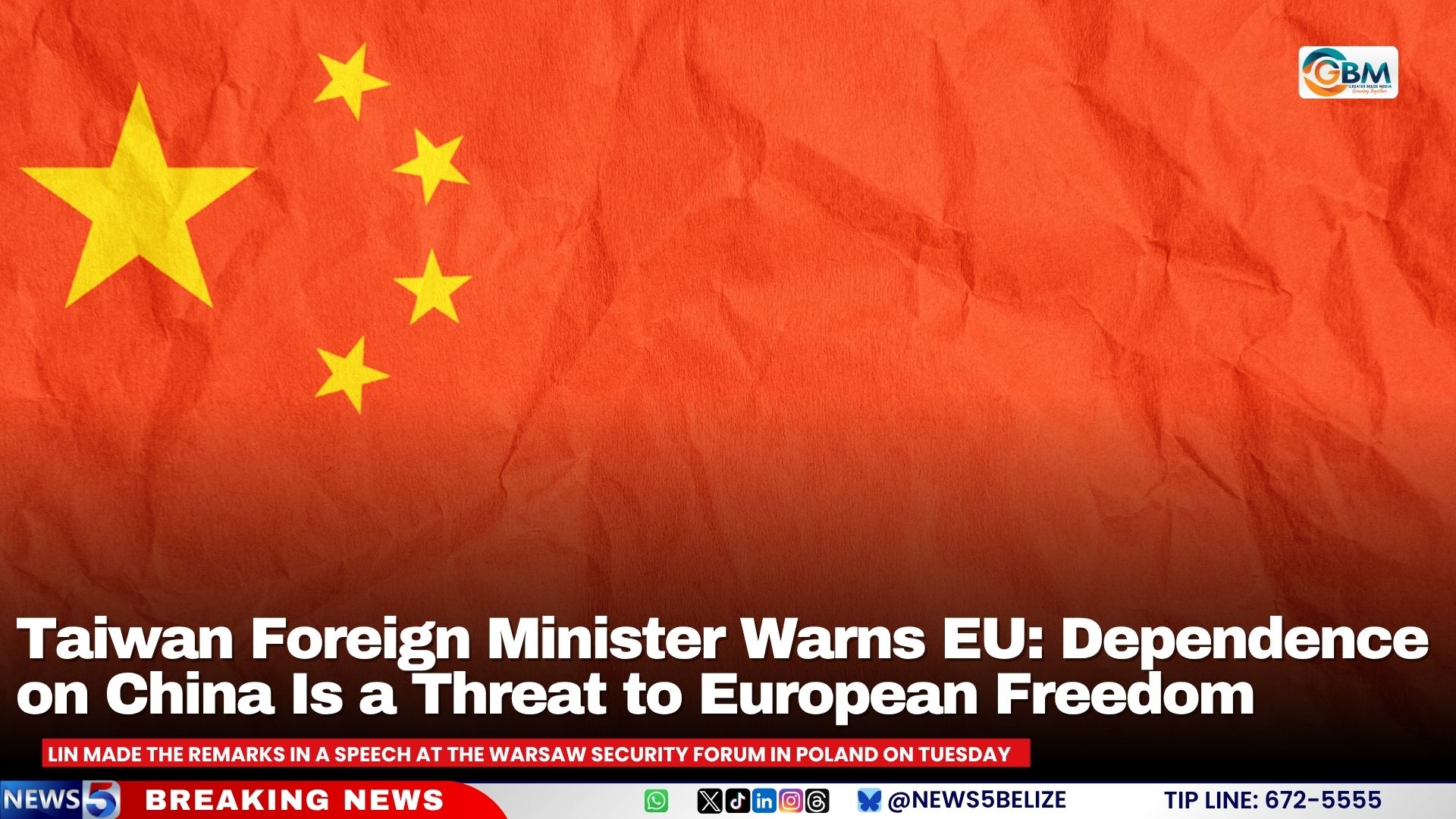
Ahead of a critical European Union summit where trade relations with Beijing will top the agenda, Taiwan’s Foreign Minister Lin Chia-lung has issued a stark warning to EU leaders: over-reliance on Chinese supply chains poses a direct threat to Europe’s core values of freedom and self-determination.
Lin delivered the remarks during an address at this week’s Warsaw Security Forum held in Poland, just two days ahead of the October 16 Brussels summit where EU heads of state and government will gather to discuss strategies to cut the bloc’s large trade deficit with China and reduce exposure to Beijing in strategically sensitive sectors.
“China’s authoritarian system of governance is fundamentally incompatible with the democratic framework that underpins European society,” Lin told attendees. “As a result, growing dependence on Chinese suppliers is not just a vulnerability for the European economy—it is an existential threat to European freedom and sovereignty itself. A Europe that is vulnerable to coercion through its supply chains is a Europe that has already ceded a portion of its liberty to outside forces.”
Beyond his warning about China, Lin emphasized that deepening trade ties with Taiwan would deliver tangible benefits to European economies. “Taiwan and Europe are united by shared foundational values: democracy, individual freedom, universal human rights, and respect for the rule of law,” he noted. “The Taiwanese model of innovation-driven development has long powered growth and prosperity in Silicon Valley, and we are ready to bring that same dynamism to European markets.”
The speech marks another milestone in Taiwan’s effort to build closer formal and informal ties with European nations, a push that has gained new momentum following Russia’s 2022 full-scale invasion of Ukraine. Today, Europe faces growing frictions with China over multiple issues, including a persistently lopsided trade balance and widespread international concerns that Beijing provides diplomatic and material support to Moscow amid its war in Ukraine.
Notably, Lin’s trip to Poland is part of a broader shift in Taiwanese diplomatic outreach to Europe. For decades, Beijing lobbied heavily to block visits by Taiwanese foreign ministers to European capitals, and such trips were extremely rare. Since assuming office more than two years ago, however, Lin has made multiple visits to European countries, including this trip to Poland. Poland, like the vast majority of countries around the world, does not maintain formal diplomatic relations with Taiwan, in deference to Beijing’s claims over the self-governing island.
Beijing routinely denounces overseas trips by Taiwanese elected officials and has refused to engage in formal talks with current Taiwan President Lai Ching-te, whom it labels a “separatist.” For its part, Taiwan’s democratically elected government rejects Beijing’s claims of sovereignty over the island, and maintains that it has the right to engage in diplomatic and people-to-people exchanges with all countries on the basis of equal standing.