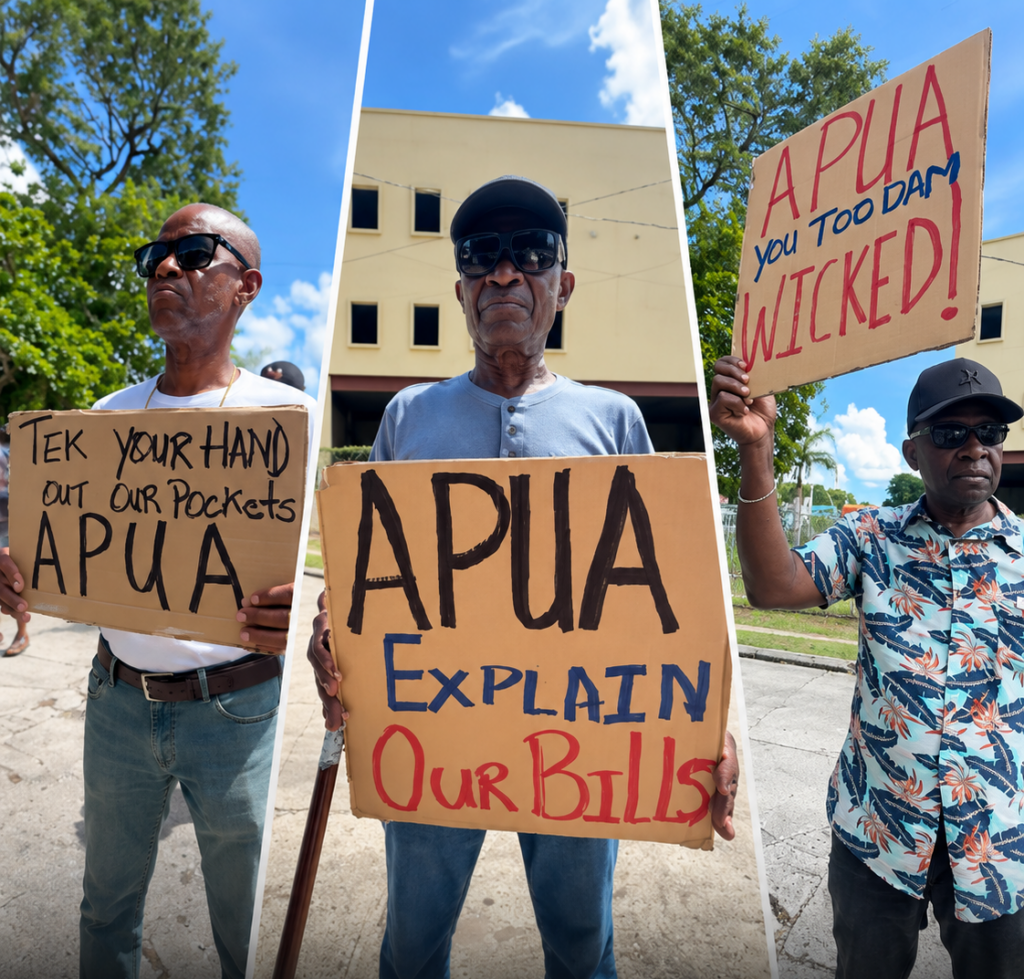
On a mid-October Wednesday, a crowd of demonstrators assembled outside the headquarters of the Antigua Public Utilities Authority (APUA) to amplify widespread public anger over soaring utility costs and subpar service delivery across the twin-island nation of Antigua and Barbuda.
Organizer Franz De Freitas addressed the gathering during a live-streamed broadcast of the October 14 protest, laying out the core grievances driving citizens to take to the streets. According to De Freitas, residents across the country are growing increasingly frustrated by steadily climbing electricity and water tariffs, frequent unplanned power outages, and persistent irregularities in municipal water access. He added that a large share of consumers are even unable to parse the confusing billing statements they receive from APUA, with the only clear detail being consistent, ongoing hikes in total charges month after month.
De Freitas issued a direct call to action for both APUA leadership and the national government to step in and urgently address runaway utility costs, noting that households are already grappling with broad economic strain and urgently need financial relief. He also publicly criticized the administration for failing to introduce targeted subsidies that would ease the burden of rising utility prices on low- and middle-income families.
Notably, De Freitas did not share specific individual bill figures, documented rate adjustment data, or quantitative analysis to back up his claims of sustained increases during the live protest address. Protesters in attendance carried hand-painted placards highlighting their unmet demands, pressing APUA officials to open dialogue and deliver tangible solutions to the issues raised.
De Freitas emphasized that the demonstration was never intended to draw a massive crowd; instead, its core goal was to empower ordinary citizens to voice their dissatisfaction with public services, regardless of turnout size. “Today is not about massive numbers, just about citizens standing up and saying that enough is enough,” he told attendees.
Looking ahead, De Freitas announced that the grassroots campaign will expand beyond utility reform to tackle a wide range of unaddressed public concerns, including deteriorating road conditions, gaps in access to health care, underfunded education systems, and struggles within the national agricultural sector. “Nothing will happen unless the people in this country decide that they are going to do something about it,” he said, confirming that additional protest actions are already in planning stages.
To build momentum for the movement, De Freitas confirmed that organizers will circulate photographs and video footage from Wednesday’s picket across social platforms and local community networks. The content is intended to raise broader public awareness of the issues and encourage more Antiguan residents to join future demonstrations.