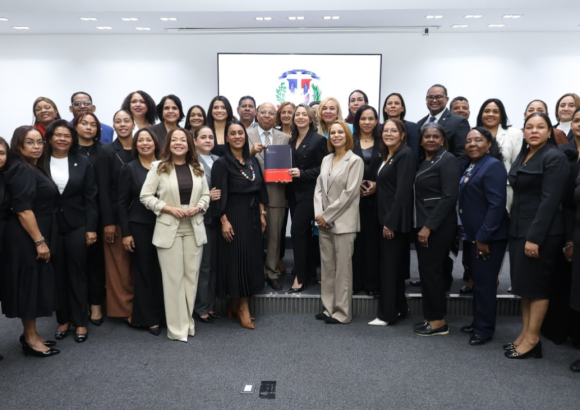
In a landmark step forward for gender equity in the Dominican Republic, the national Cabinet for Women, Adolescents and Girls has officially submitted a groundbreaking piece of legislation — named the Mirabal Law — to the country’s Chamber of Deputies. The bill’s core mission is to shore up the nation’s existing legal framework and build a unified, coordinated state-wide response to the persistent crisis of violence against women.
The draft legislation was formally presented at the National Congress by Gloria Reyes, the country’s Minister of Women, joined by top congressional leaders and senior representatives from the nation’s justice and security sectors. Reyes emphasized that the initiative is designed to fix a long-standing flaw in the current system: the fragmentation of institutional support services that forces women fleeing violence to navigate a maze of disconnected government agencies just to access life-saving protection.
“A woman in danger shouldn’t have to find many doors. She should find only one State,” Reyes told attendees at the presentation, underscoring the bill’s user-centered, survivor-first design.
Unlike many past policy proposals, the Mirabal Law was forged through a year-long collaborative inter-institutional process that brought together a diverse cross-section of stakeholders. Beyond the Ministry of Women, the drafting table included leaders from the Public Ministry, the Ministry of the Interior and Police, the National Police, grassroots women’s organizations, national feminist collectives, and leading human rights advocacy groups. The final draft integrates evidence-based recommendations drawn from years of case analysis, assessments of critical service gaps, and decades of sustained grassroots demands for comprehensive, holistic legislation targeting gender-based violence.
If approved, the legislation will codify clear, binding responsibilities for all state institutions involved in addressing gender-based violence. It mandates action across every stage of response: prevention of violence before it occurs, expanded protection for at-risk women, timely access to critical support services, strengthened investigation and prosecution protocols, stricter sanctions for perpetrators, and guaranteed reparations for survivors. It also includes provisions to improve protective outcomes for survivors and their minor children, and ensures inter-agency coordination is backed by dedicated funding, clear accountability structures, and formal monitoring mechanisms.
Congresswoman Kinsberly Taveras, a leading voice on gender equity who spearheaded the earlier “Let Her Go” legislative initiative, noted that the Mirabal Law builds on more than 20 years of incremental work by women’s organizations and public institutions to confront gender-based violence across the country.
Minou Tavárez Mirabal, a prominent advocate and relative of the iconic Mirabal sisters, voiced strong support for the proposal and called for an urgent update to the country’s existing 1997 gender violence law (Law 24-97) to reflect the hard-won lessons learned from nearly three decades of implementation. She also highlighted the deep symbolic weight of naming the legislation after Patria, Minerva and María Teresa Mirabal — three activists assassinated under the Dominican Republic’s Trujillo dictatorship, whose legacy has grown into a global symbol of resistance to gender-based violence and political oppression.
Proponents of the bill are pushing for fast-track consideration by Congress. They have called for legislative leadership to prioritize the proposal, establish a special bicameral commission to review the text and align it with the country’s existing Penal Code, and target a final approval vote in November 2026 — a timeline that would coincide with the annual global commemoration of the International Day for the Elimination of Violence against Women.