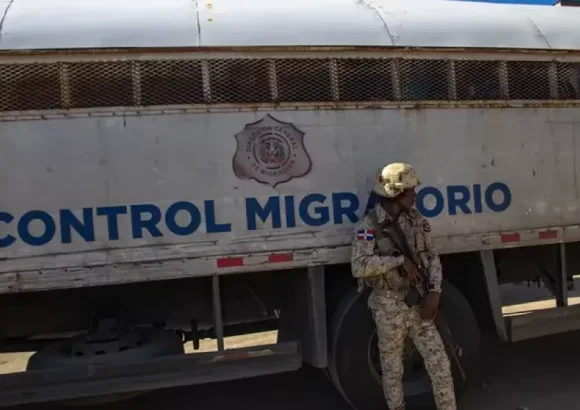
On Wednesday, global human rights nonprofit Amnesty International issued an urgent call for a full, independent and unbiased investigation into the October 3 death of a young man believed to be of Haitian descent, who died during a migration enforcement operation in the Dominican Republic’s popular Punta Cana region.
The rights organization stated in its official release that Dominican government officials are obligated to fully unpack the circumstances of the fatality, identify any parties that may bear legal responsibility, and deliver meaningful justice to the victim’s family. Local media reports indicate the man was shot and killed by an officer from the Dominican Republic’s General Directorate of Migration during the operation, a claim that domestic authorities have yet to publicly address or confirm.
Ana Piquer, Amnesty International’s Regional Director for the Americas, highlighted that for years, her organization alongside Dominican and Haitian civil society groups have systematically documented widespread patterns of abuse tied to the Dominican state’s migration policies. These documented abuses include routine racial profiling, arbitrary detentions, mass collective deportations, and multiple other forms of violent discrimination targeting people of Haitian origin.
Against this backdrop, Piquer emphasized that Dominican investigating authorities cannot ignore this long-standing pattern of rights violations when probing the recent death, and must guarantee that any officials found responsible for abuses are held legally accountable.
Amnesty International further clarified that the intentional use of lethal force by state agents is only permissible when it is strictly unavoidable to protect an innocent life. The organization stressed that a person’s irregular migration status never provides legal justification for the excessive, unlawful use of deadly force.
The nonprofit warned that the Dominican state holds a binding obligation not only to investigate this individual death, but also to roll back long-standing migration policies and practices that enable systemic human rights violations and discriminatory targeting based on national origin and skin color.
“Dominican authorities must ensure that no one is stripped of their freedom, personal safety, or life because of a migration policy rooted in anti-Haitian racism,” Amnesty said in its closing statement. “Violence, systemic discrimination and impunity for abusers can no longer be the centerpiece of the state’s approach to migration management.”
The fatal incident comes amid a massive ramp-up of deportation operations by the Dominican government. Since October 2024, the Dominican executive branch has implemented an aggressive deportation plan that targets the repatriation of 10,000 undocumented Haitian migrants per week in an effort to curb what it frames as unregulated irregular immigration. Official data from the Dominican government shows that between January and July 2024 alone, more than 250,000 undocumented Haitian migrants were deported back to Haiti, a country currently grappling with a widespread, multifaceted humanitarian and political crisis.