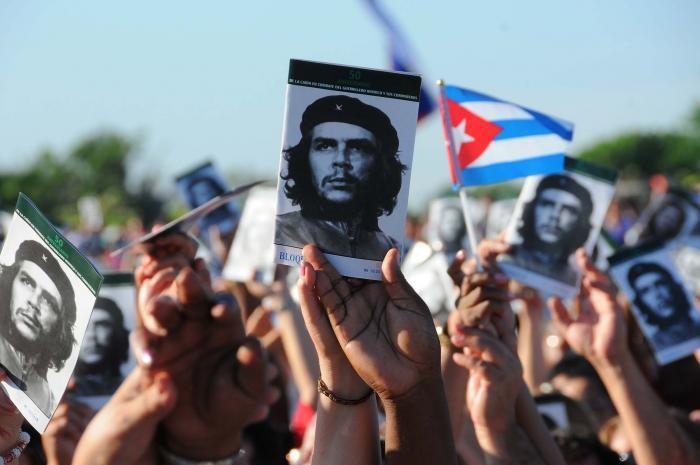
October 8 marks a date forever tied to the legacy of Ernesto “Che” Guevara, a guerrilla commander whose influence extends far beyond the ritualized, surface-level tributes that often accompany calendar-based commemorations. Long after his death, Che remains an unavoidable, unignorable figure in global conversations about justice, resistance, and collective struggle – a truth the Cuban journalist Mario Ernesto Almeida Bacallao underscores in this reflection on the revolutionary’s enduring relevance.
Popular culture has cemented Che’s image as a global icon: his bearded portrait printed on posters, etched into tattoos, and worn as a symbol of rebellion by generations of activists. Songs of the mid-20th century leftist movement and the books he wrote and read have become tied to his public persona, creating a familiar, often sanitized brand of his legacy that is easy to pull out for annual memorials. But Almeida Bacallao argues that Che’s importance cannot be contained to these comfortable, curated reminders.
His presence does not only emerge in casual anecdotes or soft nostalgic reminiscence of a bygone revolutionary era. Instead, Che forces his way into the most fraught, contentious, and painful public debates – cutting through the noise of disillusionment, political polarization, and simmering public anger to make his mark felt even when powerful forces work to erase him.
Throughout modern history, critics and opponents of revolutionary change have deployed every rhetorical and intellectual trick to push Che out of legitimate political discourse. In eras that frame incremental compromise as “rational” politics, he is dismissed as a reckless madman. When elites tout a false, oppressive calm that maintains unequal status quo, he is labeled an inherently violent extremist. Moderate political actors, feigning compassion for marginalized groups while advancing policies that harm them, accuse him of being cold and uncompromising. In moments where political power prioritizes short-term, incremental gains over systemic change, he is written off as an outdated figure ill-suited to modern problems. Even in self-styled liberal democracies that frame themselves as beacons of freedom, Che is routinely tarred as an authoritarian to discredit any call for radical redistribution of power.
Yet despite these sustained efforts to sideline him, Che continues to step into global political conversations unbidden, sustained by millions of working men and women across the world who embrace his vision. Those who invoke his legacy today face the same labels used to discredit him: madman, violent, extremist, outdated, authoritarian. Still, they carry his memory forward – some openly reciting his speeches, carrying the fire of his conviction, pushing against long-accepted political boundaries that entrench injustice; others invoke his ideals quietly, without fanfare or even conscious recognition of their debt to his thinking.
Che does not schedule his appearances in organized, sanctioned memorial events when debates over the future of global justice heat up. Instead, he becomes an uncomfortable, accusatory presence in collective consciousness during moments when reactionary forces cloak their oppressive agendas in the language of progress, sanity, and democracy. When abusive power uses violence to suppress change, when inequality hardens into heartless policy, when authoritarianism hides behind the rhetoric of democratic performance, Che’s legacy disrupts the false narratives that sustain the status quo.
Almeida Bacallao emphasizes that it is ordinary, living people who protect and sustain Che’s legacy, beyond the token tributes of annual commemorations. These are people who carry his image and his ideas not as a fashion statement, but as a living guide to struggle – cutting through the sanitized popular culture depictions to embrace the radical core of his commitment to anti-imperialism and economic justice.
It is the collective conscience of the people that keeps Che’s legacy alive. The reflection closes with a timeless question and a conviction that has sustained revolutionary struggle for generations: For how long will the people carry this legacy forward? At the risk of sounding idealistic or even absurd to critics, the answer remains the same it always has: until victory.