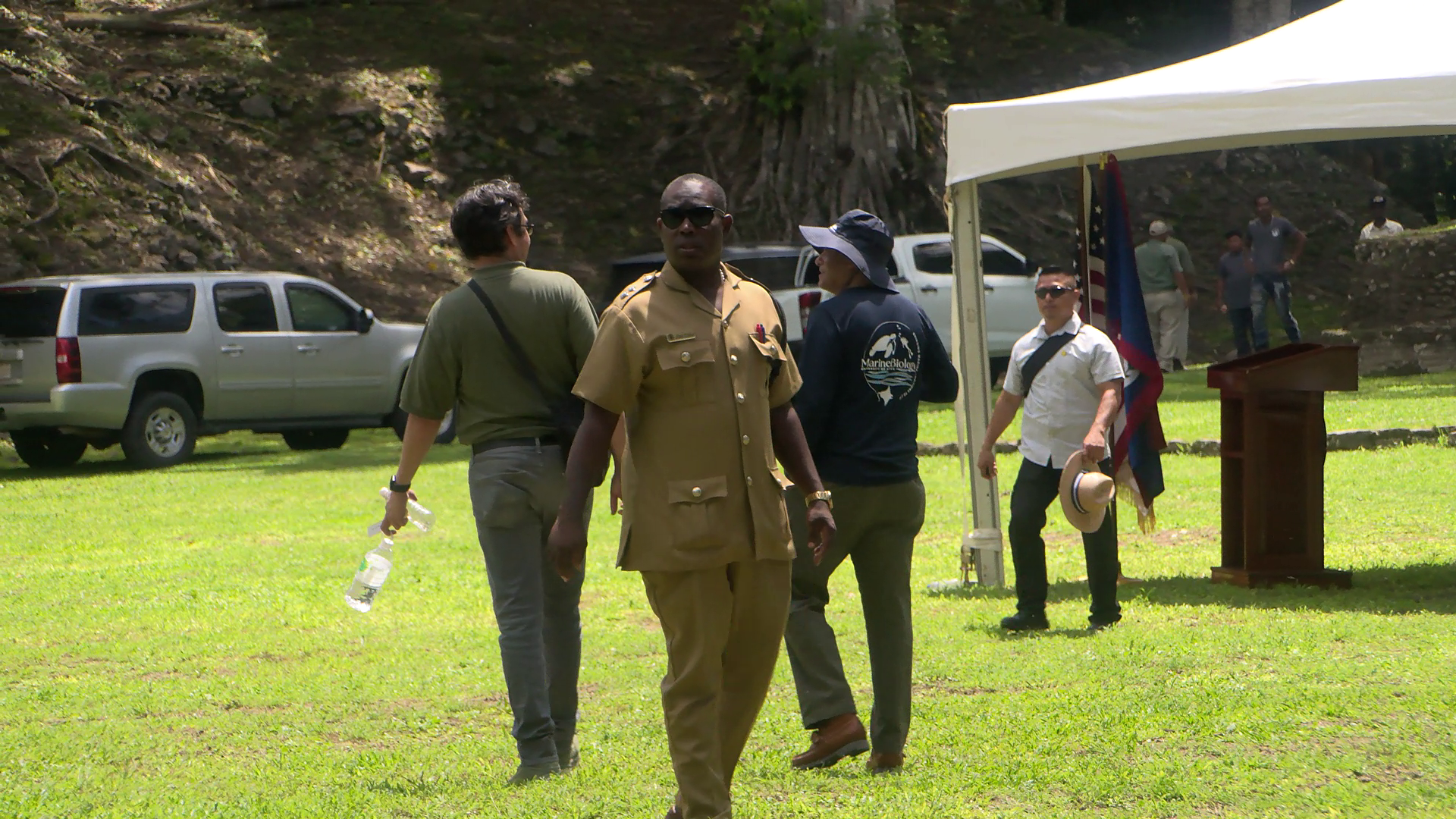
It has been 12 years since Special Constable Danny Conorquie lost his life protecting Belize’s Caracol Archaeological Reserve, and today, the iconic ancient Maya site stands at a crossroads of unprecedented growth and persistent security challenges. Following the recent completion of a paved access road, visitor numbers have surged, and hundreds of thousands of US dollars have been allocated to critical preservation and infrastructure projects, ushering in a new era of tourism development at the site. Yet this expansion has reignited longstanding concerns over security in the border region, where illegal activity continues to threaten both visitors and Belize’s irreplaceable cultural heritage.
Conorquie’s death in September 2014 marked a tragic turning point for security efforts in the area. On September 25 that year, Conorquie encountered two armed intruders of Hispanic descent on horseback who had illegally entered the territory near Caracol. When he approached the pair, they opened fire, fatally wounding the special constable before fleeing across the border into Guatemala. In response to his killing, a dedicated conservation outpost was built near Caracol a year later to step up regular security presence across the Chiquibul region, which encompasses the archaeological reserve.
Today, as tourism booms and new investment flows into Caracol, the question of whether current security measures are sufficient to meet the site’s expanding needs has taken on new urgency. In an interview, Belize’s Minister of Culture Francis Fonseca acknowledged the ongoing challenges of patrolling and protecting the vast Chiquibul region, which spans hundreds of square miles of remote, dense forest along the Guatemala-Belize border.
Fonseca explained that a multi-agency security framework has been in place for many years to safeguard the Caracol site and the wider Chiquibul area. The Institute of Archaeology deploys a team of dedicated rangers whose core mission is the protection and preservation of the archaeological reserve, and these rangers work in close collaboration with the Belize Defence Force (BDF), national police, the Forest Conservation Department (FCD), and the National Institute of Culture and History (NICH) to coordinate patrols and respond to illegal activity. While this collaborative structure has limited damage to the Caracol site itself, Fonseca noted that controlling and patrolling the entire Chiquibul region remains an immense, ongoing challenge. Illegal activity including unauthorised logging, gold panning, and cross-border incursions continues to plague the remote area, and authorities are consistently working to improve security management strategies to address these persistent threats.
For Belize, Caracol is far more than a major tourist draw—it is one of the most significant cultural heritage sites in Central America, offering unrivalled insights into Maya civilisation. As the country works to grow sustainable tourism and preserve this global cultural treasure, balancing expanded access with effective security remains a top priority for authorities, 12 years after Conorquie’s ultimate sacrifice.