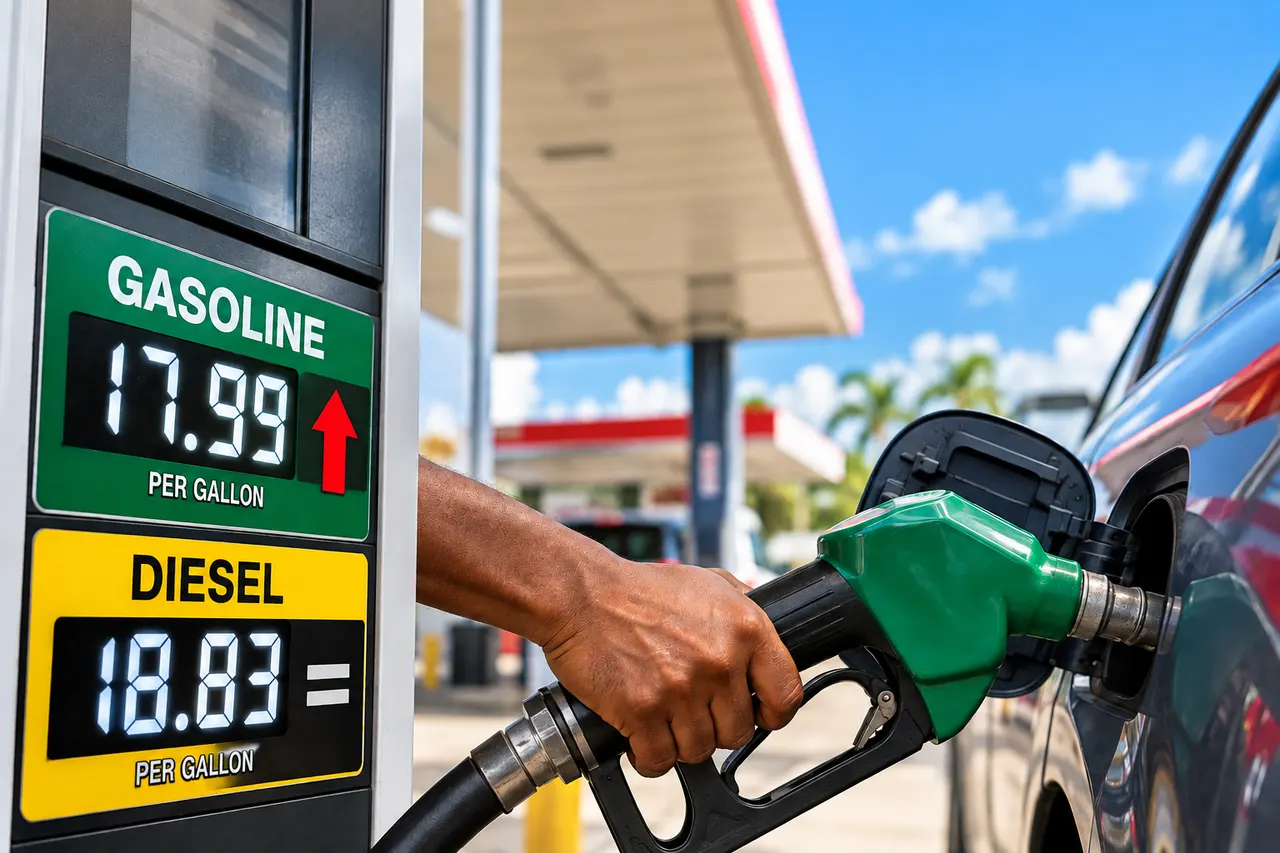
Motorists across Antigua and Barbuda are facing another financial strain at fuel pumps starting Wednesday, October 1, after the small island nation implemented its second steep gasoline price increase in just over 30 days. The latest adjustment pushes the retail price of gasoline to $17.99 per gallon, adding a $1.49 surge that brings the cumulative price increase from the two recent hikes to $3.49 per gallon. Just one month prior, the price had already jumped by $2 to settle at $16.50 per gallon, leaving local drivers grappling with rapidly rising transportation costs.
Gregory Georges, chief executive officer of the West Indies Oil Company, officially verified the updated pricing structure, confirming that diesel prices will hold steady at $18.83 per gallon for the current period. Ahead of the official announcement, Prime Minister Gaston Browne issued a public warning of the incoming increase during a Tuesday evening reception hosted by the Chinese Embassy, making clear that skyrocketing global fuel prices have crossed a threshold where the government can no longer absorb the full difference to protect consumers from the market shock.
Browne directly tied the mounting pressure on domestic fuel prices to ongoing geopolitical tension between the United States and Iran, framing the price hikes as a consequence of external forces far outside the control of Antigua and Barbuda’s domestic policy. “As a small developing country, the government cannot continue its programme of absorbing the increased costs in fuel to shield consumers and it is therefore forced to pass on the increased costs to consumers,” the prime minister explained.
The prime minister emphasized that the situation lays bare the extreme vulnerability of small, open developing economies to sudden shifts in global stability, with energy prices acting as an immediate transmission channel for international volatility. In his remarks, Browne also reaffirmed his support for constructive cooperation between major global powers including China and the United States, stressing that consistent international peace and stability is a foundational requirement for the economic survival and growth of small island nations like Antigua and Barbuda.