On a tense, record-breaking day of ODI cricket in Guwahati on September 30, India clinched an unassailable 2-0 series lead over the West Indies, pulling off a historic chase even after the visitors produced one of the most stunning batting displays in their ODI history. Heading into the second fixture, the West Indies, already trailing after a loss in the opening match, knew they faced a must-win scenario to keep the three-match series alive. What followed was a batting masterclass that rewrote multiple sections of the West Indies record books, even if it ultimately could not deliver a victory.
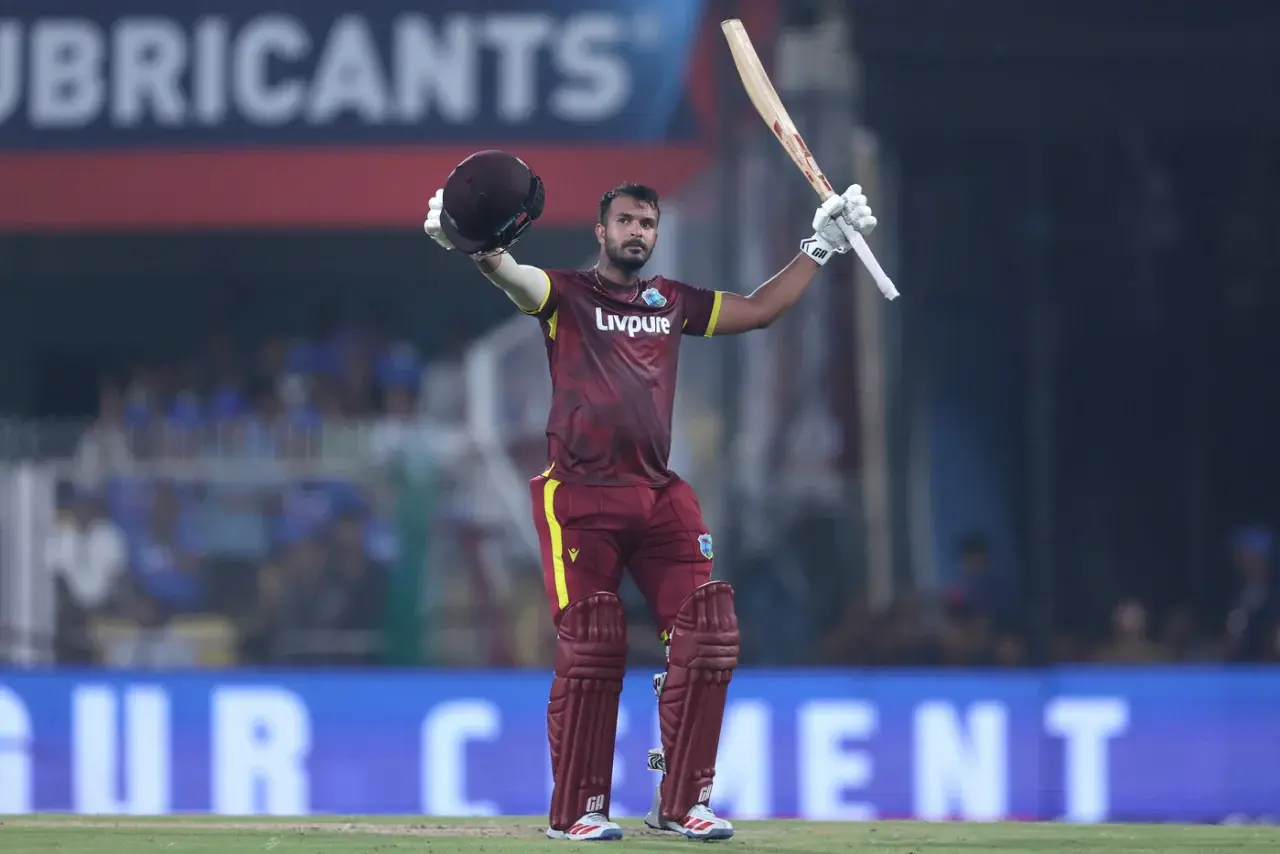
Staring off the innings aggressively, opening batsman John Campbell set the tone for the day with a blistering 101 runs off just 68 deliveries. His knock was packed with milestones: it marked the fifth-fastest century in West Indies ODI history, the fastest hundred ever posted by a West Indian batsman against India, and also secured the record for the fastest half-century by a West Indian against the Men in Blue. Following Campbell’s breakthrough innings, middle-order batters Shai Hope and Amir Jangoo kept the run rate ticking steadily through the middle overs, even as the pace of scoring slowed slightly in line with typical ODI match dynamics. Both batsmen went on to reach triple-figure scores, making the West Indies the first team in ODI history to record three individual centuries in a single single innings.
Hope’s 104 runs off 94 balls carried extra significance, as the knock pushed his career total of ODI centuries to 20, surpassing West Indian cricketing legend Brian Lara’s previous tally of 19. Hope now sits second on the all-time list of West Indian ODI century-makers, trailing only Chris Gayle, who holds the current record with 25 hundreds. For Jangoo, the Trinidad-based left-hander, his knock of 114 runs off 77 deliveries – the highest score of the West Indies innings – extended a consistent run of good form, following a half-century in the first ODI. By the end of their 50 overs, the West Indies had posted a mammoth total of 405, the highest team score in their ODI history to that point.
Facing one of the largest run chases in ODI cricket against an in-form Indian side, the home team’s openers got off to a flying start in the powerplay overs and never looked back on their pursuit of the target. Captain Rohit Sharma and star batter Shubman Gill shared a 255-run opening partnership, with both batters hitting centuries. Sharma brought up his 101 runs, and in doing so crossed the 12,000 career run milestone in ODI cricket, becoming one of a handful of batters to reach that mark. But it was Gill who stole the show with an unprecedented innings: the ICC’s top-ranked ODI batter smashed the fastest double century in ODI history, reaching the 200-run mark off just 117 deliveries. He finished the innings unbeaten on 222 not out, the highest individual score ever posted by a captain in ODI cricket.
India chased down the 406-run target in just 44 overs, completing the second-highest run chase in ODI history and securing the series victory with one match still remaining. Following the defeat, West Indies captain Shai Hope acknowledged the strong performance of his batting unit while pointing to a key area for improvement. “Lot of positives I can take from it, to be honest. Mainly from the batting side. As a batting group we have been consistently putting up competitive totals,” Hope said. “But when you come up against some of the best batters, you can’t let them have a start like that. Have to give credit where it’s due, but if I had to be really critical, we had to be a little tighter with the ball.”
The three-match ODI series will conclude on Saturday, October 3, when the West Indies will look to secure a consolation win to end their tour on a high note.