In a coordinated show of regional solidarity, all 32 active member states of the Organization of American States (OAS) have released a unified joint statement calling on the United Nations Security Council to extend the operating mandate of the Gang Suppression Force (GSF) deployed in Haiti, while pressing the global community to deliver the full suite of resources needed to make the deployment fully functional and sustainable. The statement, issued on September 25, 2026, reiterates member states’ unwavering solidarity with the Haitian people, formal respect for Haiti’s sovereignty, independence and territorial integrity, and a shared commitment to advancing solutions led by Haitian national stakeholders. It also underlines the obligation to implement OAS General Assembly Resolution AG/RES. 3051 (LVI-O/26), a measure adopted in June 2026 that structures OAS support to Haiti while centering Haitian leadership and aligning assistance with coordination frameworks involving the United Nations, the Caribbean Community (CARICOM), and other key regional and international partners.
The full list of signatory states includes Antigua and Barbuda, Argentina, The Bahamas, Barbados, Belize, Bolivia, Brazil, Canada, Chile, Colombia, Costa Rica, Dominica, the Dominican Republic, Ecuador, El Salvador, Grenada, Guatemala, Guyana, Haiti, Honduras, Jamaica, Mexico, Panama, Paraguay, Peru, Saint Kitts and Nevis, Saint Lucia, Saint-Vincent and the Grenadines, Suriname, Trinidad and Tobago, the United States of America, and Uruguay.
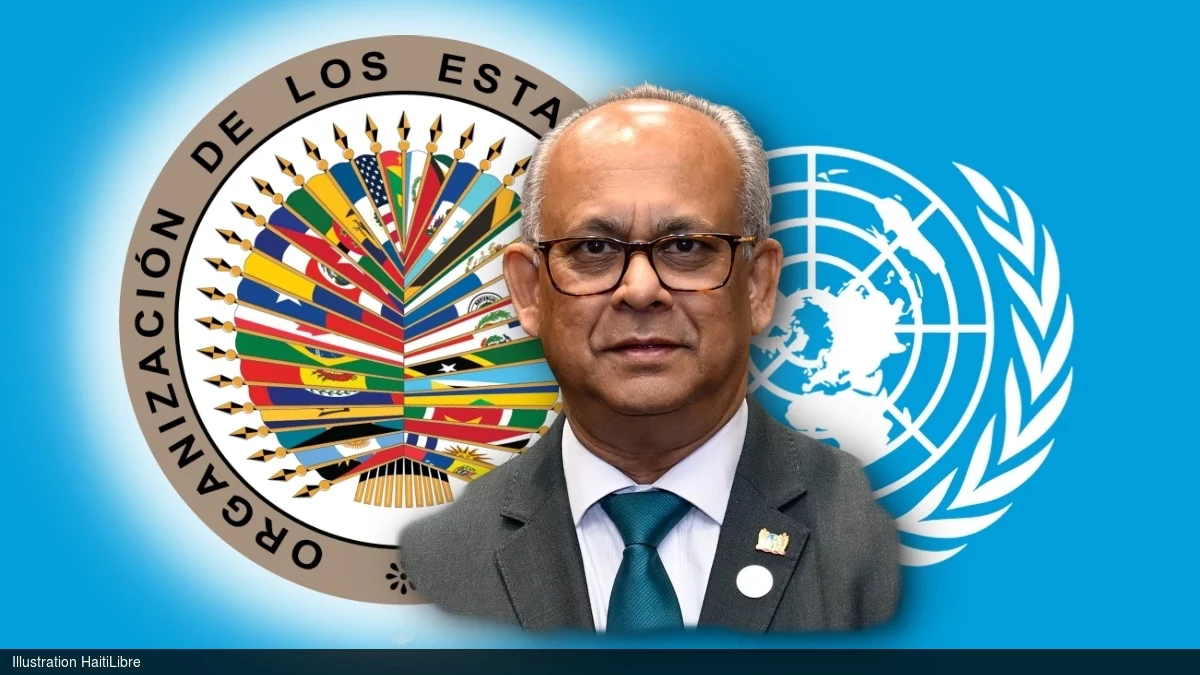
OAS Secretary General Albert R. Ramdin, who led a high-level fact-finding mission to Haiti from August 16 to 19, 2026, publicly endorsed the joint statement, emphasizing that the international community must deliver on the Haitian people’s demand for stability by backing both the GSF and an urgent mandate renewal. “The Force is on the ground playing an essential role in helping Haitian authorities regain territorial control, restore access to critical infrastructure, improve public safety, and create the security environment necessary for institutions to function and for elections to take place,” Ramdin noted. He added that a renewed mandate alone is insufficient to deliver tangible change: “A mandate, by itself, does not produce results. We must also ensure that the results Haitians need in terms of security are properly sourced. Results require personnel, financing, equipment, logistics and of course sustained political support.” Following his August mission, Ramdin presented a report to the OAS Permanent Council identifying security and electoral progress as interconnected urgent priorities for the country.
Haiti’s Permanent Representative to the OAS, Jean Josué Pierre, emphasized that the declaration sends an unambiguous message to the international community: “renew the mandate of the Gang Suppression Force, ensure its full deployment, strengthen Haiti’s security institutions, protect the population, and create the conditions for Haiti to advance toward credible elections and lasting stability.”
Steve Ferrol, Chair of the OAS Permanent Council and Permanent Representative of Dominica to the organization, highlighted that the unified statement demonstrates regional commitment beyond internal political divides. “By speaking together, we as OAS member states are demonstrating that support for Haiti transcends political differences and reflects a common commitment to peace, democracy, human rights, and human dignity for Haiti, and for the region as a whole,” Ferrol said.
The joint statement outlines core operational priorities for the GSF, which is mandated to support the Haitian National Police and Haiti’s Armed Forces in line with their respective institutional mandates. Key priorities include reestablishing legitimate state control over gang-held territories, securing critical entry points including the country’s main airport and seaports, reopening blocked major transportation routes, protecting civilian populations, and enabling sustained permanent presence of the Haitian National Police at strategic infrastructure sites and in territories reclaimed from armed gangs.
Signatory states also called for expanded disarmament, demobilization and reintegration programs for former gang members, alongside targeted measures to restore unimpeded humanitarian access to vulnerable populations, rebuild core public services, and expand socioeconomic opportunities – particularly for Haitian youth. The statement explicitly requires all operations carried out by the GSF and supported Haitian security institutions to adhere to international law and established international human rights standards.
To address the root drivers of gang violence, the declaration calls for coordinated national, regional and global action to crack down on the illicit trafficking of arms and ammunition into Haiti, disrupt the transnational financial and supply networks that sustain armed criminal groups, and hold accountable all actors that provide financing or material support to gang activity.
On the path to restoring democratic and constitutional order, member states emphasized that electoral preparations should proceed in lockstep with improving security conditions. They encouraged international support for core electoral processes including civil identification updates, voter registration, and electoral logistics, as well as the deployment of a formal OAS Electoral Observation Mission to oversee upcoming polls.
Finally, the statement reiterates the need for close coordinated action among Haiti’s national government, the OAS, the United Nations, CARICOM, and all other international partners. The Haitian-Led Roadmap for Stability and Peace, facilitated by Ramdin’s office, serves as the overarching framework to align international assistance with priorities set by Haitian authorities and national stakeholders, and to monitor progress on fulfillment of all international commitments. The full text of the joint declaration is available for download via the OAS document portal.