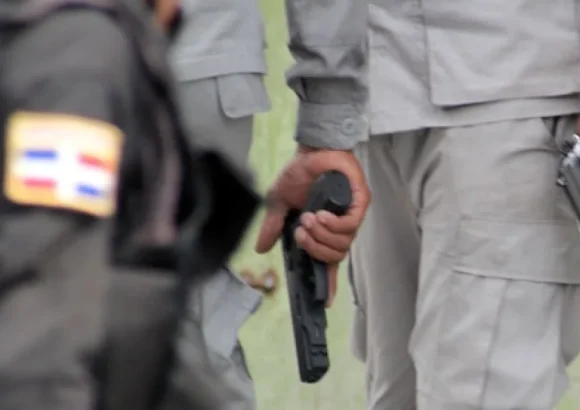
In the wake of a high-profile murder that sent shockwaves through Dominican society, a disturbing pattern of fatal police encounters has emerged, drawing condemnation from human rights advocates. Less than 24 hours after the country’s National Police confirmed that eight alleged criminals were shot and killed during separate gunfire exchanges across multiple regions of the Dominican Republic, human rights officials are sounding the alarm over a rapidly escalating death toll that far outpaces projections.
The most recent wave of police killings follows the murder of Zenaida Castillo, wife of renowned merengue singer Julián Oro Duro. That high-profile incident, which has already resulted in four arrests, shook public trust in law enforcement’s ability to keep communities safe, but human rights leaders say the response from police has raised even more pressing concerns.
Manuel María Mercedes, a representative of the Dominican Republic’s Human Rights Commission, reports that the official 8 fatalities in less than a day do not capture the full scale of the crisis. By his count, at least 31 people have been killed in police shootouts across the country already in September alone. When extended across the full calendar year, that figure jumps to 200 deaths linked to apparent exchanges of gunfire with police agents — a toll that Mercedes says has already far outpaced the projected total for 2025.
Mercedes has publicly called on Dominican President Luis Abinader to intervene immediately, demanding an end to what human rights activists describe as extrajudicial “police killings.” He argues that law enforcement should prioritize capturing suspects alive whenever possible, pointing to the successful arrest of four suspects in the Zenaida Castillo murder as a model for appropriate police action.
National Police spokesperson Diego Pesqueira has defended the most recent operations, noting that all eight people killed were alleged dangerous criminals with active arrest warrants and multiple criminal complaints filed against them. The fatal encounters took place across five jurisdictions: Los Alcarrizos, Cabral in Barahona province, Gaspar Hernández, Santo Domingo East, and Santo Domingo West.
The deceased individuals have been publicly identified by police: Gabriel Luis Montero (also known as “Campeón”), Domingo Santiago Valdez (“La Fama”), and José Daniel De La Cruz Valdez (“Hernán” or “Nay”) were killed in Los Alcarrizos; Carlos Julio Feliz Sena died in Cabral; Ricardo Polanco García (“Richard Gatillo”) was killed in Gaspar Hernández; Genny Santos Franco Jimenez, nicknamed “El Come Hombre de Los Frailes” or “Man Eater of Los Frailes,” was shot dead in Santo Domingo Este; and Haitian national José Manuel San Luis (“Negrón”) was killed in Las Caobas, Santo Domingo West. All were linked to a range of serious crimes including drug trafficking, homicide, and membership in organized criminal groups, with “Man Eater of Los Frailes” having been the subject of a widespread manhunt for months.
A ninth alleged criminal, Hansel “Boca Negra,” was killed separately in Samaná during a confrontation with arresting officers. Police say “Boca Negra” was the prime suspect in the fatal shootings of two DICRIM (Criminal Investigations Department) officers, Major Andrés Pascual and Corporal William Antonio Jesús Heredia, in separate previous attacks. He was found hiding in a building in the Honduras neighborhood of Samaná and was in possession of a Glock pistol when officers located him.
Pesqueira confirmed that the National Police is currently conducting a full review of all recent cases, with official detailed reports set to be released to the public in the coming days.