NEW YORK — Fifty-two years ago, Juan Díaz relocated to the United States, where one of his earliest and most pressing priorities was mastering English. Two decades later, his son Juan Francisco was born on U.S. soil, and his greatest concern stands in stark contrast: holding onto his cultural ties to his family’s origin, the Dominican Republic.
Juan, who built a career in business administration and now owns his own company, is currently semi-retired, while Juan Francisco pursues a degree in civil engineering. The Díaz family’s experience reflects a broader trend across the more than 2 million Dominicans who have built lives in the United States, where second-generation diaspora members are increasingly advancing into professional careers, higher education, government roles, and private enterprise.
For decades, public discussion of the Dominican diaspora centered almost exclusively on small neighborhood businesses such as corner bodegas, family-owned restaurants, and local beauty salons. But demographic and social shifts over recent years have transformed that narrative, new data shows.
According to 2025 figures from research group INDEX, more than 3 million Dominicans currently reside outside their home country, with the United States hosting the overwhelming majority of that population: 2,398,000 as of the end of 2024, the latest official count available. Research from the Pew Research Center confirms the striking generational advancement of this community: among U.S.-born Dominicans aged 25 and older, 33% hold at least a bachelor’s degree, a rate that nearly doubles the 18% attainment recorded among Dominicans who were born in the Dominican Republic.
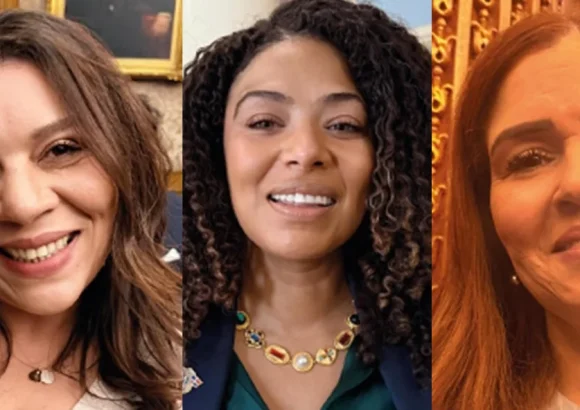
This upward mobility is visible across countless individual stories. Ana Mercedes Chireno, a Brooklyn native born to Dominican immigrant parents, earned degrees in philosophy and political science and now works in partnership with nonprofits and New York City government. Arelia Taveras, another U.S.-born daughter of Dominican immigrants, holds a doctorate in law, operates her own legal practice, and leads a regional Latin restaurant association. Charlie Núñez, an architecture graduate, runs a diversified portfolio of businesses spanning event management, real estate, and hospitality.
Across generations, the concerns of diaspora members vary widely, shaped by their place of birth and life experience. Ana Mercedes says she thinks often about the Dominican Republic, particularly its economic trajectory. Like many Dominican-Americans, she still has extended family relying on financial support from relatives in the U.S. “We all want to see the Dominican Republic develop in a stable, advanced way, because most of us hold onto the dream of returning one day,” she shared, her tone soft with nostalgia.
For Arelia, the most pressing worries are rooted in daily life in the United States: access to quality employment, equal opportunity, and the soaring cost of living. “Prices have climbed far too fast,” she noted, adding that the restaurant industry — a long-standing entry point to the workforce for generations of Latino immigrants — is facing unprecedented strain that threatens that pathway for new arrivals.
Charlie highlights ongoing shifts in U.S. immigration policy as the most critical issue facing the community today. “Right now, the biggest conversation is what’s happening with immigration enforcement,” he explained. “People live in fear of being here, of working openly, and the constant uncertainty of interactions with ICE.”
Back to the Díaz family, their differing priorities underscore the generational divide. Juan emphasizes that fluency in English was non-negotiable for his generation of immigrants. “If you don’t learn the language, your opportunities are almost nonexistent,” he said, recalling a recent conversation with a man who has lived in the U.S. for 30 years and still speaks almost no English, leaving him locked out of most economic mobility.
For Juan Francisco, who has spoken English since early childhood, the challenge is the reverse: actively working to preserve his connection to Dominican culture and Spanish language, even as he builds a life in the U.S. “The most important thing for someone whose father was born in the Dominican Republic is to hold onto that culture, that connection to our roots,” the young man explained, speaking Spanish with a noticeable English accent.
One long-standing tradition of the Dominican diaspora has remained unchanged across generations: the regular flow of remittances to family back home. Data from the Central Bank of the Dominican Republic shows that between January and August 2025, the country received $8.4327 billion in remittances from abroad, marking a $511.7 million increase over the same period in 2015. The United States remains the single largest source of these critical funds.
Juan estimates that his family sends an average of $800 back to the Dominican Republic each month. While he previously supported his late mother, he and his wife now cover living costs for other relatives and maintain the family home his mother owned in Moca. Carmen Hernández, who moved to the U.S. from Santo Domingo at age 5 and now works in arts programming in Brooklyn, says remittance culture is a core part of Dominican identity, regardless of how long a family has lived abroad. “Sending money home is just part of who we are, isn’t it?” she said. For most senders, she explained, the monthly amount falls between $200 and $300, covering basic needs: groceries, utility bills, and medication — which is prohibitively expensive for many families on the island. In addition to supporting daily needs, more diaspora members are now investing their money in Dominican real estate and small businesses. Ana Mercedes says her parents send monthly support for relatives’ basic needs, while other diaspora members Arelia works with are funding construction projects and business development in cities like Villa Tapia and Santiago. Juan already owns a fully furnished apartment in the Dominican Republic and is planning additional investments. Even so, Arelia notes that rising living costs in the U.S. have put pressure on this giving: when local expenses go up, the amount many can send or invest back home drops accordingly.
For many Dominicans across generations, the idea of returning to their home country remains a powerful dream, even for those who never lived there. Ana Mercedes, the Brooklyn native, says she hopes to retire in the coastal Dominican towns of Samaná or Las Terrenas. “I miss the sun and the warmth of our country,” she said, her tone brightening. Carmen echoes that sentiment, citing the island’s beaches, open culture, and cuisine as pulling her back. Charlie has made multiple trips to the country this year and is actively considering it as a retirement destination, while Juan already has his apartment waiting for him when he chooses to return.
Juan Francisco has never lived in the Dominican Republic, though he has visited many times — his last trip was two years ago. When asked what draws him to his father’s homeland, he describes an immediate sense of belonging: “The atmosphere, the warmth, the feeling that when you’re there, it feels like home.”
Juan left the Dominican Republic more than half a century ago, and his son was born thousands of miles away in New York. Yet both share a deep, unbroken connection to their Dominican identity, illustrating a simple truth for diaspora communities: a person may leave their country, but the country never leaves them — and Dominican identity is born wherever its people choose to call home.