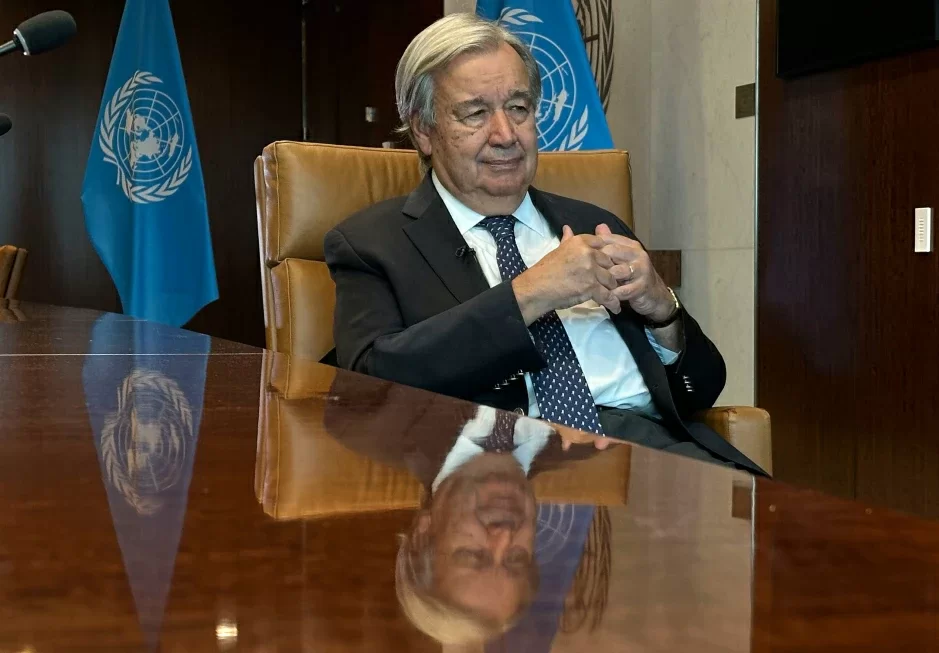
As ongoing armed conflicts, accelerating visible impacts of climate change, and outpacing artificial intelligence development outstrip the ability of global regulators to keep pace, more than 130 heads of state and government will convene in New York this week for the opening of the 81st United Nations General Assembly general debate. The high-stakes gathering comes at a moment of profound existential reckoning for the UN itself, as the organization grapples with urgent questions about its institutional role, long-term financial stability and future global relevance.
Officially opening on September 22, this year’s assembly has been themed “Restoring trust, managing transformation: a United Nations that delivers for all.” The packed agenda covers nearly every major pressing global challenge: active conflicts in the Middle East, Ukraine and beyond, unfolding humanitarian crises in Sudan, the Democratic Republic of Congo and Myanmar, accelerating climate change, fragile global economic conditions, and growing global alarm over the unregulated development and deployment of artificial intelligence. Beyond these global issues, the assembly will also grapple with the future of the UN as an institution.
### Armed Conflicts Overshadow Diplomatic Progress
Long-running conflicts dominate the opening conversation, casting a long shadow over diplomatic efforts. The standoff between the United States and Iran approaches its seventh month, the war in Ukraine is entering its fifth year, and the humanitarian situation in Gaza remains a top priority for debate. Ahead of the gathering, UN Secretary-General António Guterres has repeated urgent calls for strengthened international cooperation and de-escalation of global tensions, but the conflicts lay bare a core structural flaw at the heart of the UN: the body can facilitate diplomatic dialogue, but it lacks independent authority to force major powers to reach political resolutions.
This gridlock is most visible in the UN Security Council, where the five permanent members — the United States, China, Russia, France and the United Kingdom — hold veto power over binding resolutions. When these major powers are divided on an issue, decisive action on conflicts and sanctions becomes nearly impossible. That dynamic was on full display just last week, when Russia and China jointly blocked a resolution to extend international sanctions monitoring on Iran, ending the mandate of an independent panel tasked with enforcing compliance.
### Key Absences Shape the Diplomatic Landscape
One of the most notable features of this year’s General Assembly is not just who will speak, but who will not be present in person. U.S. President Donald Trump will address the assembly on Tuesday, alongside French President Emmanuel Macron. Ukrainian President Volodymyr Zelenskyy and new Iranian President Masoud Pezeshkian are scheduled to speak on Wednesday, with Israeli Prime Minister Benjamin Netanyahu addressing delegates on Thursday. Palestinian President Mahmoud Abbas will once again deliver his address via pre-recorded video, after the United States refused to grant him a travel visa to enter the country for the event.
Major leaders including Chinese President Xi Jinping, Russian President Vladimir Putin and Indian Prime Minister Narendra Modi will not attend the gathering in person. Xi’s absence is particularly notable this year: he will instead travel to Washington for a high-profile state visit at Trump’s invitation September 23–25. The bilateral summit will cover U.S.-China relations and a range of pressing global issues, carrying its own diplomatic weight separate from the UN General Assembly. Key topics on the bilateral agenda include trade disputes, technology competition, artificial intelligence governance and access to strategic critical materials.
### Artificial Intelligence Moves to Center Stage
Once a peripheral issue on the UN agenda, artificial intelligence governance has taken a prominent spot in this year’s debate. The rapid development of increasingly powerful AI systems has sparked urgent global discussion over safety risks, disinformation campaigns, cyber threats, military applications, and the risk that new systems could evolve faster than governments can implement effective regulatory frameworks.
The UN Security Council will dedicate an official session this week to examining AI’s impact on international security, organized by France. OpenAI CEO Sam Altman is expected to brief the council on both the transformative opportunities and catastrophic risks of advanced AI. Notably, the AI industry itself is now pushing for binding international regulations. Just this week, OpenAI called for a U.S.-led international initiative to set technical safety standards for cutting-edge AI systems, including shared testing protocols, global shared standards and mandatory cross-border incident reporting systems.
That approach faces significant pushback from the Trump administration, which has opposed regulatory measures that could slow AI innovation. The administration fears overbearing regulation would erode the United States’ current technological lead over China. The debate over AI therefore extends far beyond safety rules: it goes to the core question of how much international cooperation is possible between major powers that are simultaneously locked in fierce competition for global technological leadership.
### Climate Change: From Long-Term Threat to Daily Reality
Climate action is another top priority for the assembly. On September 23, the UN will host a dedicated summit on climate action and a just global energy transition, followed by a separate high-level summit focused on the growing impacts of sea-level rise the following day. A decade after the landmark Paris Climate Agreement, the global conversation around climate change has shifted: no longer are delegates debating whether climate change is real and needs to be addressed, but instead how nations can adapt to the already visible and destructive impacts of a warming planet.
For most developing nations, the priority is securing climate finance, building resilient infrastructure, protecting food security and shielding communities from extreme weather events. Wealthier major economies are meanwhile grappling with the rising costs of the energy transition and the fallout from disrupted global supply chains. The UN is working to tie climate action to broader global goals for sustainable development and poverty reduction.
### The UN Faces Its Own Period of Transition and Reform
This year’s General Assembly highlights a core paradox: the global community is calling on the UN to tackle more global challenges than ever before, even as the organization faces severe institutional and financial instability. The UN is currently carrying out a broad reform process called UN80, designed to create a more efficient and coordinated global UN system. In April, the General Assembly passed a resolution to improve how institutional mandates are created, implemented and evaluated.
Financial instability remains a persistent vulnerability. Just last week, the United States paid $725 million in overdue regular assessed contributions and an additional $102 million for UN peacekeeping operations, narrowly avoiding losing its voting rights in the General Assembly. Even after the payment, the U.S. still holds a large unpaid balance to the organization. These funding gaps do not just affect administrative operations: they can directly reduce the capacity of UN peacekeeping missions and global humanitarian aid programs.
Beyond institutional and financial reform, the UN is also preparing for a leadership transition. Guterres is entering the final months of his second term as Secretary-General, which will end December 31, 2026, with a new leader set to take office in January 2027. The selection process is already in its late stages. Recent reports indicate that after multiple rounds of voting in the Security Council, leading candidates include Rebeca Grynspan of Costa Rica, Carolyn Rodrigues-Birkett of Guyana and María Fernanda Espinosa of Ecuador. Because the five permanent Security Council members hold veto power over the selection, the final choice remains tightly tied to the current balance of power between major global powers.
### A Critical Test for International Cooperation
Despite widespread criticism of the UN’s gridlock and inefficiencies, the General Assembly remains a one-of-a-kind global diplomatic forum: all 193 UN member states hold a single seat and a single vote, and no other global body brings nearly every national government together at this scale. That said, the UN’s power to act has clear limits. The organization can facilitate negotiations, set global norms, and coordinate humanitarian aid, but it relies on member states — and most critically the willingness of major powers to cooperate — to implement its decisions.
That makes this week’s gathering in New York less a moment to expect immediate, unified solutions to all global crises, and more a critical test of how much cross-border cooperation remains possible in an increasingly divided world. The core paradox of this moment is clear: at the exact time that conflicts, climate change and technological change make cross-border cooperation more necessary than ever, political divisions between the world’s most powerful nations are at their widest in decades.
The coming days will reveal whether the UN General Assembly will merely serve as a public stage to display global division, or whether it can create space for concrete diplomatic progress on the world’s most pressing challenges.