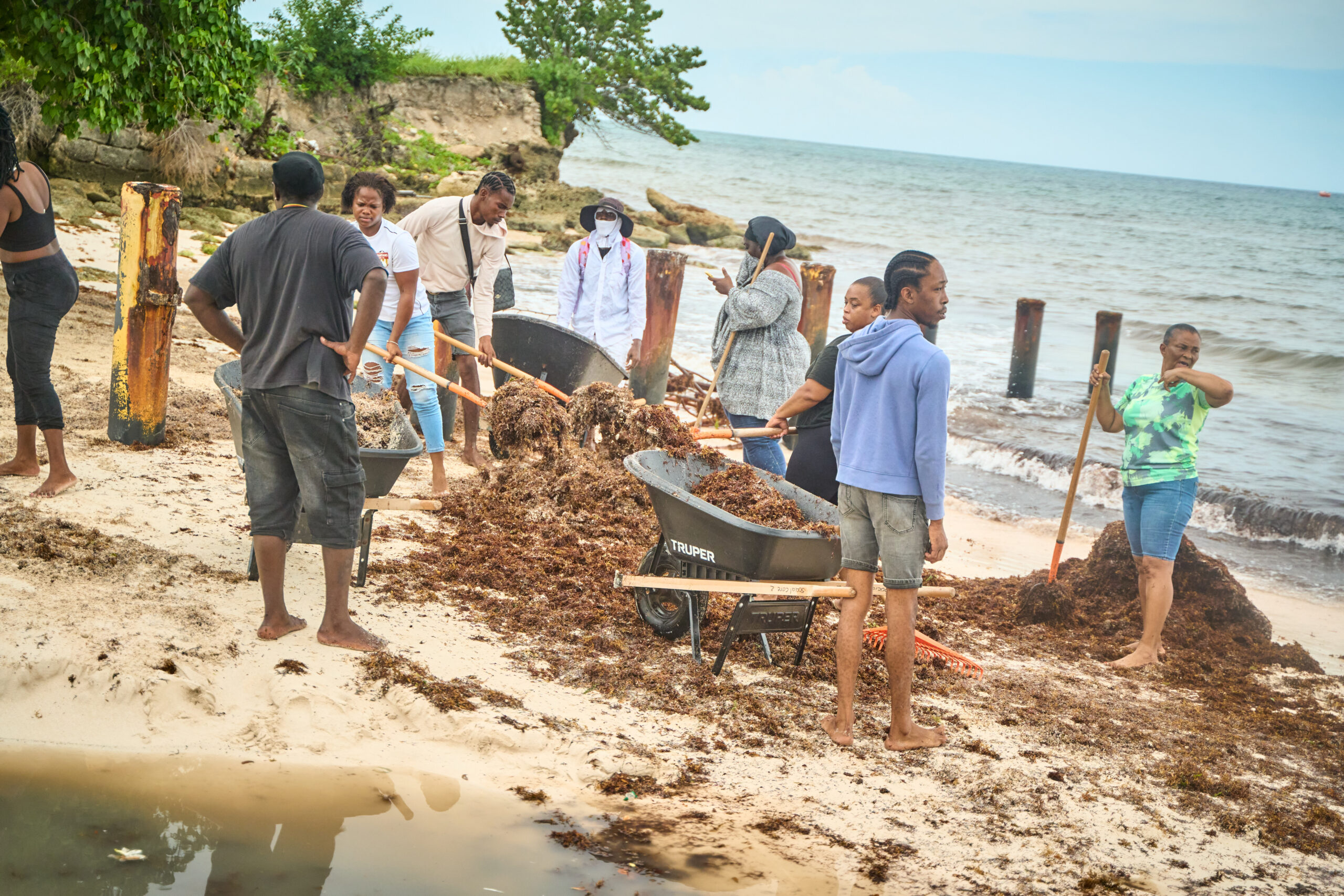
Barbados’ ongoing battle against invasive sargassum seaweed has hit a major milestone this year, with local environmental authorities confirming that approximately 3.6 million pounds of the brown algae have been cleared from public and resort beaches across the island as of mid-year. The update was shared this Wednesday by David Carter, National Project Coordinator of the Sargassum Seaweed Collection Unit under Barbados’ Ministry of the Environment, during a working visit by a Dominican Republic delegation focused on exploring collaborative sustainable sargassum management strategies.
Currently, 150 full-time workers are deployed daily to manually clear seaweed from high-priority shorelines. Carter highlighted that three locations — River Bay in St Lucy, Skeetes Bay in St Philip, and Long Beach in Christ Church — have emerged as the most heavily impacted and challenging to maintain. The southern coastline sites, in particular, are core hubs for Barbados’ $4.8 billion tourism industry, lined with commercial resorts, hotels, and recreation facilities that rely on clean shorelines to attract visitors. “These are our main tourist-facing beaches, so we have dedicated teams working daily to clear them by hand,” Carter explained.
Despite the ongoing efforts, gaps in the cleaning schedule have left some popular public beaches uncleared for weeks at a time. Enterprise Beach, commonly known to visitors as Miami Beach, is one of the sites that has fallen behind, triggering frustration among local beachgoers and small seaside business owners who depend on foot traffic for revenue.
To address longstanding limitations of manual cleaning, the collection unit is now actively evaluating the deployment of pump harvesters to remove sargassum directly from offshore waters before the algae drifts onto shore, a solution that would address one of the most damaging side effects of current practices: coastal erosion. When crews remove large volumes of sargassum from the sand, the heavy machinery and repeated sand removal often strips away natural coastal sediment, accelerating erosion that already threatens many of Barbados’ low-lying shorelines.
Carter explained that the new pump harvester system is designed with wildlife protection in mind. The equipment is anchored offshore, and uses floating containment booms and fine mesh filters to block fish, sea turtles, and other marine life from being drawn into the suction system. The harvested sargassum pumped out of the water can then be repurposed for value-added uses, including biogas production, fertilizer, and construction materials, turning a marine nuisance into a usable resource.
The unit has identified River Bay as the most promising first site for a pilot program, due to the area’s consistent calm sea conditions that make operating the equipment safer and more effective. Skeetes Bay, another heavily impacted site, is also being evaluated, but rough open-ocean conditions at the location create significant logistical challenges that must be resolved before deployment can proceed, Carter added.