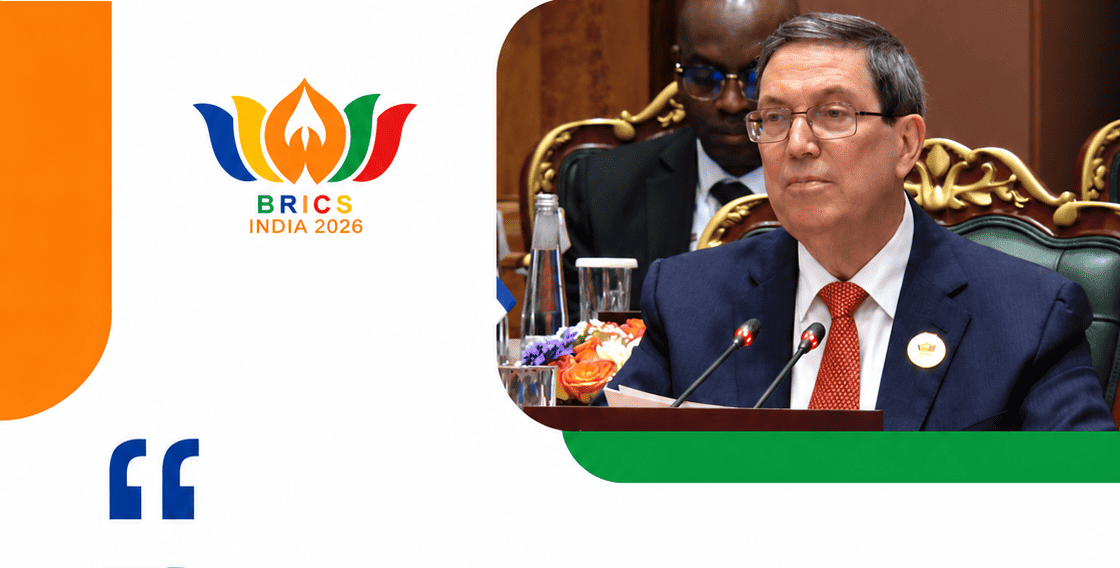
Against a backdrop of shifting global power dynamics and growing pushback against punitive unilateral measures, the 18th BRICS Summit, which gathered the bloc’s 11 member states in New Delhi from September 12 to 13, 2026, has issued a landmark call for the elimination of coercive economic, trade and financial sanctions imposed on Cuba.
The expanded BRICS grouping, now counting Brazil, India, China, Russia, South Africa, Ethiopia, Egypt, Iran, Indonesia, the United Arab Emirates and Saudi Arabia among its members, adopted a 140-point joint declaration that articulates clear concern over the steadily tightening unilateral blockade against the Caribbean island nation. According to an official statement released by the Cuban Embassy in Dominica, the declaration emphasizes the devastating ripple effects of these measures on Cuba’s domestic economy, critical energy infrastructure, and most importantly, the daily lives and well-being of the Cuban people.
Beyond its stance on the Cuban blockade, the joint declaration also reaffirmed BRICS’ longstanding core commitments to a set of foundational principles: mutual respect between sovereign states, equal legal standing for all nations, collective solidarity, inclusive democracy, open dialogue, and consensus-driven decision-making for global governance.
Cuba’s top diplomat, Minister of Foreign Affairs Bruno Rodríguez Parrilla, has publicly embraced and praised the bloc’s position, sharing his reaction to the declaration via a post on social media platform X. Rodríguez emphasized that the BRICS statement formally recognized the tangible harm caused by what he frames as the United States’ long-running hostile policy toward Cuba, spanning its damage to national economic stability, consistent disruption of energy access, and broad deterioration of humanitarian conditions across the country.
During his formal address to the summit gathering, Rodríguez reiterated his unwavering condemnation of the decades-long economic, commercial and financial blockade, stressing that it has been ramped up to unprecedented intensity in recent years. He characterized the policy as a deliberate act of collective punishment targeting the entire Cuban population, noting that its indiscriminate reach has inflicted deep and widespread suffering on millions of ordinary Cuban families.
Going further, Rodríguez described the ongoing measures as “a silent genocide that claims lives”, arguing that the overarching goal of the policy is to force political regime change in Cuba. He shared stark public health data to illustrate the humanitarian toll, stating that Cuba’s infant mortality rate has jumped from 4.0 to 9.9 per 1,000 live births, while the five-year survival rate for children diagnosed with cancer has dropped from 85 percent to 65 percent.
“Inflicting human harm, suffering, and anguish is the objective of this cruel policy, which was deliberately designed for that purpose,” the Cuban foreign minister told summit attendees.
In addition to addressing the blockade, Rodríguez outlined his vision for BRICS’ role in global affairs, noting that the bloc holds unique potential to advance peace, security, equitable development, and systemic justice across the Global South. He framed this contribution as an essential building block for creating a new, fair, and democratic multilateral global order that centers the needs and interests of lower-income and developing nations.