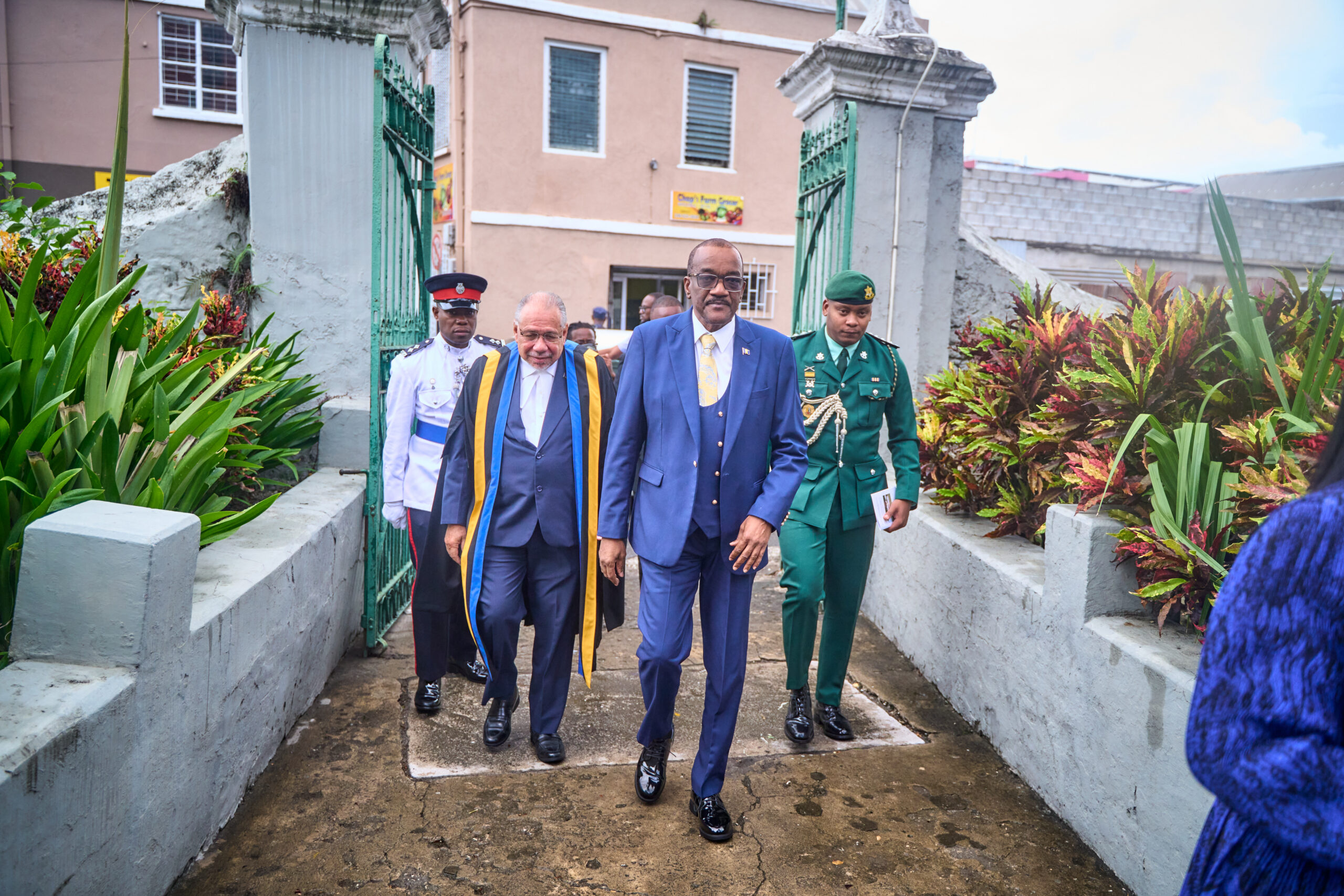
Barbados’ top judicial leader has announced a firm timeline for the launch of two specialized gun-focused courts, part of a broader push to clear a backlog of firearms-related cases and reduce systemic pressure on the island nation’s entire court network. Chief Justice Leslie Haynes made the announcement Monday during the ceremonial opening of the 2026-2027 legal year, held at the Supreme Court Complex’s Court No 1.
Haynes confirmed that the two dedicated gun courts will be fully operational no later than next January, adding that collaborative work between the Office of the Attorney General and the Ministry of Legal Affairs puts the project on track to launch well ahead of that January deadline. The specialized courts, created to exclusively handle cases of unlawful firearms possession, will be based at the Henry Forde and David Simmons Legal and Judicial Complex located on Coleridge Street.
The Chief Justice openly acknowledged ongoing space constraints that have challenged the judiciary’s expansion plans, noting that recent renovation work at the Forde-Simmons Complex and growth in judicial staffing at the Supreme Court have made the space shortage more acute than ever. To address this, Haynes said court administrators are taking a creative approach to space allocation, which is reflected in the judiciary’s updated capital improvement plan. He highlighted the long-delayed rehabilitation of the St. Matthias court complex, confirming that planning for that project is now in its final advanced stages.
Alongside the St. Matthias renovations, four other key infrastructure projects are moving forward this term. First, construction will soon begin on a redesigned public waiting area for District A magistrate courts, a change designed to uphold the dignity of all visitors accessing court services. Second, ongoing roof repair work at the main Supreme Court Complex will continue. Third, the Supreme Court Complex will add two entirely new courtrooms, as well as dedicated meeting spaces for attorneys who travel to the complex for cases. Haynes called the full slate of projects an ambitious agenda, but stressed that the judiciary is committed to delivering tangible, positive results for the public.
In addition to physical infrastructure upgrades, the judiciary is also rolling out digital improvements to streamline processes and reduce strain on other government agencies. Haynes revealed that internet bandwidth is currently being upgraded at every magistrate court across the island to enable virtual hearings for bail applications. Once the upgrade is complete within the next few months, virtual bail hearings will become the standard practice. This change will eliminate the need to transport inmates from correctional facilities to local magistrate courts for these hearings, freeing up overstretched Barbados Prison Service resources to be deployed to other critical needs.
Haynes added that the upgraded internet capacity will unlock a range of other administrative improvements, including the ability to conduct daily reviews of core magistrate court administrative tasks: these include processing incoming and outgoing funds, managing child maintenance payments, debt collection, and financial enforcement actions.
The Chief Justice also shared new details on the planned new judicial complex at Six Roads, which will include a centralized command center for financial administration across the magistrate court system. Currently, each individual magistrate court maintains its own separate bank account, a fragmented system Haynes described as an administrative nightmare that fails to meet modern transparency standards. The new centralized command center will oversee all collection of fines, court fees, and other payments, as well as all disbursements for things like child maintenance and debt settlements, greatly improving accountability for all public funds handled by the magistrate court system.