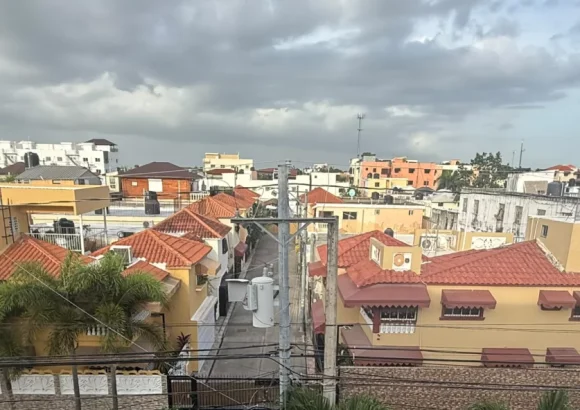
The Dominican Republic’s core metropolitan region is currently facing a stark economic divide in residential real estate, where location alone can push per-square-meter apartment prices to three times higher than comparable properties just kilometers away, according to fresh official market data. This wide gap in residential valuations across the region stems from deep-seated territorial disparities in land pricing and the divergent types of development projects underway in different zones.
New findings from the National Statistics Office (ONE)’s 2026 first-round Building Supply Registry Results Report (ROE 2026-1) lay bare the scale of these inequalities. At the municipal level, the highest average per-square-meter apartment price is recorded in Santo Domingo de Guzmán, hitting RD$148,445. This figure stands in sharp contrast to peripheral municipalities like Los Alcarrizos, where the average per-square-meter cost lands at just RD$48,418 – a clear demonstration that property values triple when moving from outer suburban zones to the central urban core. Disparities grow even more pronounced when breaking data down to the neighborhood level.
The ONE’s technical analysis identifies the Paraíso sector as the metropolitan region’s most expensive neighborhood by average per-square-meter pricing, with valuations reaching RD$218,951. It is narrowly followed by the exclusive, upscale Piantini district, which posts an average of RD$210,026 per square meter. The two areas, both located within the National District, solidify their positions as the priciest residential real estate markets in the whole region.
Median full-unit housing prices tell a similar story of stark economic inequality across geographic zones. Los Cacicazgos leads the ranking of the most expensive neighborhoods, with a median unit price hitting RD$23,500,000 per apartment. It is followed by the high-end residential hubs of Piantini and Renacimiento, which together hold the largest share of high-value residential supply in the Dominican capital.
The census-based study also measured total new residential construction across the metropolitan region, finding that the total area of newly built residential space hit 5,684,625 square meters in the reporting period. However, the distribution of this new construction is heavily geographically concentrated: Santo Domingo de Guzmán claims 36.9% of all new built area, followed by Santo Domingo Este at 31.2% and Santo Domingo Norte at 20.6%.
This value polarization coincides with a significant expansion in overall market volume and the total number of units available to buyers. Bolstered by strong consumer demand, the total count of new residential units rose 23.6% year-over-period, climbing from 46,850 units in the second half of 2025 to 57,920 units in the first half of 2026. Latest market absorption data confirms ongoing strong buyer appetite for residential property across the region. The number of units sold, reserved or under deposit increased 44.7% to 22,909 committed properties during the period. At the same time, immediately available inventory rose to 19,351 units, while pre-construction and future planned offerings more than doubled over the analysis window.