On September 11 this year, Cuban people across the island gathered to honor the 17th anniversary of the death of iconic Revolutionary Commander Juan Almeida Bosque, a foundational figure whose courage and legacy continue to shape the nation’s identity decades after his historic fight for independence.
Born to a working-class family in Havana in 1927, Almeida Bosque rose from humble beginnings—shining shoes as a young man to survive the systemic inequality of pre-revolutionary republican Cuba—to become one of the most revered leaders of the Cuban Revolution. He joined the historic Centennial Generation movement in 1953, marking the start of a lifelong commitment to Cuban independence that would cement his place in the country’s history.
Almeida Bosque’s most legendary act came during the pivotal Battle of Alegría de Pío, when rebel forces faced overwhelming odds and near certain defeat. In that moment of crisis, he defied calls for surrender, shouting the iconic rallying cry that would become a permanent part of Cuban national memory: “No one surrenders here!”
Beyond his role as a military commander and revolutionary leader, Almeida Bosque was also a celebrated artist and thinker. A thoughtful, witty composer and author, he wove his experiences and love for Cuba into creative works that remain beloved by the Cuban public to this day.
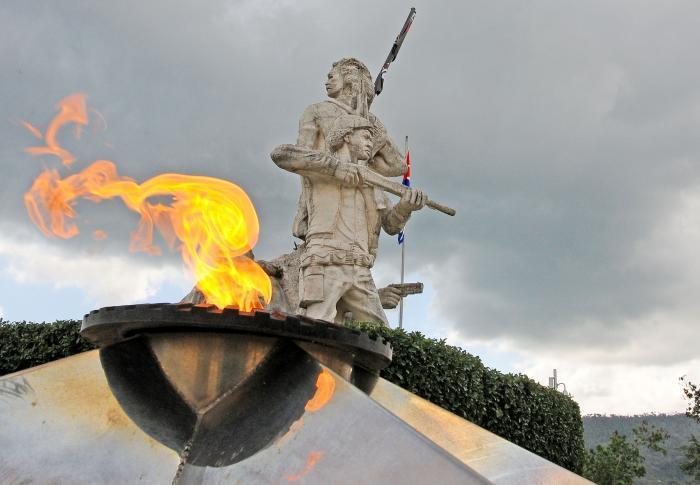
Following his passing on September 11, 2009, Almeida Bosque was laid to rest at the Dr. Mario Muñoz Third Eastern Front Mausoleum, located on La Esperanza Hill in the historic Sierra Maestra mountain range, the cradle of the Cuban Revolution. Each year, thousands of Cubans make a annual pilgrimage to the mausoleum to pay their respects to the commander.
This year’s commemoration follows a long tradition of national tribute, reflecting the enduring respect and affection the Cuban people hold for Almeida Bosque, who is widely recognized as one of the towering symbolic figures of the Cuban Revolution. In a final message left to future generations, Almeida Bosque echoed the words of Cuban independence hero Antonio Maceo, writing: “I wish to have the glory of having contributed to the well-being and independence of Cuba, and to wear with pride the title of good citizen—a title that bestows luster and greatness when earned without blemish.” Today, that legacy remains alive in the daily lives of Cubans, who continue to sing his songs, read his writing, and draw inspiration from his unyielding commitment to the nation.