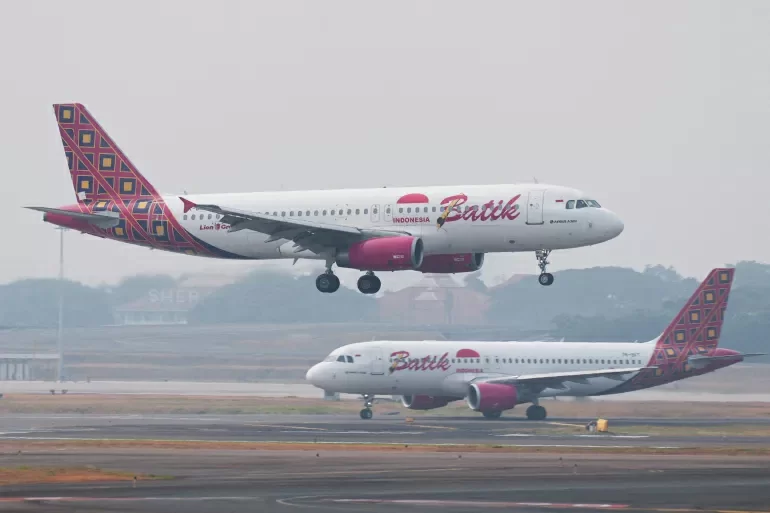
Five airports across Indonesia, including the country’s busiest international hub, Jakarta’s Soekarno-Hatta International Airport, have resumed full operations this week following intensive cleanup efforts to remove volcanic ash spewed from the recent eruption of Anak Krakatau. The temporary closure, triggered by dangerous ash accumulation on runways, taxiways, and critical airport infrastructure, brought widespread disruption to air travel across the archipelago nation, impacting more than 340,000 passengers and forcing the cancellation of approximately 2,900 commercial flights.
Videos circulating widely on social media platforms captured emergency response teams and airport maintenance personnel working around the clock to clear ash deposits from landing strips and operational areas across the affected facilities. Indonesian Transport Minister Dudy Purwagandhi noted that while airports have reopened, a full return to pre-eruption flight schedules will take additional time. “We ask passengers to remain patient as we conduct thorough checks to confirm the airworthiness of all aircraft returning to service,” Purwagandhi stated.
Anak Krakatau, an active stratovolcano located in the Sunda Strait between Indonesia’s two most populous islands, Java and Sumatra, erupted with significant force last Saturday, followed by at least three smaller secondary eruptions early Tuesday. According to Lana Saria, head of Indonesia’s national Geological Agency, the environmental and infrastructural impact of the 2025 eruption has remained less severe than that of previous major eruptions of the volcano. Even so, geological teams are maintaining constant monitoring of the volcano’s seismic activity to detect signs of larger impending eruptions.
Indonesia sits along the Pacific Ring of Fire, a geologically active zone where multiple tectonic plates converge, leaving the country home to roughly 130 active volcanoes – one of the highest counts of any nation worldwide. The island nation still remembers the devastating 2018 disaster at Anak Krakatau, when a partial collapse of the volcano’s crater triggered a massive tsunami that killed more than 400 people along the coastlines of Java and Sumatra.
Today, the resumption of airport operations has restored critical air connectivity across western Indonesia, though national authorities remain on high alert for potential new eruptive activity from the volatile volcano.