After months of tense standoffs and prolonged negotiations between the Bahamas Union of Teachers (BUT) and the national government, the nation’s educators have secured a landmark five-year collective agreement that delivers meaningful salary bumps, lump-sum bonuses and targeted relocation benefits, marking one of the biggest labor victories for the country’s education workforce in recent years.
The new industrial accord, which covers the 2025 to 2030 period, is set to be retroactively applied starting July 1, bringing immediate financial relief to thousands of teachers across the Bahamas. Under the terms of the deal, the maximum annual salary for experienced educators will rise to $54,000, while starting pay for new entry-level teachers has been boosted to $30,100. In addition to base salary adjustments, the agreement includes one-time lump-sum payments: teachers will receive $700 in the third year of the contract and $750 in the fifth and final year. A key win for educators working outside the main island is the new hardship allowance established for teachers who choose to relocate to schools on the Family Islands, addressing longstanding inequities for educators serving more remote communities.
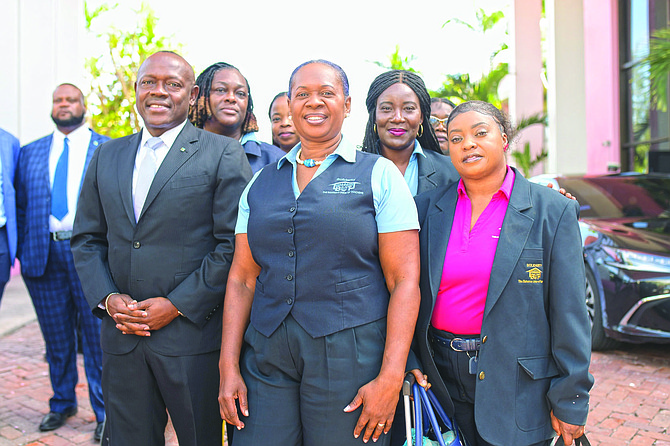
The breakthrough deal was finalized during a high-stakes meeting at the Office of the Prime Minister, attended by Prime Minister Philip “Brave” Davis, Education Minister Chester Cooper, senior finance and public service ministry officials, and BUT leadership. Emerging from the closed-door talks Wednesday morning, BUT President Belinda Wilson and union members greeted reporters with open celebration, expressing overwhelming relief that years of unresolved financial demands had finally been resolved.
Negotiations over a new collective agreement first launched in October 2025, with deadlocks plaguing talks for months as the union repeatedly rejected the government’s successive counterproposals. Initially, BUT had pushed for a 20 percent total salary increase phased over three years. Tensions reached a fever pitch last week, after teachers voted down the government’s sixth offer by an overwhelming margin. In response, the union placed more than 1,400 members on formal industrial action alert, opening the door to strikes or work stoppages that would have disrupted classrooms across the country. This latest threat was the culmination of months of repeated warnings from the union that industrial action would be unavoidable without a fair deal.
On Wednesday, however, Wilson told cheering members that the threat of work stoppage could be called off, joking that educators could put their “tennis shoes” — a reference to protest footwear — back in their closets, as all core demands had been met. She added that the salary increases are expected to appear on teachers’ paychecks as early as the September or October pay cycle, bringing faster than expected relief.
Reflecting on the adjusted terms, Wilson noted that the union agreed to shift from a three-year 20 percent increase framework to a five-year arrangement aligned with the government’s fiscal timeline, a compromise that ultimately delivered more sustainable long-term gains for members. “What we did is, we put together a five-year proposal that balanced our needs against the government’s position, and we’re pleased with what we’ve gotten today,” Wilson said. “And I think our members will be very, very happy.”
Education Minister Chester Cooper echoed that positive tone, framing the negotiated deal as a launchpad for broader progress in the country’s education sector. He described the final meeting as productive and collaborative, noting that the government and BUT would now shift focus to working together to drive transformative change for Bahamian education. “This is a positive outcome. It’s a great day for education,” Cooper said.