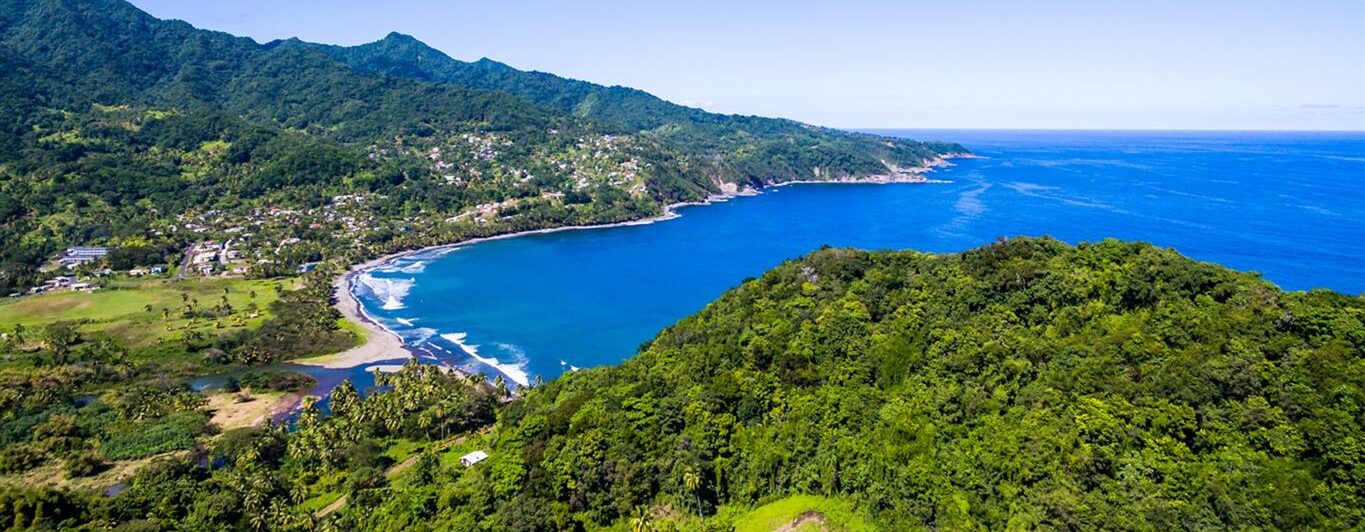
It has been nearly a decade since Hurricane Maria tore through Dominica in 2017, leaving the Castle Bruce local police station in ruins. In the aftermath of the storm, law enforcement officers serving the region stretching from Petite Soufrière to Castle Bruce have been forced to operate out of a rotating series of makeshift, borrowed residential spaces across the community. Within a year of the destruction, the government of Dominica launched a long-promised initiative: the construction of a purpose-built, modern police station that would restore consistent, accessible public safety services to the area. But what was supposed to be a landmark infrastructural improvement has instead turned into a years-long saga of delay, leaving a half-built concrete shell standing as a stark reminder of unfulfilled government promises.
Construction progress has ground to a halt repeatedly at multiple stages of the build. Eight years after ground was first broken, the site still holds nothing more than an incomplete, exposed structure. What work has been completed — a poured foundation and partial framing — sits open to the elements, unused by anyone. Unprotected construction materials stacked across the lot have steadily degraded from years of exposure to sun, wind, and tropical rain. Today, the abandoned site is far more than an uncompleted public project: overgrown vegetation has choked the perimeter, the unfinished structure poses unseen safety risks to local residents, and the blighted lot is widely considered an eyesore that disrupts the village landscape.
For the past 27 months, no visible construction work has taken place at the site, and local residents have been given no official explanation for the shutdown. This lack of transparency has spawned a host of unanswered questions among community members, who have waited years for a permanent, functional police presence. Many wonder if stalled budget allocations or repeated holdups in government funding disbursement are to blame for the deadlock. Others question whether shifting government policy priorities, combined with a complete lack of dedicated project oversight, have left the initiative to languish. Some local residents speculate that unforeseen engineering challenges required costly redesigns that drained project resources, while others hypothesize that widespread infrastructural needs across the island stretched government resources too thin, forcing officials to redirect attention and funding to other higher-priority projects.
This stalled initiative is more than a local inconvenience; it serves as a high-profile example of deep-rooted failures in public project planning and governance across the country’s infrastructural development sector. To reverse the damage and deliver the police station the community was promised, a series of targeted actions are needed. First, government authorities must launch a full, public audit of the project’s current status to identify exactly what has caused the multi-year delay. Second, officials must move quickly to secure the full funding and material resources required to push the project across the finish line without further holdup. Third, the government should reassess the project’s original design and scope to address any unforeseen challenges, then appoint an independent, dedicated project management team to oversee all remaining work and keep construction on schedule.
After eight years of waiting, the community of Castle Bruce still lacks the permanent public safety infrastructure it was promised. Resurrecting and completing this stalled project will require coordinated action across government agencies, consistent long-term funding commitments, and transparent, strategic planning. Only through these steps can the unfinished structure finally fulfill its original purpose: serving as a stable, modern public safety hub that supports the safety and well-being of thousands of residents across the region.