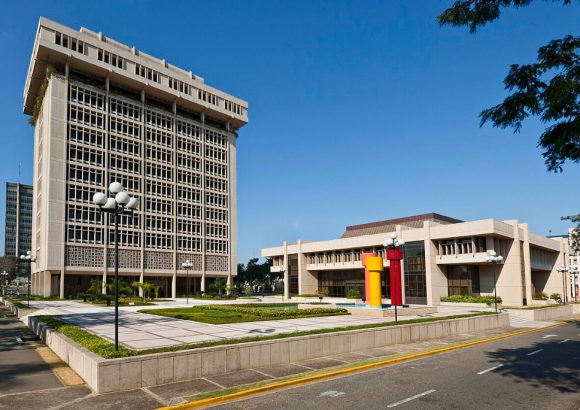
Many currency holders in the Dominican Republic hold a common misconception: that a banknote torn, worn, waterlogged or even partially destroyed by fire automatically forfeits its face value. To clear up this confusion and clarify public rights, the Central Bank of the Dominican Republic (BCRD) and all authorized institutions across the country’s financial system have established formal, transparent regulations outlining which damaged banknotes and coins qualify for exchange, and the proper channels to complete this process.
For any financial institution to approve an exchange—issuing a crisp replacement banknote or depositing the full value into the customer’s account—the damaged note must first meet two core baseline requirements: it must be confirmed as authentic, and it must retain a minimum level of integrity. Beyond these baselines, the rules lay out clear, specific scenarios where exchange is guaranteed.
First, banknotes degraded by regular circulation or age, marked by heavy creasing, uneven discoloration, loss of paper stiffness or general wear from years of use, remain full legal tender. By regulation, commercial banks are required to accept these worn notes to withdraw them from circulation and issue new replacements to customers.
Second, fragmented or torn banknotes are eligible for exchange as long as more than 50% of the original banknote’s surface is preserved. A critical requirement for these cases is that at least one of the note’s two unique serial numbers remains intact, allowing officials to verify the note’s authenticity.
Third, banknotes torn into multiple pieces but taped back together with clear transparent tape are also accepted without any fees or value deductions, as long as all pieces can be confirmed to belong to the same original banknote.
Fourth, even partially burned or heat-damaged banknotes can be exchanged, provided the remaining structure is recognizable, more than half of the original note is preserved, and key anti-counterfeiting security features can still be validated by examiners.
Finally, accidentally waterlogged, washed, lightly stained or marked banknotes (including those with minor ballpoint pen markings) retain their full value, so long as the damage does not block the authentication of security features.
While the regulations cover most common damage scenarios, there are specific cases where on-counter direct exchange will be denied. If a banknote is missing 50% or more of its original surface, it does not qualify for immediate exchange. If severe damage from fire, chemical exposure or tearing has completely erased both serial numbers and the banknote’s security thread, exchange is also turned down. Attempts to reconstruct a single banknote from fragments of two different notes (confirmed by mismatched serial numbers) will also be rejected. Most notably, banknotes stained with the pink, green or purple security dyes released from ATMs or armored car anti-theft systems cannot be exchanged at commercial bank counters, as these stained notes are almost always linked to theft or illegal tampering.
For citizens looking to exchange damaged banknotes, the process is split between two tiers of financial institutions based on case complexity. Straightforward cases, including minor tears, worn aged notes, and properly taped notes, can be processed directly at any commercial bank or savings and loan association counter across the country. For more complex cases, such as severely burned, heavily mutilated or chemically damaged notes, holders can either submit the note directly to the BCRD for a formal technical assessment by the bank’s specialized department, or drop it off at a commercial bank that will forward it to the central bank for evaluation.