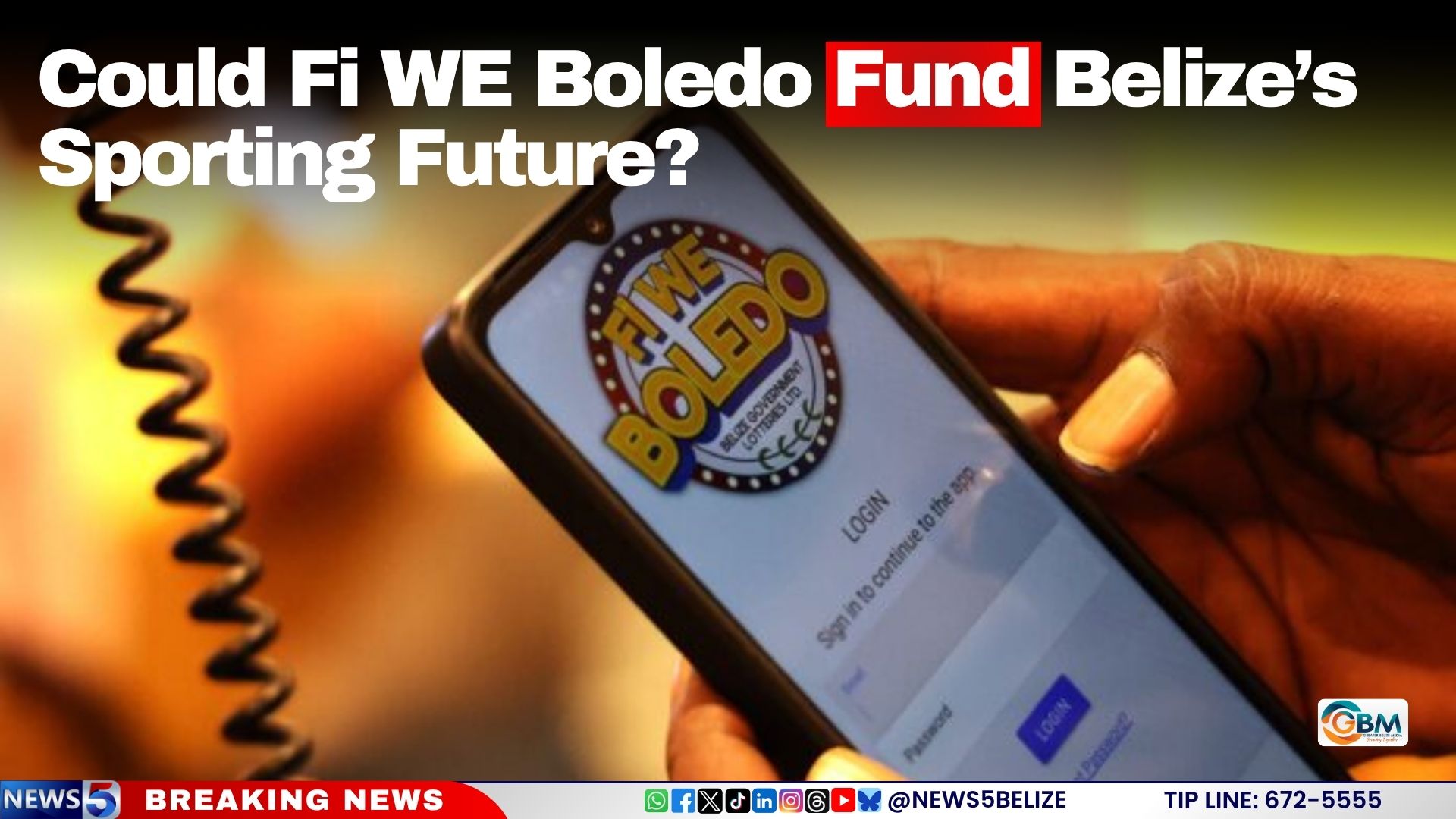
As Belize maps out a long-term vision to elevate its domestic sports ecosystem, a pressing question has emerged at the country’s first-ever National Sports Summit: can proceeds from the nation’s popular Fi We Boledo lottery unlock greater funding for athletic growth?
Projections show Belizean consumers will spend upwards of $144 million on Fi We Boledo in 2026, matching the total revenue the game generated in the 2025–2026 fiscal year. After accounting for $100 million in prize payouts to winners and covering operational overheads, the Belize Lottery Board recorded a $27.4 million net profit from the lottery that year. Currently, only 7% of that profit – equal to $2 million – is allocated to the Ministry of Sports for athlete development and program support.
Narda Garcia, chair of the Belize Lottery Board, told summit attendees on Tuesday that this contribution does not have to stay static. With the government pushing forward a new, coordinated national strategy to boost sports development and expand support for local sporting associations, Garcia argued that a larger share of Fi We Boledo profits could be redirected to the sector.
“Even a modest increase in funding would go a long way to cover the overhead costs that sporting associations currently struggle with, and help scale up the pilot programs already in place,” Garcia said.
The push for increased sports funding aligns with the government’s newly launched long-term sports development plan. The strategy centers on three core priorities: strengthening the operational capacity of local sporting associations, consolidating scattered resources into a coordinated national system, and building early talent identification pathways to nurture athletes from childhood.
Sports Minister Anthony Mahler also outlined major infrastructure expansion plans as part of the strategy. Building on the success of the existing Marion Jones Sport Complex, the government aims to construct three additional high-performance training facilities across the country: one in Orange Walk District, a second in Cayo District, and a third in one of Belize’s two southern districts.
Right now, the proposal to redirect more Fi We Boledo revenue to sports remains under discussion. With millions of dollars in annual consumer spending flowing into the national lottery, stakeholders across the sports sector are debating how large a share of those funds should be reinvested into the athletic system that the lottery already helps support.