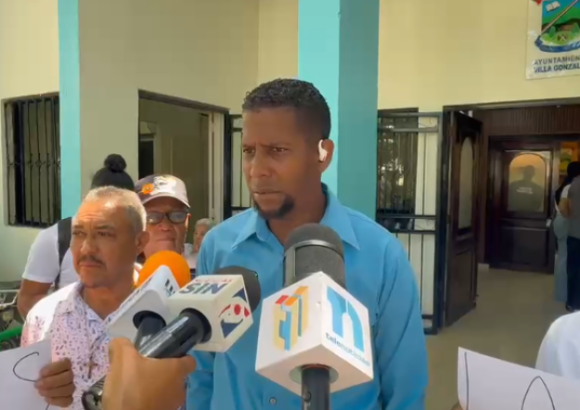
Residents of the small Dominican community of Las Lavas, located in Villa González, Santiago, have united in a urgent call to shut down nearby unregulated mining operations, citing widespread dust pollution, soaring rates of respiratory illness, and unaddressed risks to children’s health that have upended daily life for the 2,000-person neighborhood.
Community organizers allege that poor environmental conditions tied to intensive mining have contributed to at least five recent resident deaths, though no official causal link has been confirmed by Dominican public health authorities. The movement brought their grievances directly to top local and national officials—including Deputy Minister of the Interior and Police Ángela Jáquez, Villa González Mayor Cesar Álvarez, and representatives of Digesett, the national traffic and transportation security agency—at a special security convening held to address the ongoing conflict between residents and mining operators.
Rubén Darío Peña Lendóf, president of the local community advocacy group Unidos por Las Lavas, told attendees that the region of less than one square kilometer adjacent to the neighborhood hosts more than 20 separate active extraction sites, where operators pull sand, gravel, and stone from surrounding hills. “We can’t eat at the table, we can’t rub ourselves with a clean sheet, we can’t bring a family member to visit us, because they want to leave right away; their clothes get dirty with dust. You can’t breathe,” Peña Lendóf described, emphasizing how constant mining dust has degraded quality of life for every household in the area.
Backing up the community’s anecdotal claims, officials from the Dominican Ministry of Public Health presented data from an in-person survey of 486 local residents conducted to assess population health outcomes in the area. Dr. Rafael Polanco, of the Santiago Provincial Directorate of Public Health, outlined survey findings that show staggeringly high rates of respiratory and related conditions among the assessed population: 56% of respondents reported respiratory allergies, 46.7% experienced frequent common colds, 31.3% lived with bronchial asthma, 30% had rhinitis, and 26.7% were diagnosed with chronic obstructive pulmonary disease (COPD). Additional reported conditions included skin disorders, tonsillitis, conjunctivitis, gastroenteritis, and cancer. The survey also recorded that 63.3% of respondents reported acute respiratory distress, while 66.7% lived with chronic respiratory illness—health officials clarified that these two metrics were measured through separate survey questions and are not overlapping indicators.
Unlike many public health surveys that rely on remote phone polling, the assessment was conducted entirely through face-to-face interviews with local residents, a detail Polanco highlighted to reinforce the data’s credibility, noting that “we didn’t call people by phone without knowing who we were surveying, questioning, or investigating.”
For Las Lavas residents, the official survey results validate years of unaddressed concern about the impact of unregulated mining on their community. Community leaders also claim that an earlier joint inspection with an environmental commission found that roughly 90% of the nearby mining operations lack the required legal operating permits, and are calling on authorities to launch a full investigation into permitting compliance.
In response to the community’s demands, Jáquez outlined a set of incremental policy proposals designed to mitigate harm while addressing the conflict, stressing that there is no quick fix for the ongoing crisis. The proposed measures include a city council resolution banning mining trucks from entering or exiting the extraction area during school drop-off and pick-up hours, with fines for non-compliance, as well as the urgent development of a formal environmental remediation plan led by the Ministry of Environment with input from all affected stakeholders. Jáquez projected that tangible improvements for the community would become visible within a 3-month timeline.
The proposals have failed to satisfy local residents, who remain firm in their core demand for a full, immediate halt to all mining operations near Las Lavas. Community representatives issued an ultimatum to authorities: if no decisive intervention is delivered within the next 15 days, organizers will launch a 48-hour general strike across the municipality of Villa González to escalate pressure for action.