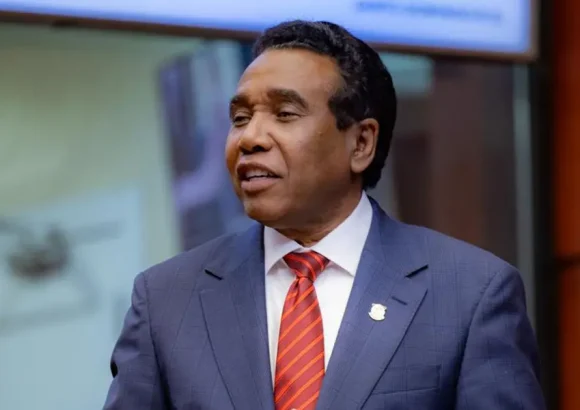
In Santo Domingo, a senior Dominican legislator has ignited a critical debate over electoral system reform with a bold proposal to overhaul how legislative and municipal seats are distributed across the country. Senator Félix Bautista, representing the San Juan region, has formally introduced legislation to the upper chamber of Congress that would eliminate the D’Hondt method, a seat-allocation framework that has been a core part of Dominican electoral rules for nearly three decades. The D’Hondt system was first integrated into the nation’s electoral architecture as part of the sweeping 1997 electoral reform package, which established the proportional representation model currently in use.
Bautista’s proposal does not just call for removing the existing framework—it also puts forward a replacement model designed to deliver a more equitable distribution of elected positions, one that he says will more closely mirror the actual will of Dominican voters at the polls. In justifying the overhaul, Bautista has repeatedly emphasized that the D’Hondt method carries an inherent structural bias that consistently benefits the nation’s largest, most established political parties. This bias, he argues, has systematically squeezed out smaller emerging parties and underrepresented minority political groups from gaining seats in collegiate governing bodies, from national representative assemblies to local municipal councils. Over time, he contends, this exclusion has eroded the foundations of democratic pluralism in the Dominican Republic, narrowing the range of voices that can shape policy at both national and local levels.
The senator stressed that his legislation is intended first and foremost to open up a broad, inclusive national conversation about updating the country’s electoral rules to meet the needs of modern Dominican democracy. Beyond simply changing the allocation formula, the core goals of the initiative are to reinforce the principles of proportional representation and guarantee a far more level playing field when it comes to distributing seats across all competing political groups. If the Senate advances the bill and it ultimately receives final approval, analysts and political observers note that the reform would reshape the landscape of Dominican elections dramatically. Most notably, it would open the door for smaller, less established political organizations to win seats and gain a meaningful foothold in national and local decision-making processes, a shift that could rebalance power dynamics across the country’s political sphere.