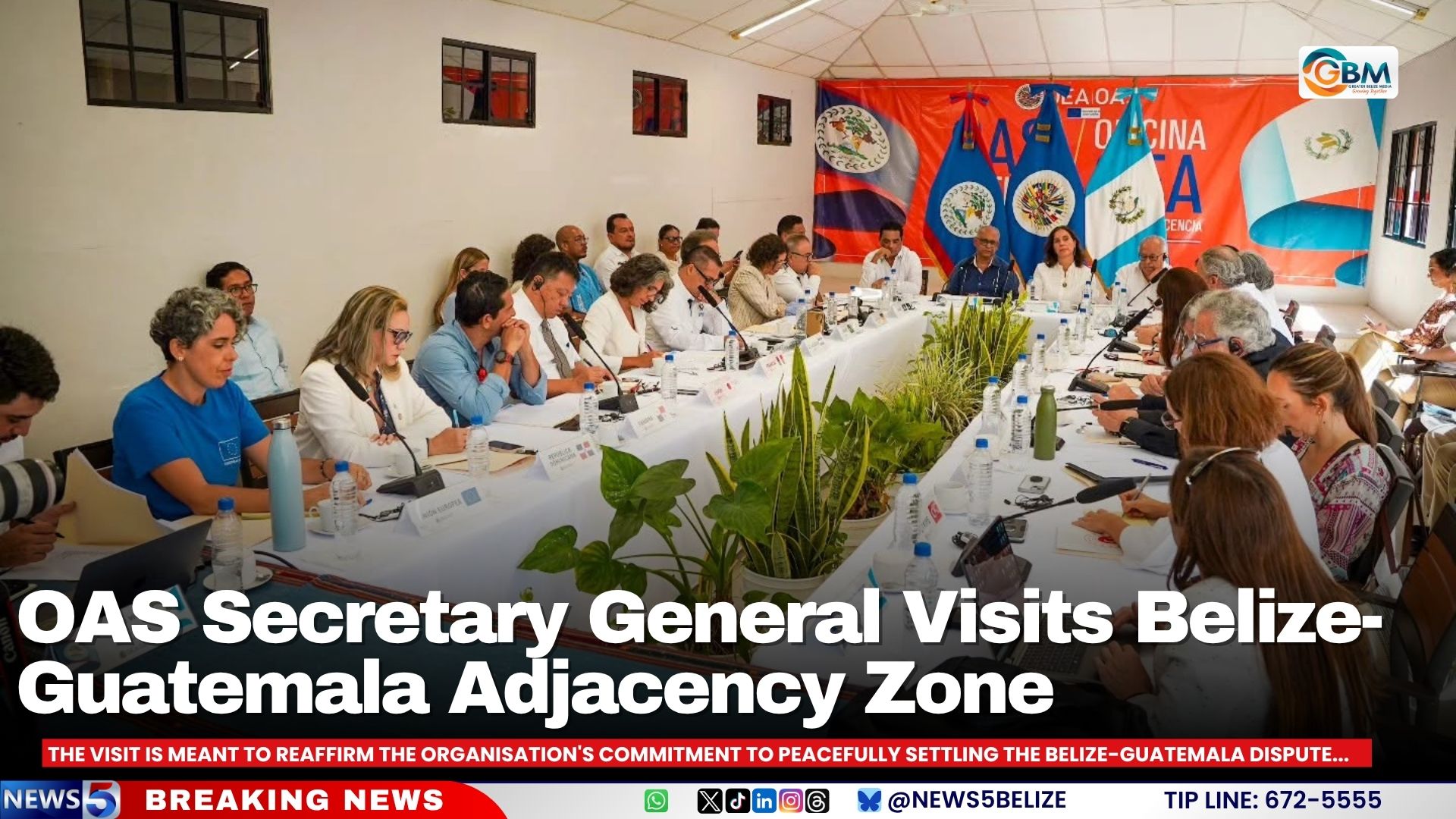
Ahead of the eagerly anticipated International Court of Justice (ICJ) ruling on the long-running Belize-Guatemala territorial dispute, Organization of American States (OAS) Secretary General Albert Ramdin led a high-profile delegation from the Group of Friends of Belize and Guatemala on a three-day visit to the contested Adjacency Zone between August 31 and September 2, 2026. The trip, which included bilateral meetings with foreign ministers from both nations and regional integration leaders, comes as part of sustained diplomatic efforts to advance peaceful resolution of the decades-long border conflict.
The stated objectives of the visit extend far beyond diplomatic discourse. According to OAS officials, the mission seeks to reaffirm the intergovernmental body’s unwavering commitment to a peaceful negotiated settlement, conduct an on-the-ground assessment of ongoing confidence-building measures, and amplify the positive impact of community-focused and educational programs that have taken root in the zone. A key secondary goal is to mobilize additional international technical and financial backing for the OAS mission that has maintained a permanent presence in the area for nearly 25 years.
The Group of Friends delegation in attendance featured senior representatives from 11 nations and the European Union, including Argentina, the Dominican Republic, El Salvador, France, Germany, Italy, Mexico, Panama, Spain, Türkiye, showcasing broad international support for the diplomatic process. On the first full day of the visit, Ramdin and the delegation convened a joint meeting with Belizean Foreign Minister Francis Fonseca and Guatemalan Foreign Minister Carlos Ramiro Martínez Alvarado at the local OAS office, where they received detailed briefings on the mission’s recent activities and evolving security and political developments in the zone.
In a symbolic gesture of cross-border collaboration, the delegation toured the OAS-run Ta’ Amay Peace Promotion and Training Centres and took part in the unveiling of a new mural celebrating peaceful coexistence. The mural was created collaboratively by young artists from both Belize and Guatemala, and has been hailed as a tangible symbol of binational integration and growing community trust across the disputed border.
Following the joint events, Ramdin carried out a series of separate bilateral engagements with each foreign minister, meeting in Belmopan (Belize’s capital) and Guatemala City respectively. While in Guatemala City, he also held talks with Lina Eugenia Ajoy Rojas, Secretary General of the Central American Integration System, to align regional diplomatic efforts ahead of the ICJ ruling.
Established in 2000 as a core confidence-building measure, the Adjacency Zone is a 213-kilometer long, 2-kilometer wide buffer strip spanning approximately 426 square kilometers. The zone was created to maintain stability, open channels for dialogue, and prevent escalation during the dispute resolution process. Two years after its creation, the OAS formalized its permanent presence through the establishment of its General Secretariat Office in the zone, with a mandate centered on preventive diplomacy, cross-border security, and inclusive social development.
Over more than two decades, the OAS mission has notched a series of key achievements that have kept the peace. To date, the mission has verified more than 500 cross-border incidents, facilitated regular coordination meetings between the armed forces of both nations, and maintained a permanent open communication channel between the two countries’ foreign ministries. This includes eight annual coordination meetings between mid-level military officers and four between senior commanders, creating consistent routines that reduce the risk of miscommunication and escalation.
At the community level, the OAS’s impact is visible through four Ta’ Amay Peace Promotion and Training Centres located in Benque Viejo del Carmen (Belize), Melchor de Mencos, Santa Cruz, and Aldea El Arenal (Guatemala). More than 2,500 students have completed skills and leadership training through these centers, over 80 percent of whom are women. Beyond training, the centers host a wide range of community initiatives focused on improving access to healthcare, justice, and social and cultural development opportunities for residents on both sides of the border.