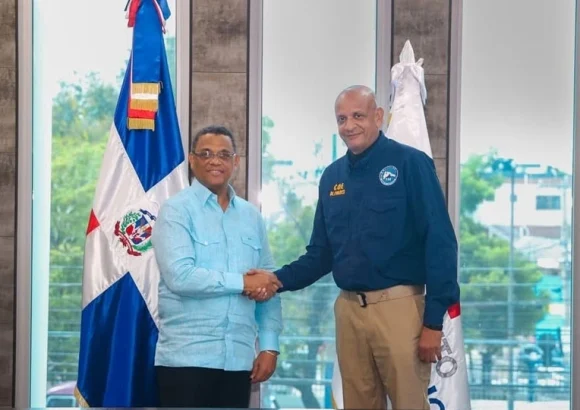
In a move designed to reinforce national disaster preparedness, Dominican Republic’s Emergency Operations Center (known locally as COE) and the national Airport Department have formalized an agreement to tighten collaborative coordination and update response protocols for crises and natural disasters across the country.
Last week, senior leaders from both entities gathered for a working meeting focused on aligning operational priorities: COE Director Erdwin Olivares sat down with Airport Department Executive Director Mérido Torres Espinal to conduct a full review of the existing capabilities that the nation’s network of heliports, hospital-connected landing zones, private airfields and public commercial airports can bring to bear when disaster strikes. From hurricanes to flash floods, the Caribbean region’s frequent extreme weather events leave Dominican Republic vulnerable to large-scale crises, making rapid deployment of emergency resources a critical policy priority.
Under the terms of the new agreement, the joint partnership will prioritize leveraging this sprawling national aviation infrastructure to cut response times for life-saving interventions. The updated framework calls for pre-coordinated access to all landing facilities to speed up the delivery of emergency aid, enable faster search and rescue missions, streamline the medical evacuation of impacted residents, and speed up the movement of critical emergency supplies and personnel across affected areas.
During the meeting, Olivares stressed that maintaining a well-coordinated, fully optimized national aviation network is non-negotiable for effective disaster response, noting that delayed access to hard-hit regions often amplifies harm to communities and complicates recovery efforts. For his part, Torres Espinal reaffirmed the Airport Department’s full commitment to delivering all required operational support, from pre-event maintenance of landing facilities to on-the-ground coordination during crises, to guarantee that emergency responses across the country are both timely and tightly integrated between all relevant government agencies.