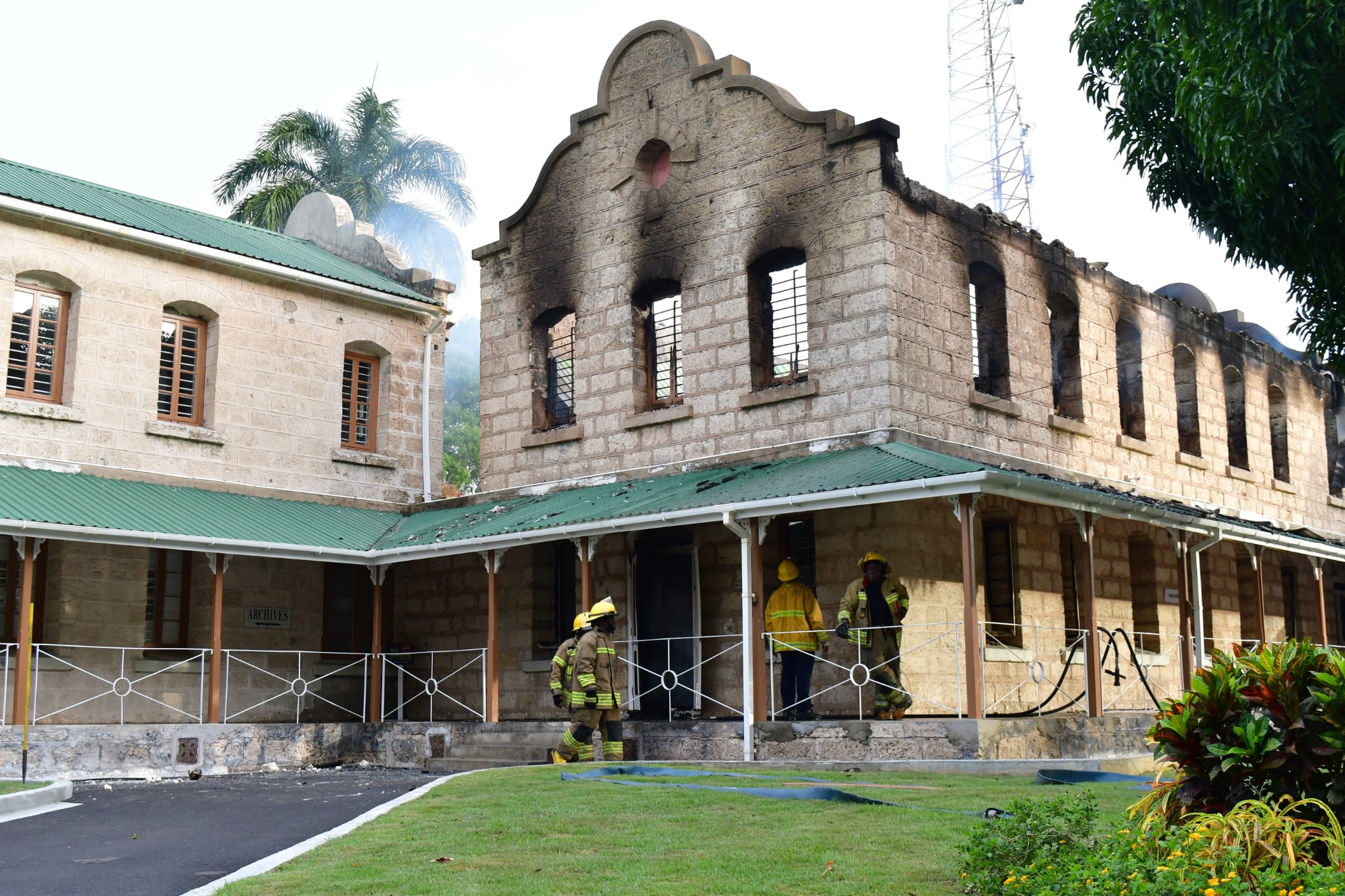
Nearly two years after a devastating lightning strike triggered a catastrophic fire at Barbados’ national Archives Department, ongoing recovery, structural repair and heritage protection work is still progressing, according to the island’s Minister of Pan African Affairs and Heritage Trevor Prescod. The destructive blaze broke out just minutes before midnight on June 18, 2024, ripping through a two-story building at the department’s Black Rock, St. Michael campus that held generations of irreplaceable historic national documents. In the immediate aftermath of the fire, chief archivist Ingrid Thompson confirmed that only a small fraction of the records stored in the damaged Block D could be saved from the destruction. Prescod recently spoke with local publication Barbados TODAY following an on-site inspection of the recovery work, where he received a full briefing from department leadership on the status of structural repairs, new specialized equipment installations, and safety protocols put in place to protect surviving archival collections. “It is clear that while we have restored the roof over the burned area, we have not yet completed interior finishing work on that section of the building,” Prescod explained. Beyond patching up fire-related damage, government authorities have prioritized hardening the entire archives facility against future natural and environmental hazards, rolling out new specialized protective infrastructure to mitigate risks to the remaining buildings and their holdings. “We are installing a wide range of specialized devices and safety equipment designed to reduce the threat of similar damage to the entire site,” Prescod noted. In response to growing public concern over the safety of surviving one-of-a-kind historical documents, Prescod moved to reassure residents that all valuable archival materials have already been relocated away from the high-risk damaged zone. “Right now, all surviving collections are secured in an alternative location away from the area where lightning struck and hit the building,” he said. “We are making consistent progress, and all materials remain protected.” Basic construction and technical supplies have been imported to support the ongoing work, Prescod confirmed, though he added that key technical installation processes are still ongoing and have not yet been finalized. When asked whether a full public report detailing the full scope of damage, a breakdown of lost versus salvaged items, and a formal damage assessment had been completed, Prescod said he could not provide a firm timeline for the document’s release. He did note, however, that work is ongoing to restore as many damaged records as possible, and that off-site preservation and large-scale digitization projects are underway in partnership with other local organizations. A selection of surviving records has already been transferred to the R.O.A.D (Restoring Our Atlantic Destiny) digitization initiative based on Harbour Road, where they will be digitized for long-term preservation and public access. In addition to fire recovery work, Prescod confirmed that structural maintenance and masonry repairs are ongoing across other sections of the broader archives campus, pushing back against recent rumors that construction of a completely new standalone facility had already begun. “We are carrying out targeted repairs across the existing site right now; masons are on-site doing that work,” he explained. He also revealed that maintenance teams are currently addressing a separate major structural issue on the site’s eastern perimeter, caused by invasive tree roots that have compromised the building’s outer wall. “Tree roots have grown through and penetrated the eastern wall of the archives building, which has created a major structural integrity issue,” Prescod said. Technical engineering teams are currently evaluating two potential solutions to fix the damage: constructing a new reinforced interior supporting wall, or demolishing and fully reconstructing the compromised section of the outer wall. Prescod emphasized that despite the range of complex operational and environmental challenges the department has faced since the fire, the dedicated teams leading recovery work remain fully committed to stabilizing the facility’s infrastructure, protecting the island’s priceless historical heritage, and completing all critical repairs to return the archives to full public functionality.