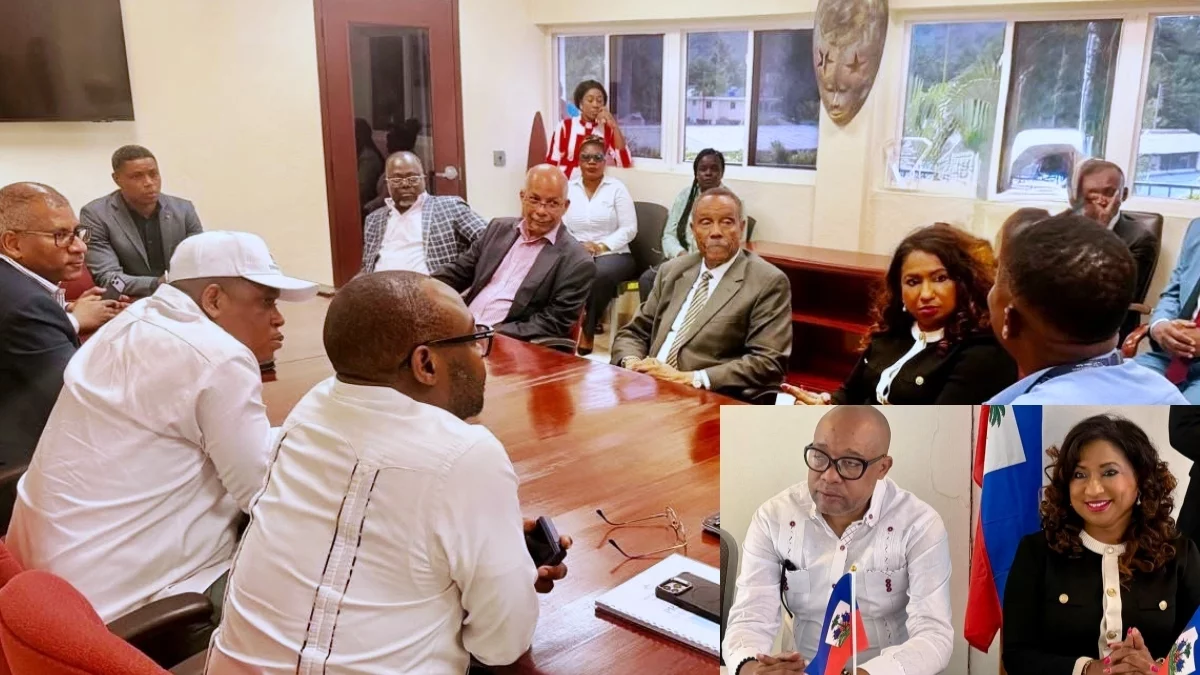
Between August 23 and 25, 2026, Haitian Minister of Health Bertrand Sinal welcomed a high-level delegation from the Caribbean Public Health Agency (CARPHA) in Cap-Haïtien, marking the start of a three-day mission focused on cross-regional experience exchange around major regional public health threats. The visit, which centered on deepening collaborative ties between Haiti and the broader Caribbean public health ecosystem, brought together CARPHA’s top leadership, including Executive Director Dr. Lisa Indra, alongside senior medical advisors Dr. Mark Sami and Dr. Horace Cox, for direct talks with Haiti’s national public health leadership.
Accompanying Minister Sinal during the discussions were Director General Dr. Gabriel Thimothe and a cohort of central and department-level health agency directors. In his opening remarks, Sinal openly addressed the multiple cascading challenges straining Haiti’s public health infrastructure, while also emphasizing the nation’s untapped potential and core systemic strengths.
“We welcome this delegation at a moment when our nation is navigating profound, widespread difficulties,” Sinal stated during the meeting. “We have no interest in concealing the challenges we face. We are fully aware of our systemic weaknesses, the constraints on our operations, our unmet needs, and the relentless pressure that our frontline health professionals endure every single day. But we are equally clear about our strengths. Haiti is a nation rich with potential, staffed by highly competent health professionals, supported by long-established, experienced institutions, and home to a population that has repeatedly proven its ability to withstand crisis, recover, and advance,” he added.
Beyond closed-door technical negotiations, the CARPHA delegation conducted on-site visits to two leading Haitian health facilities: Justinien University Hospital and Milot’s Sacré-Cœur Hospital. These field visits allowed the regional agency team to observe first-hand the operations of Haiti’s epidemiological surveillance network and public health laboratories, as well as the country’s existing frameworks for preparing for and responding to sudden public health crises and emergencies.
For Haitian public health leadership, strengthened regional integration and cooperation are non-negotiable for effective public health action, given that infectious diseases and other health threats do not respect national borders. Addressing shared hazards requires collective solidarity, open data sharing, structured knowledge transfer, and coordinated cross-national action, officials emphasized. Despite linguistic and cultural diversity across the Caribbean, Haiti remains committed to building a more interconnected regional public health community, where varied experiences can be leveraged as a strength for mutual learning and collective progress.
As a regional coordinating body, CARPHA was formally established through an intergovernmental agreement between CARICOM member states in July 2011, and launched full operations in January 2013. Headquartered in Trinidad and Tobago, with additional regional hubs in Saint Lucia and Jamaica, the agency counts 26 member states across the Caribbean, including Haiti, and supports coordinated collective action to address shared public health priorities across the region.