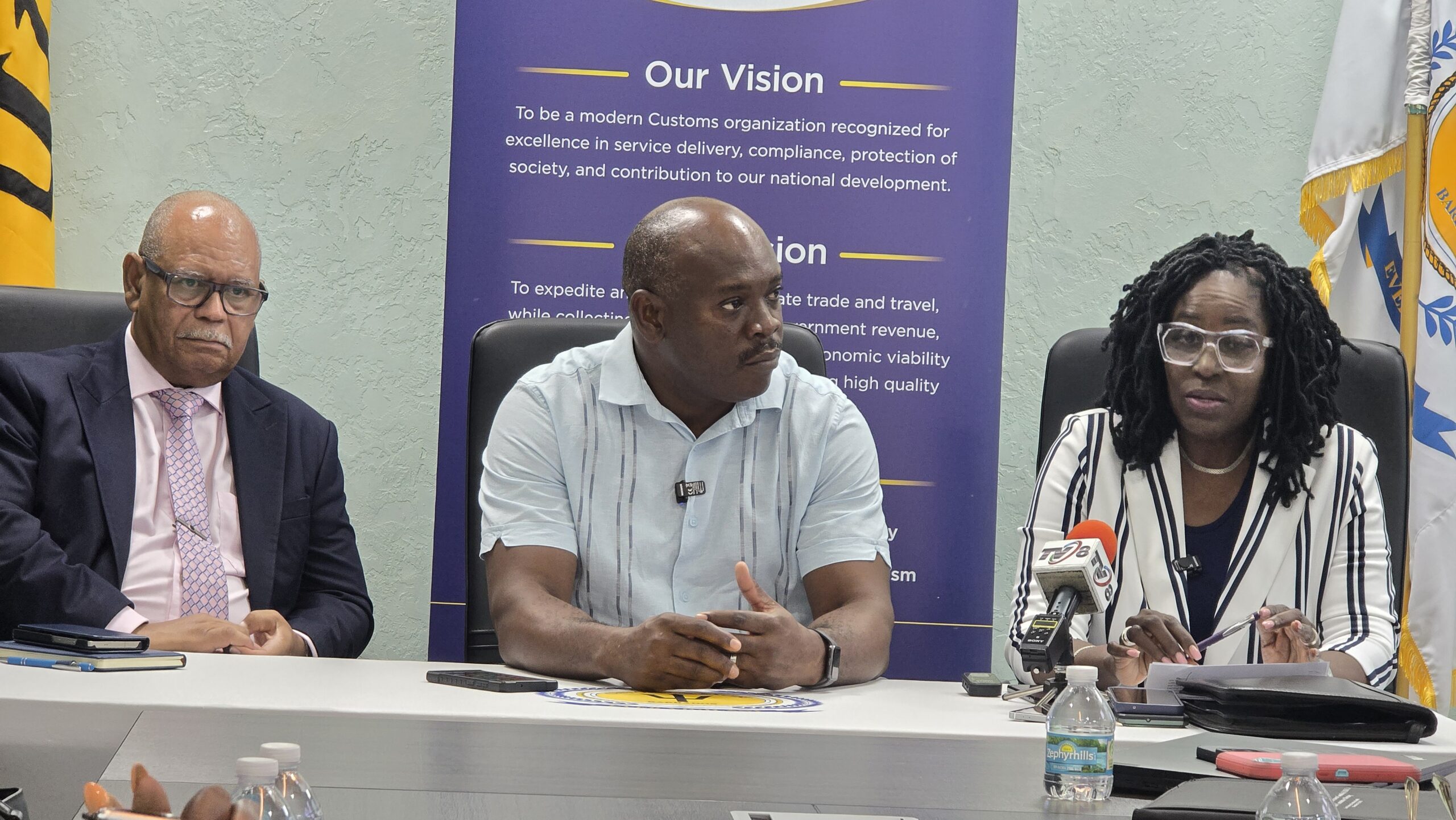
During a press conference marking the 121st anniversary of Barbados’ Customs and Excise Department, Minister of Finance Ryan Straughn has issued a stark warning to local businesses against submitting fraudulent or inaccurate invoices, outlining the far-reaching harms that non-compliance brings to the island nation’s economy and global standing.
Straughn opened his remarks by acknowledging longstanding challenges the Customs department faces in verifying invoice accuracy to collect full, lawful duties and taxes. He emphasized that under-invoicing and misreporting create two interconnected harms: it slashes the government’s overall revenue intake, and it creates an unlevel competitive playing field for honest businesses that follow regulatory rules. “When some operators cut corners by hiding accurate transaction details, they gain an illegal cost advantage over competitors that play by the rules,” Straughn explained. “A fair market requires all actors to contribute the same required duties and taxes to the public system.”
The warning comes as Barbados prepares for a 2027 review by the Financial Action Task Force (FATF), the global standard-setting body for anti-money laundering and counter-terrorist financing rules. Straughn stressed that resolving trade-based compliance gaps is critical to keeping Barbados off of international watchlists that carry damaging economic and reputational consequences. “No gray list, no black list, no watch list of any kind – our goal is to stay off all of them,” he said. The minister announced that the government will ramp up outreach to business stakeholders in coming months to clarify compliance requirements and the stakes of non-compliance for all segments of the public, from small enterprises to individual importers.
Straughn also highlighted the central role the Customs and Excise Department plays in funding core public services, noting that the agency collects approximately 20% of the Barbadian government’s total annual revenue. That funding supports the country’s free public education system, robust universal public health infrastructure that prevents catastrophic medical debt for citizens, and targeted social safety net programs that support vulnerable communities across the island. “Every dollar of lawful revenue Customs collects directly translates to better services and support for all Barbadians,” he added.
Outlining the three core compliance risks the department faces, Straughn explained that non-compliance typically falls into three categories: submission of fraudulent valuation information for imported goods, misclassification of items under tariff codes to secure lower duty rates, and delayed or incomplete upfront disclosure that overburdens the department’s post-clearance audit operations. He added that intentional mislabeling also poses severe risks to national security and public health, pointing to examples of illicit controlled substances being smuggled into the country mislabeled as legitimate consumer goods such as vitamins.
Newly appointed Comptroller of Customs Lynette Padmore also raised concerns about misuse of government-issued import concessions, which are designed to support targeted sectors including manufacturing, tourism investment, and green economy initiatives. Padmore reported that the department has uncovered repeated cases of importers securing concessions for raw materials or manufacturing equipment, only to divert or sell the items for unauthorized uses. “When the government provides financial concessions to support business growth, we expect recipients to uphold their end of the agreement by adhering to the terms of that support,” she said.
Straughn confirmed that concession volumes have risen sharply in the years following the COVID-19 pandemic, driven largely by tourism infrastructure investment enabled by the Tourism Development Act and rising global construction costs that have increased the total value of concession-eligible imports. He also noted that one of the largest recent concession programs has been incentives for electric and hybrid vehicle imports, launched four years ago to advance the government’s goal of decarbonizing Barbados’ national vehicle fleet. The policy has proven successful: the government’s own transport fleet is now nearly 100% electric, and private adoption has grown dramatically. Straughn announced that the incentive program will end soon, as the government transitions back to standard import rules.
Acknowledging that the Customs department faces persistent staffing shortages that prevent daily, widespread inspections of all import operations, Straughn emphasized that voluntary compliance and mutual trust are foundational to the agency’s work. To close compliance gaps, the government is developing digital inventory tracking systems to monitor concession-eligible goods across the economy, and is partnering with key industry groups including the Barbados Chamber of Commerce, Small Business Association, and Manufacturers Association to spread awareness of compliance standards and encourage peer accountability among business owners.