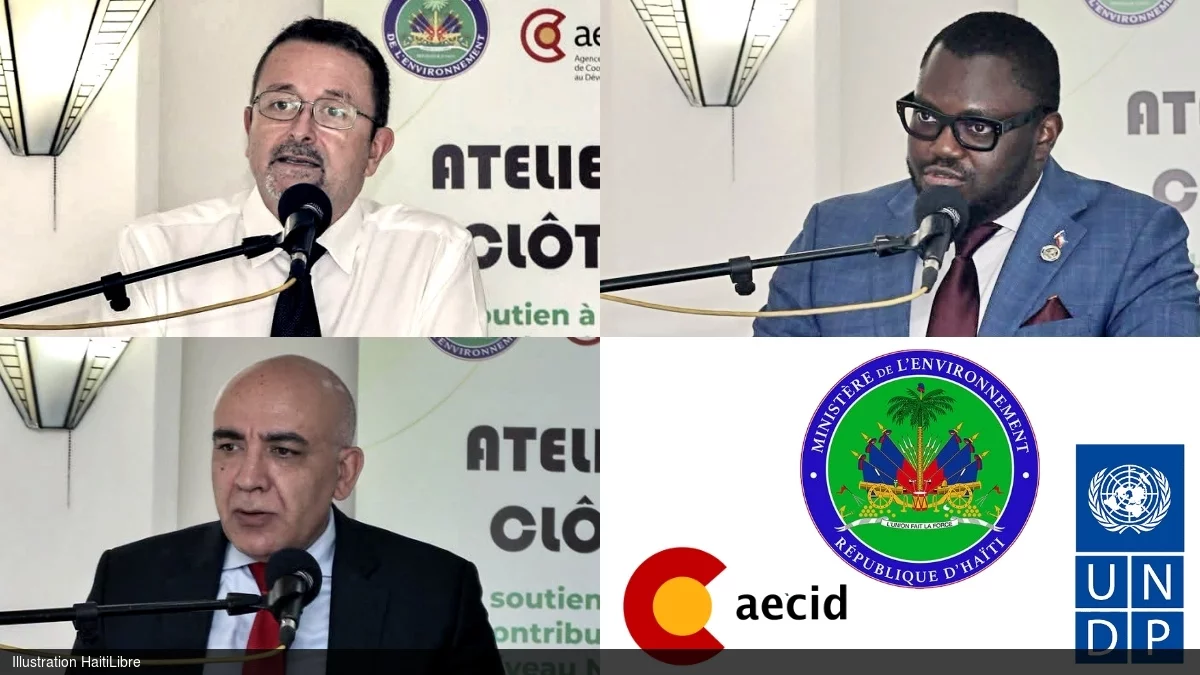
The stark contradiction at the heart of global climate inequality has been laid bare in Haiti, where a nation contributing almost nothing to global greenhouse gas emissions faces some of the deadliest consequences of the climate crisis. Speaking at an August 11 closing workshop in Port-au-Prince focused on advancing Haiti’s national climate commitments, Xavier Michon, Resident Representative of the United Nations Development Programme (UNDP) in Haiti, spelled out the full scale of the climate injustice the Caribbean nation confronts. With Haiti responsible for just 0.02% of the world’s total historical greenhouse gas emissions, its outsized exposure to climate breakdown stands as one of the most glaring examples of global climate inequity today.
While Haiti’s contribution to global warming remains negligible by any global measure, the impacts of the climate crisis are already accelerating and devastating across the country. The nation now faces increasingly powerful and destructive hurricanes, more frequent extreme flooding, prolonged crippling droughts, widespread agricultural losses that threaten food security, and billions in cumulative economic damage that has derailed long-term development efforts.
Against this backdrop, investing in proactive climate disaster prevention is not an optional luxury for Haiti, but an urgent strategic priority, Michon argued. He reminded attendees of the proven cost-benefit of early action: every one dollar invested in risk reduction and prevention can avoid up to seven dollars in post-disaster recovery and economic losses, a ratio that makes proactive climate action one of the most impactful investments for vulnerable nations.
For the past 18 months, Haiti’s Ministry of the Environment, UNDP, and the Spanish Agency for International Development Cooperation (AECID) have collaborated on a targeted initiative to support Haiti in delivering on its existing Nationally Determined Contribution (NDC) — the national climate action plan countries submit under the Paris Agreement. Beyond on-the-ground climate activities, the partnership focused on strengthening national institutional capacity, improving climate governance frameworks, and building an inclusive dialogue platform that brings together central government ministries, local government authorities, civil society organizations, private sector stakeholders, and international technical and financial partners.
Through a series of national stakeholder consultations, targeted technical working workshops, and the completion of eight key strategic policy deliverables, the project has laid a more solid foundation for climate action that is more coherent, better coordinated across government and non-government actors, and far more effective in delivering tangible results on the ground.
Marco Antonio Peñín Toledano, Spanish Ambassador to Haiti, emphasized that the lasting legacy of international climate support projects extends far beyond the initial funding mobilized. “The true legacy of a project lies not only in the funding mobilized, but also in the skills transferred, the institutions strengthened, and the partnerships that endure,” he noted during the workshop.
Valéry Fils-Aimé, Haiti’s Minister of the Environment, called for global and national actors to turn formal climate commitments into tangible, on-the-ground results for Haitian communities. As Haiti begins work on developing its third iteration of national climate commitments, NDC 3.0, he stressed that stronger national ownership of climate action is critical to turning climate policy into a core driver of inclusive, long-term sustainable development for the country.
Beyond the formal assessment of the 18-month project, the Port-au-Prince workshop brought a pressing global reality into sharp focus: for the world’s most climate-vulnerable nations, climate justice requires more than just global recognition of their disproportionate vulnerability. It demands sustained investment in capacity building, institutional strengthening, and proactive risk reduction that empowers these nations to anticipate climate impacts, adapt to irreversible changes, and act before disasters strike — rather than scrambling to respond after catastrophe unfolds.