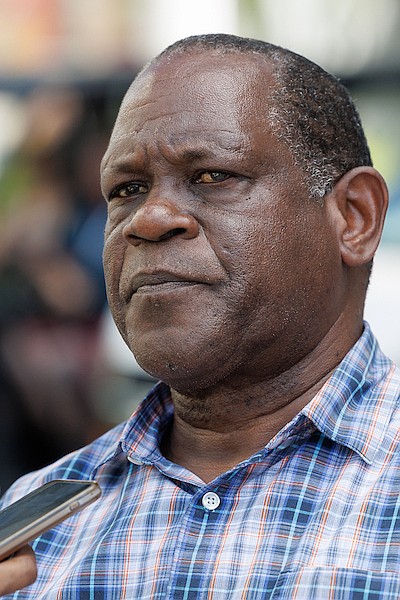
A months-long simmering conflict over ground transportation operations at the Bahamas’ Lynden Pindling International Airport (LPIA) has reached a boiling point, with the Bahamas Taxi Cab Union (BTCU) publicly stating it has lost all confidence in the Davis administration’s ability to resolve the dispute and warning that industrial action is now imminent.
The core of the conflict centers on long-running disagreements between union-affiliated taxi drivers and unregulated or livery vehicle operators over access to the high-traffic arrivals door pick-up zone at LPIA. According to BTCU President Tyrone Butler, union leaders reached a tentative two-week trial agreement with senior tourism and transport government officials last Wednesday, which would have restricted exclusive access to the arrivals door to station taxi drivers only, while allowing just three livery vehicles to wait in the commercial lane behind the taxi queue. All prearranged passenger pick-ups would remain permitted at the existing zone near rental car facilities, and Road Traffic officials were scheduled to be on-site to enforce the arrangement starting Monday, August 10.
But that agreed framework never went into effect, Butler claims. Livery drivers were never notified of the new terms, leading to a chaotic disruption at the airport on Monday when unknowing operators attempted to block the commercial lane reserved for taxi drivers. Nassau Airport Development Company called local police to respond to the standoff, which Butler says was incorrectly framed in early accounts as a direct confrontation between taxi and livery drivers. Obie Ferguson KC, president of the Bahamas Trade Union Congress (TUC), confirmed Butler’s account of the agreed deal, noting he was present at the negotiating meeting and left with clear assurances the pilot arrangement would launch Monday morning.
The BTCU circulated an email Butler sent to Transport Minister Leon Lundy on the prior Sunday, which detailed all terms of the tentative agreement, but the union says it never received any official government confirmation that the arrangement would move forward. In sharp criticism of the Davis administration, Butler accused Minister Lundy of openly favoring livery operators, acting as their de facto spokesman and bargaining agent rather than serving as a neutral broker for all stakeholders. He noted the union has met with Lundy seven times since the minister took office, and three times with Tourism Minister Glenys Hanna Martin, with zero progress on resolving any of the union’s outstanding demands.
Butler went so far as to call on Prime Minister Philip “Brave” Davis to remove Lundy from his post, arguing that a new minister is needed to deliver the meaningful reform the country’s transportation sector requires. The BTCU’s position rests on its interpretation of existing Bahamian transportation law, which it says reserves the LPIA arrivals door taxi stand exclusively for regulated taxi drivers and prohibits livery operators from soliciting walk-up passengers in that zone. Butler emphasized the union does not oppose legal prearranged luxury livery services, but argues that unregulated solicitation at the arrivals gate allows livery drivers to undercut fixed regulated taxi fares, creating an unfair playing field. He also noted the union would support formal legislative changes to properly license and regulate livery services, pointing out that the popular term “black car service” has no legal standing under current Bahamian law.
The dispute is not limited to LPIA: Butler added that the union has unaddressed concerns about unapproved livery operations at the Atlantis resort’s Royal Towers and The Cove, and that the resort will be included in any upcoming industrial action after failing to respond to a union inquiry sent months ago. When asked about the potential negative impact of industrial action on the Bahamas’ critical tourism sector, Butler placed full responsibility on the Davis administration, saying government leaders should have prioritized preventing disruption to tourist experiences long before the conflict reached this stage.
Ferguson has pledged full solidarity and support from the TUC for any collective action the BTCU approves, and has called on all taxi drivers – including non-union operators – to stand with the BTCU and follow Butler’s leadership if industrial action is called. “When the president says go, then everybody got to go,” Ferguson said, urging non-members to join the collective action to secure a fair resolution. Butler declined to share details on what form industrial action could take or when it would begin, saying the union will first hold consultations with its membership, supporters and TUC leadership before moving forward.