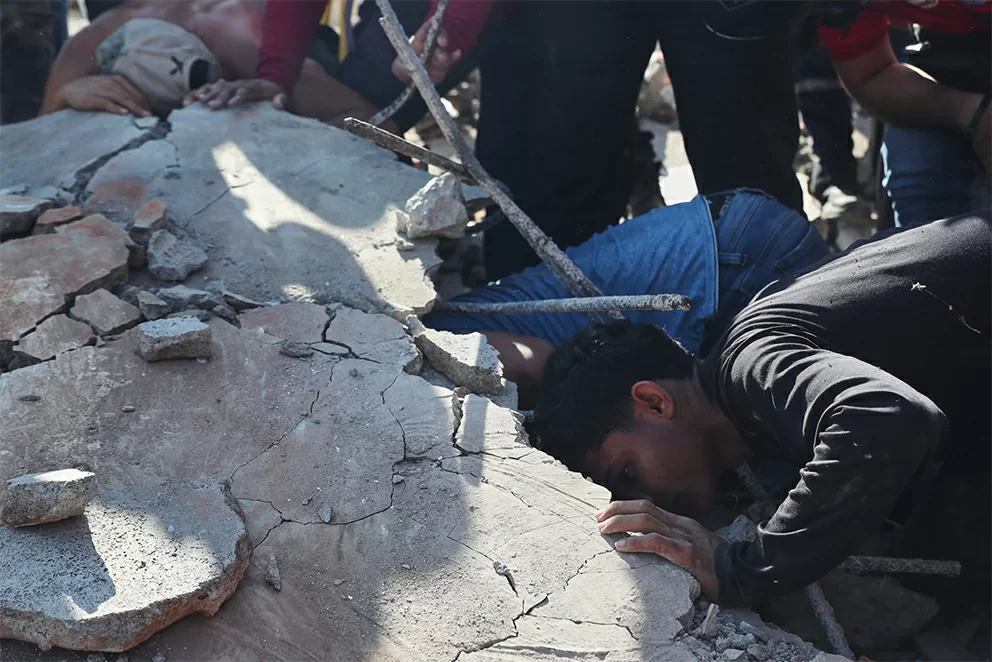
On Monday, August 10, 2026, a powerful 7.4-magnitude earthquake rocked western Colombia, leaving at least 111 people dead and causing severe damage to hundreds of structures across the affected region. The newly inaugurated Colombian President Abelardo de la Espriella quickly declared a state of emergency to speed up rescue operations and recovery work, announcing he would personally visit the disaster zone, which is concentrated largely around the rural Chocó region.
According to both the U.S. Geological Survey and Colombia’s national seismological service, the quake’s epicenter was located in San José del Palmar, a community of roughly 4,800 residents in Chocó Province, approximately 400 kilometers west of the capital Bogotá. The tremor originated at a depth of 107 kilometers, and shaking was felt as far as neighboring Ecuador and Panama, though those countries reported only minimal damage.
Two of Colombia’s departments, Risaralda and Valle del Cauca, suffered the worst impacts. In Risaralda, home to the major city of Pereira, at least 40 people lost their lives. Valle del Cauca, which includes the large urban center of Cali, recorded 27 fatalities, three of whom were children. Nine deaths were confirmed in Chocó itself, two in Caldas, and one in Antioquia, alongside dozens of injuries across all affected areas.
Major cities including Pereira, Quibdó, Cali and Manizales all reported extensive structural damage. In Pereira, the ceiling of the local airport collapsed, triggering panic among traveling passengers. Pereira Mayor Mauricio Salazar confirmed at least 18 local deaths and noted that many people remained trapped beneath collapsed buildings. In Manizales, one tower of the city’s iconic neo-Gothic cathedral crumbled, prompting Mayor Jorge Eduardo Rojas to urge all residents to remain outdoors amid ongoing fears of aftershocks.
Colombia’s Geological Institute confirmed this earthquake is the strongest to hit the country in the past 10 years. Two aftershocks, measuring magnitude 2.8 and 4.8 respectively, followed the initial major tremor. Flight operations were suspended at multiple regional airports across the impacted zone, including those in Manizales, Quibdó, Armenia, Cartago, Buenaventura and Pereira.
The Pacific coastal region of Colombia where the quake struck sits along the so-called Pacific Ring of Fire, a horseshoe-shaped zone circling the Pacific Ocean where roughly 90 percent of the world’s earthquakes occur. Compounding challenges for rescue teams, Chocó is one of Colombia’s poorest and most remote regions, largely covered in dense jungle and only accessible by boat or small plane, a geographic barrier that complicates delivery of emergency aid.
This disaster comes just weeks after two devastating earthquakes hit neighboring Venezuela in late June that killed more than 5,000 people, deepening the sense of shared tragedy for communities across the Andean region. Notably, President de la Espriella, who was only sworn into office last weekend, has taken personal command of the national disaster response. In an address to the nation, he reassured affected residents that the Colombian state is taking urgent action, saying, “You are not alone in this.”
International offers of support and condolences began rolling in quickly from across the globe. Mexico, Brazil, Ecuador, El Salvador and the United States have all extended sympathy and pledged emergency assistance. U.S. Secretary of State Marco Rubio wrote on social media that the U.S. government is monitoring the situation closely and stands ready to support Colombia’s response efforts. The United Nations also confirmed it is prepared to deploy aid and technical support to the disaster zone.
For residents of western Colombia, the quake was a terrifying, unprecedented experience. Jorge Moncayo, a taxi driver based in Cali, described the experience: “My entire house was shaking. I have never felt an earthquake this strong in my life. We thank God we are alive.”
While minor seismic activity is relatively common across Colombia, major quakes above magnitude 6.0 are rare. The deadliest seismic event in recent Colombian history was a 6.2-magnitude quake near Armenia in 1999 that killed more than 1,100 people. Authorities have warned residents that additional aftershocks remain possible over the coming days. Currently, emergency response efforts are focused on three core priorities: searching for trapped survivors, providing urgent medical care to the injured, and repairing critical damaged infrastructure in the hardest-hit communities.