Nearly two months after the passing of Barbadian cricketing icon Sir Garfield Sobers, the Bayland community on the island is reacting to the government’s decision to rename Bay Primary School in his honor — while reigniting long-running calls to rebrand the street where he spent his childhood as well.
The question of how to properly memorialize one of the most legendary figures in global cricket has sparked widespread public debate across Barbados ever since Sir Garfield died on July 17. For decades, residents of Walcott Avenue, the neighborhood where Sir Garfield grew up, have pushed for the street to be renamed in his honor, a request that has never been acted on by officials. Now, after Prime Minister’s office confirmed the primary school renaming, most community members say the move is a fitting tribute to the national hero, but many say it is only the first step.
The history of Bay Primary School is deeply intertwined with Sir Garfield’s early life. The facility relocated to its current Bayville site in 1958, replacing Bay Street Boys’ School — the educational institution Sir Garfield attended as a child. The original Bay Street Boys’ building, located steps from Barbados’ Government Headquarters, was repurposed to house the Government Information Service the same year the move was completed. Today, the school’s playing field occupies what was once Bay Pasture, the open green space where a young Sir Garfield first developed his world-famous cricket skills.
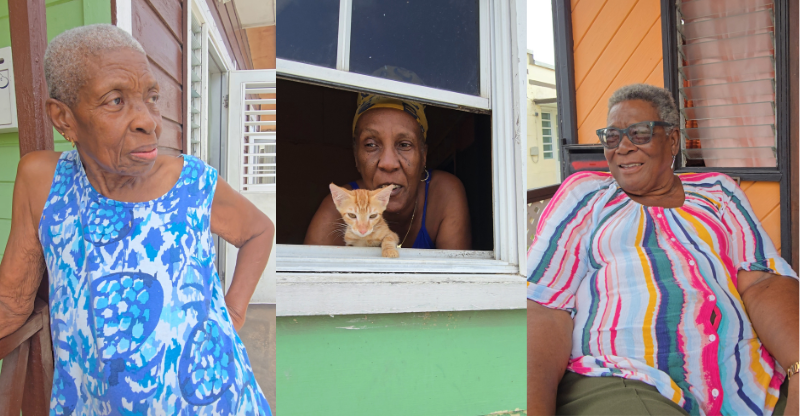
Just days ahead of the official renaming announcement, government representatives visited the Bayland community to collect resident signatures in support of the change, one parent of a current Bay Primary student confirmed, adding he had personally signed the petition. Longtime Walcott Avenue resident Udine Miller, who lived next door to Sir Garfield for decades, said she was thrilled by the school announcement, but still holds out hope that the avenue will one day carry his name as well.
“They didn’t rename the avenue, but they can do that,” Miller told reporters. She also shared that after Sir Garfield’s death, authorities repaired the street sign marking the small lane leading to his former home and filled potholes along Walcott Avenue ahead of his funeral service.
Fellow Walcott Avenue resident Angela Callender echoed Miller’s perspective, saying she fully supports the school renaming while reiterating that the street renaming is long overdue. “I feel it’s wonderful; it’s a great thing to do. It’s the school he went to, and it’s a remembrance of him, which is a great thing. He was a very nice man,” Callender said, recalling personal interactions with Sir Garfield from her own childhood. Another local resident, Maureen, also backed the dual push for renaming, noting that even if just the school is renamed, that would be a meaningful honor.
Not every member of the community supports the change, however. One Bay Primary alumnus argued the school’s original name should remain unchanged, pointing out that Sir Garfield never actually attended the modern Bay Primary facility that now stands on the pasture. He questioned why officials chose this school over other institutions linked to Sir Garfield, asking, “Why they don’t change Harrison College then, why they don’t change Harvard and Oxford?”
Most other residents pushed back against that criticism, noting that renaming public facilities to honor prominent Barbadians is a longstanding local tradition, and that Sir Garfield’s status as a national treasure makes the tribute more than deserved. Local business owner Irvin said he supports the school renaming, but shared disappointment that the lane where Sir Garfield lived has not also been renamed, pointing out that a similar lane already bears the name of local music icon Rihanna. Irvin added that the poor condition of Walcott Avenue remains an ongoing point of frustration, noting that even as recently as last year, international cricket fans and players from across the globe travel to Bayland to visit the place where Sir Garfield grew up. “Pakistan, India, all sorts of people come there asking where he lived ‘cause his brother is still there,” Irvin said. “I sorry that it didn’t happen before, but that is life. I am very proud.”
An elderly resident from a nearby lane welcomed the renaming but added that the government should pair the tribute with increased investment in youth cricket development at primary and secondary schools across the country. “That would be good to develop their skills for the game, introducing it to the children at a young age so they can spur their interest and they will eventually go on to play in the league and then further on,” he explained. “That’s the best way to develop it: introduce it at the school level. Those who like it will excel; those who don’t like it will go on to pick up some other discipline, but give everybody that opportunity, introduce it at the level.”
Skeeta, a Bayland resident who lives near the school, said the renaming has been a topic of community conversation for years. “It’s a good thing cause he grew up in the area and most people that live in the area know about him. It’s a real good honour to him. I went to school here too,” he said. Elderly resident Jeffrey said renaming Walcott Avenue would be a perfect additional tribute to the cricketing great.
Francelia Waithe, a Bayland resident who lives steps from Bay Pasture where Sir Garfield played as a child, said she fully backs the government’s decision. “It’s not a bad thing, cause he lived out here most of his young days and he did a lot for cricket,” she said. Jacqueline Straker, who lives at the upper end of Walcott Avenue, said the announcement has made the entire community proud. “All my children went [to Bay Primary], all five went there, and one grand went there,” she said. “I thought they would have named the gap, but they put it back as Walcott Avenue.”