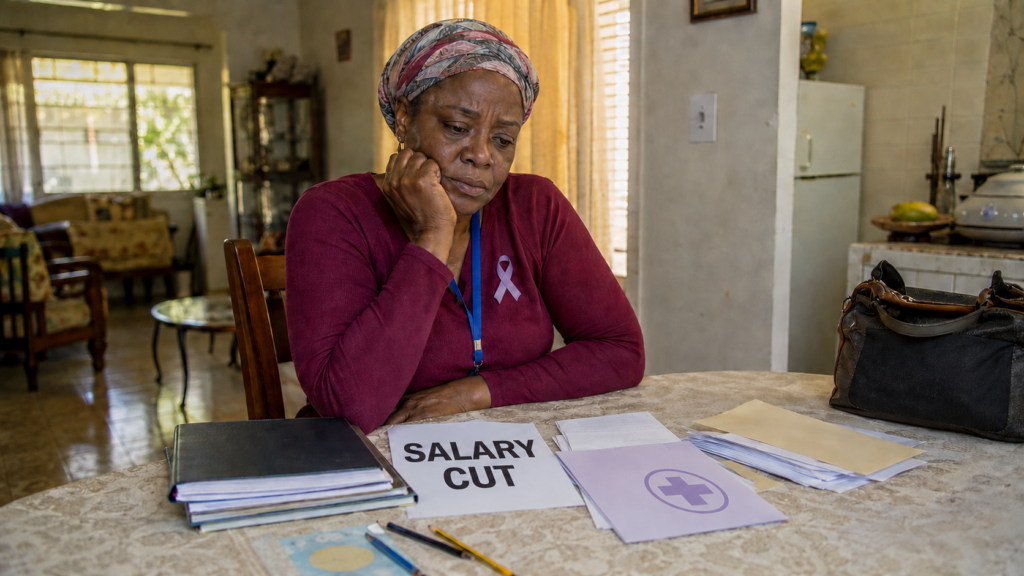
For any teacher diagnosed with a life-threatening illness like cancer, the struggle is not confined to hospital wards and treatment rooms. Beyond fighting for their health, they must also navigate overwhelming pressures to protect their dignity, retain financial stability, and cling to hope for the future. Tragically, hundreds of dedicated educators across the country are being forced to take on a second, entirely unnecessary battle: against unfair government policies that slash their salaries while they pursue life-saving medical care.
What makes this situation even more alarming is that policymakers have long been aware of a critical gap in local healthcare: many specialized cancer treatments are simply not available within the country’s borders. As a result, sick teachers are often required to travel abroad to access urgent chemotherapy, radiation therapy, specialized surgery, or consultations with leading oncology specialists. These trips are not unplanned leisure travel or discretionary choices—they are matters of life and death, taken only out of absolute necessity.
Even with this well-documented reality in mind, educators who have spent years, and often decades, nurturing the nation’s children continue to see their incomes cut mid-treatment. The impact of this policy stretches far beyond simple financial inconvenience: for many families, it is catastrophic, leaving them uncertain how they will cover mortgage payments, put food on the table, or pay for the costly international travel required for care. Morally, this policy is indefensible: no one fighting for their life should have to shoulder the extra burden of financial ruin on top of their illness.
Teachers have long poured their energy and resources into the country’s future, going far beyond their formal job descriptions to support students. They comfort distressed children, work unpaid overtime after the school bell rings, frequently buy basic classroom supplies with their own money, and stay committed to their work even amid low pay and constant systemic challenges. When illness strikes, these public servants deserve to know their government will stand with them—not add to their suffering.
Public institutions are meant to embody core values of fairness, compassion, and basic humanity. Current policies that penalize teachers with salary cuts for seeking medically necessary care for catastrophic illnesses demand immediate review and revision. A responsible, compassionate government does not punish its employees for falling seriously ill. Instead, it guarantees they have the stability and support they need to focus on recovery, without the added weight of financial insecurity hanging over them.
This issue extends far beyond the individual teachers currently affected. It is a test of our society’s values: how do we treat people who have dedicated their entire working lives to serving our communities? If we fail to support teachers during the darkest period of their lives, what message does that send to every public servant who shows up to work faithfully every day? It is also not limited to cancer patients: educators battling all forms of life-threatening illness are currently impacted by these unfair cuts.
The relevant government ministry now has a clear opportunity to correct this injustice. Leaders should open dialogue with teacher union representatives, conduct a full top-to-bottom review of harmful existing policies, and implement new protections that shield educators facing catastrophic illness. Compassion is not a sign of weakness—it is the defining mark of responsible, ethical leadership.
Our teachers have spent their careers caring for our children. Now it is time for leaders in power to show up for these educators when they need support most. No educator fighting for their life against cancer or any other serious illness should also have to fight to keep the full salary they earned through decades of dedicated public service.