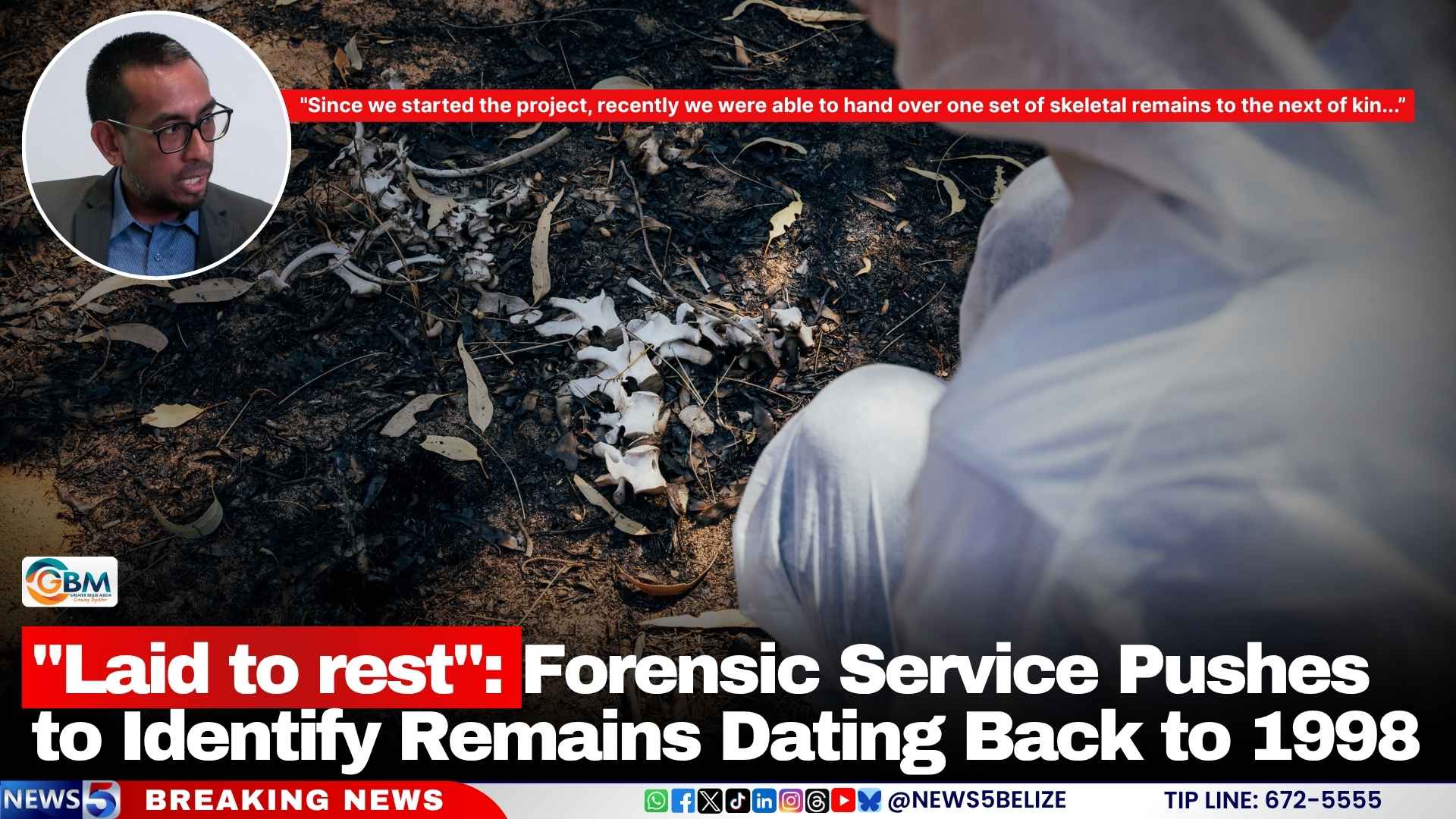
More than 25 years after the oldest set of unidentified human skeletal remains entered its custody, Belize’s National Forensic Science Service (NFSS) is moving forward with a dedicated initiative to give names to the unknown dead and bring closure to families that have waited decades for answers. As of August 2026, the agency has successfully completed its first major milestone of the project: one set of remains has been formally returned to the family of the deceased for a proper burial.
The initiative, which launched to clear NFSS’s backlog of unidentifed remains held in storage, targets approximately 20 sets of skeletal remains that have been in the agency’s possession, with some of the cases stretching all the way back to 1998. To connect remains to missing people, the NFSS is leveraging a multi-pronged approach that combines modern DNA testing, detailed archival record research, and intentional public outreach to connect with potential family members.
In an official statement, NFSS Executive Director Gian Cho confirmed the progress of the ongoing work. “Since we launched the project, we have successfully handed over one set of skeletal remains to the next of kin via our local representative,” Cho explained. He added that the agency has already sent DNA samples from three additional active cases to overseas testing facilities over the past few months, and results are expected to arrive within the next 60 days. If those tests are successful, three more families will soon be able to lay their missing loved ones to rest.
Cho clarified that the current project is limited exclusively to remains that are already in NFSS custody, and does not extend to open missing person cases where no remains have yet been recovered. For the agency, the work is rooted in a core commitment to human dignity: “Every person has the right to be recognized, and to be treated with respect even after death. Equally importantly, their family members have the right to be reunited with their loved one’s remains so they can give them a proper burial. That is our ultimate priority,” Cho emphasized.
To continue advancing the identification work, the NFSS is issuing a public call to action: any Belizean family that has a missing loved one matching the profile of the unidentified remains in the agency’s custody is urged to come forward to provide information and DNA samples. This community participation is a critical piece of the project, as it provides the genetic matches needed to confirm identities and bring the decades-long wait for closure to an end.