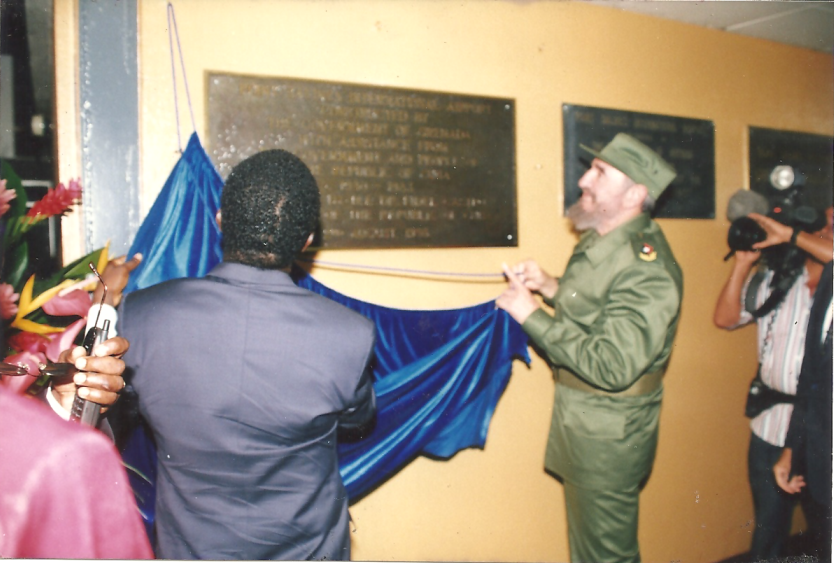
On August 2, 1998, at the tail end of a broader regional tour across the Caribbean, then-Cuban Commander-in-Chief Fidel Castro touched down on Grenadian soil at what was then Point Salines International Airport — now renamed Maurice Bishop International Airport. Barely minutes after his arrival, before leaving the airfield tarmac, Castro carried out the first symbolic act of his visit: unveiling a memorial plaque honoring the 24 Cuban citizens who lost their lives during the United States’ 1983 invasion of Grenada.
This long-awaited visit came at a pivotal turning point for bilateral relations between Cuba and Grenada. More than a decade and a half had passed since the 1983 invasion plunged the two countries into a period of strained estrangement. By the late 1990s, both governments had made active commitments to rebuilding mutual trust and unlocking new avenues for cross-border collaboration. Castro’s in-person presence on the island carried far more weight than a standard diplomatic trip: it served as a public declaration of both nations’ shared commitment to revitalizing their partnership after years of disconnectedness.
The following day, addressing a gathered crowd at the Tanteen Recreation Ground, Castro delivered a wide-ranging address touching on centuries of colonial exploitation, the brutal legacy of the transatlantic slave trade, and the ongoing economic and political challenges that small developing nations across the Global South face under the growing influence of powerful transnational corporations. The revolutionary leader pushed back against dominant global narratives that measure national progress solely through GDP and economic output. Instead, he argued that a nation’s true wealth is rooted in its human capital: the ability of a state to educate, upskill, and nurture the talent of its people to protect and sustain long-term sovereignty. For small island states like those scattered across the Caribbean, he emphasized, development must be measured by the strength and readiness of their citizens, not just financial metrics.
The 1998 visit marked a critical moment of political reaffirmation for both sides. Working alongside then-Grenadian Prime Minister Keith Mitchell — a leader widely credited with spearheading the push to restore full diplomatic ties between the two countries — Castro underscored the urgent need to relaunch bilateral cooperation that had stagnated in the 15 years following the U.S. invasion. The high-profile visit opened an entirely new chapter in Cuba-Grenada relations, one that extended far beyond formal diplomatic protocol.
In the decades since, the impact of Castro’s trip has endured across Grenada’s political and social landscape. It proved that even after nearly 15 years of estrangement, the two nations could rebuild their connection and design new, mutually beneficial frameworks for cooperation across key sectors. The visit reestablished formal channels of dialogue and paved the way for expanded partnerships in high-priority areas including public health, primary and higher education, and technical skills training.
Today, 28 years after that landmark diplomatic moment, Castro’s 1998 visit to Grenada remains a powerful symbol of solidarity between small Caribbean and Latin American nations. It is more than just a historical footnote: it stands as a enduring reference point for regional cooperation as Caribbean nations confront the interconnected economic, climate, and political challenges of the 21st century.