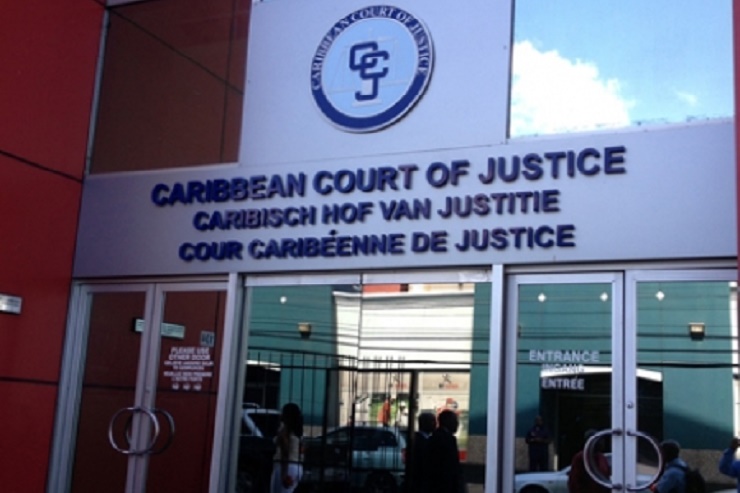
The Caribbean Court of Justice (CCJ), Barbados’ highest final appellate body, has delivered a groundbreaking ruling that raises the legal threshold for custodial sentences in minor cannabis possession and trafficking cases, overturning a lower court’s three-month jail term and cementing a new precedent prioritizing non-custodial penalties for low-quantity cannabis offences.
Tuesday’s unanimous decision centered on the appeal of Danny Lamar Husbands, a man convicted of unlawful trafficking of a small amount of cannabis. After pleading guilty to the charge, Husbands was originally sentenced to three months in prison by a lower court magistrate, who justified the custodial penalty by pointing to Husbands’ four prior convictions, which included previous offenses for cannabis possession and cultivation. The magistrate argued that earlier fines had failed to deter Husbands and that his latest offense represented an escalation in criminal activity, making jail the appropriate punishment. Husbands first appealed the ruling to Barbados’ Court of Appeal, which upheld the original sentence, leaving him to turn to the CCJ, which granted him special leave to challenge the decision.
In its review, the CCJ examined multiple key legal questions related to the sentencing, focusing heavily on compliance with Barbados’ 2001 Penal System Reform Act (PSR). The tribunal was tasked with determining whether the Court of Appeal had erred in upholding the custodial sentence, whether lower courts incorrectly used Husbands’ prior convictions to increase the perceived seriousness of the current offense, and whether appellate judges failed to follow mandatory procedural requirements for sentencing.
After a comprehensive review of the PSR Act’s text, legislative intent, and existing national and international sentencing jurisprudence, the CCJ reached a clear conclusion: both the lower court and the Court of Appeal had misapplied the law. The landmark ruling clarified that the PSR Act, which was passed as part of a broader national initiative to expand non-custodial sentencing alternatives, explicitly sets a high bar for imprisonment. Section 35(2) of the act mandates that a custodial sentence may only be imposed when an offense is so serious that no other penalty can be justified, a requirement that neither lower court properly addressed. Instead of conducting the mandated threshold analysis, both courts centered their reasoning on deterrence and Husbands’ prior record, a move that contradicts core provisions of the PSR.
The CCJ further clarified that Section 40(1) of the PSR Act explicitly prohibits courts from increasing the seriousness rating of a current offense solely based on an offender’s prior criminal record. While prior convictions can be considered to identify relevant aggravating factors directly tied to the current offense, they cannot be used to automatically justify a harsher custodial sentence where one would not otherwise be warranted. The ruling also noted that the Court of Appeal violated Section 37(4) of the PSR Act, which requires appellate courts hearing appeals against custodial sentences for hybrid offenses to obtain and review a pre-sentence report if one was not completed in the original trial. No such report was obtained for Husbands’ appeal, marking a second critical procedural error.
In its final order, the CCJ quashed the original three-month custodial sentence and replaced it with a six-month good behavior bond, a non-custodial penalty. The ruling specifies that if Husbands fails to comply with the terms of the bond, he will be required to pay a fine of 675 Barbadian dollars within 14 days. The tribunal also acknowledged that Barbadian sentencing practice has long favored non-custodial sanctions for small-quantity cannabis offenses, with imprisonment in such cases remaining extremely rare. While it emphasized this existing trend, the court rejected calls to create a rigid inflexible rule requiring non-custodial sentences for all small-scale cannabis trafficking, stressing that sentencing must remain tailored to the specific circumstances of each individual case.
Husbands was represented in the appeal by Andrew Pilgrim SC and Martie Garnes. Deputy Director of Public Prosecutions Krystal Delaney appeared alongside acting Principal State Counsel Kevin Forde for the prosecution, while State Counsel Rico Yearwood served as amicus curiae (friend of the court) on behalf of Barbados’ Attorney General.