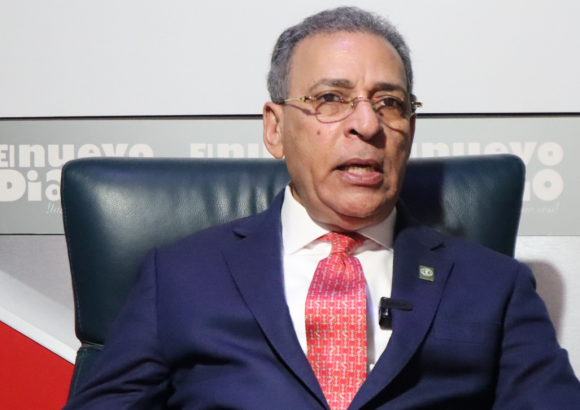
Leading Dominican geologist Osiris de León has launched a call for a comprehensive restructuring of the Dominican Republic’s national disaster readiness system, arguing that the current centralized model fails to deliver the rapid response needed to save lives during catastrophic events. Speaking on the popular current affairs program *Aquí Hablamos Claro*, de León laid out a clear alternative blueprint that prioritizes three core pillars: updated, localized land-use planning, granular seismic risk mapping, and decentralized regional emergency response units.
Under de León’s proposed framework, specialized multidisciplinary response teams would be permanently stationed across four key regions: the country’s eastern corridor, the broader Santo Domingo metropolitan area, the Cibao region in the north, and the northern Atlantic coastline. The geologist emphasized that the first minutes following a disaster are the most critical for rescuing survivors, and waiting for authorization from a single central leadership body creates dangerous delays that can turn avoidable fatalities into a tragedy. Disasters ranging from powerful earthquakes and destructive hurricanes to seasonal flooding and sudden building collapses require on-the-ground decision-making that only localized teams can provide, he argued.
A key component of de León’s proposal is a mandate for all local municipalities to adopt detailed geological risk maps tailored to their unique geographies. He highlighted that the broader Santo Domingo region alone hosts dozens of distinct soil types, each of which reacts very differently to seismic activity. One soil type may absorb seismic energy relatively well, while another can amplify shaking and increase the risk of structural collapse, even for a quake of moderate magnitude.
De León also issued a sharp rebuke of current permitting practices, where many construction projects are routinely approved without conducting thorough assessments of local seismic hazards. He warned that applying a one-size-fits-all national building code across geologically diverse regions with wildly varying soil conditions dramatically increases the country’s vulnerability to deadly earthquake damage in future events, calling the current approach a ticking time bomb that must be addressed before it is too late.