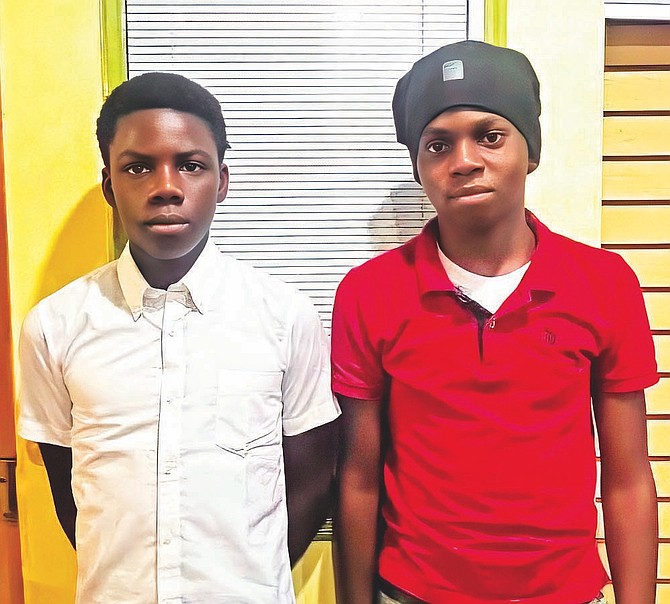
A shocking viral video capturing a bullying incident at CH Reeves has ended in an extraordinary show of forgiveness, bringing two feuding teenagers together in a shared summer youth employment program after a coordinated intervention by local advocacy groups, law enforcement, and both boys’ families.
The widely circulated clip, which spread rapidly across social media platforms in recent days, showed a 13-year-old student surrounded by a crowd of peers who pressured another teen to assault him. Rather than engaging in the confrontation, the targeted teen refused to fight and eventually fled the group. The footage sparked widespread public outrage, but it also spurred Khandi Gibson, founder and president of the Bahamas-based advocacy organization Families of All Murder Victims (FOAM), to step in before the conflict escalated into further harm.
“I was disturbed about the video, and I asked if anybody knew this young man’s parents to please have them reach out to me because I would like to personally get him ready for school,” Gibson explained in an interview. “We have other people who saw the video and didn’t do anything. But God just tell me, ‘Man, I have to step in. I can’t be seeing something like that and don’t intervene.’”
After members of the public shared contact information with Gibson, she connected with Genal Bodie, the targeted teen’s mother, on a Saturday night and met the entire family the very next morning. She offered Bodie’s son a spot in one of FOAM’s two annual summer youth programs: a skill-building summer camp with classes in math, English, arts and crafts, gardening, and educational field trips, or the “Our Community Matters” junior workforce program, which provides hands-on work experience for young people. The teen opted for the workforce placement.
Hours later, the father of the teen identified as the aggressor reached out to Gibson to seek a peaceful resolution. Gibson proposed a joint conflict-resolution meeting at the Grove Police Station, with senior officers agreeing to host and support the discussion. On the day of the meeting, something unexpected happened: the 13-year-old bullying victim asked Gibson to give his alleged aggressor a spot in the same workforce program he had just joined.
Gibson recalled the moment with awe: “The funniest thing about it is, the little boy who was actually getting bullied — and he still called him his friend — he said ‘Ms Gibson, you can’t give my friend a job where I work at FOAM too?’ I am saying to myself, this boy just [had someone try] fight him and he had to break off running and he asking for a job for him.”
Gibson granted the request, and both boys started work at FOAM’s headquarters the same day. Their daily tasks include answering incoming phone calls, greeting office visitors, and supporting other administrative and operational tasks. Through the program, both teens earn a weekly stipend and receive free daily lunch, in addition to building foundational professional skills.
Gibson says the pair have already put their prior conflict behind them. “You should see those two working together today. They’re like nothing ever happened,” she said.
The outcome offers a powerful lesson in the capacity of young people to extend forgiveness even in the wake of harm, Gibson noted, echoing a religious framing to emphasize the moment: “I said that’s why the Bible tells us, unless we become as these little ones, we can’t enter the kingdom of God, because little children are forgiving.”
Gibson extended public gratitude to the Grove Police Station’s senior leadership team, led by Chief Superintendent Christlyn Skippings, for their collaboration in facilitating the mediation. Moving forward, police plan to identify the other teens who appear in the viral video and organize a separate roundtable discussion with their families to address the incident and prevent future conflict.
Gibson says she hopes this community-centered intervention will serve as a replicable model for addressing youth conflict across the region, proving that early, collaborative action can stop disputes from escalating into serious violence. “Let’s start the trend somewhere,” she said.