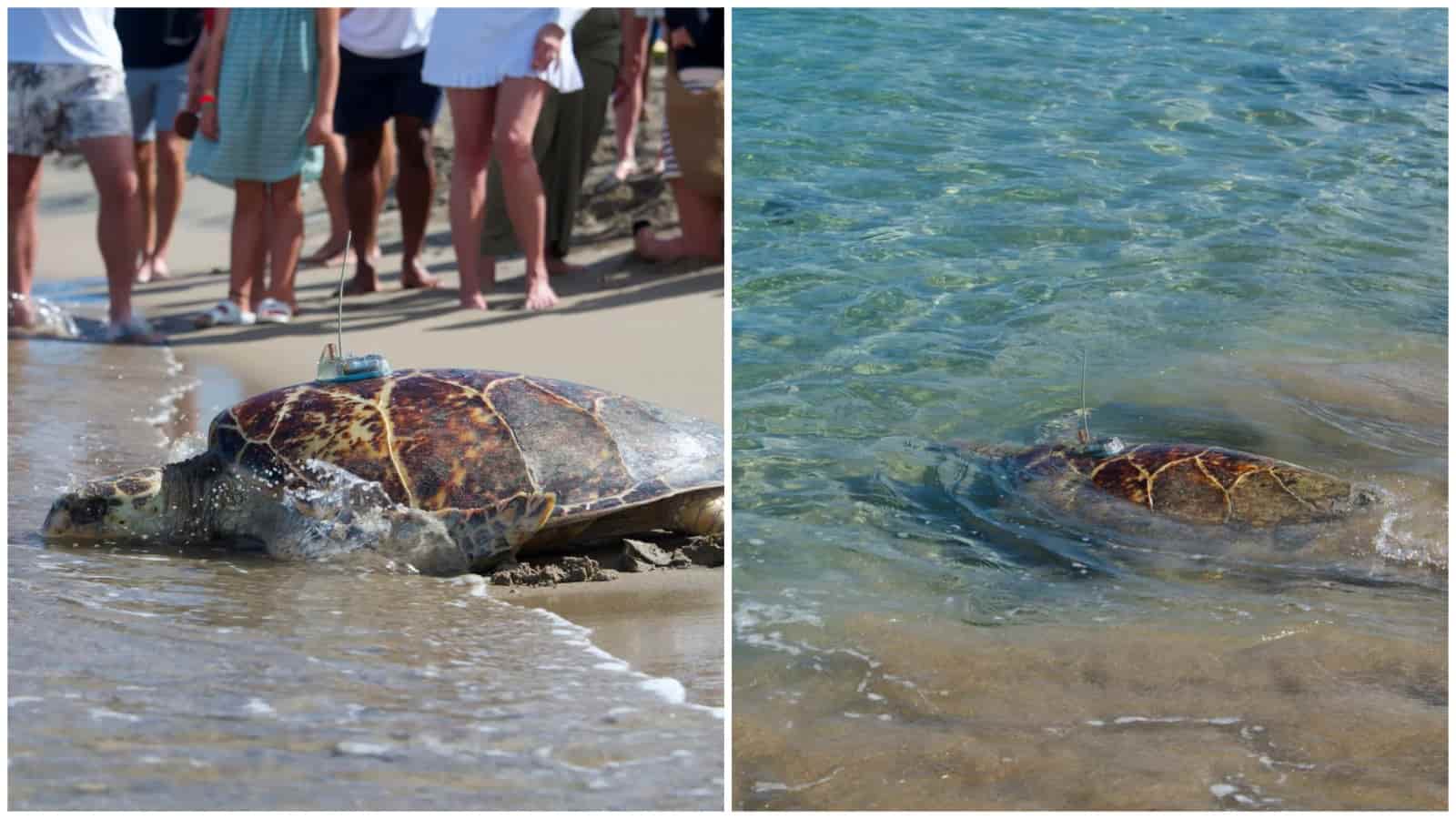
In a key step to advance marine conservation for one of the world’s most at-risk reptile species, researchers with the Sea Turtle Conservancy (STC) have outfitted an adult female hawksbill turtle with a satellite tracking tag following her nesting on Nevis’ Lovers Beach. Named Sandy by the conservation team, this critically endangered marine animal will have her post-nesting journey across the Caribbean monitored in real time by both scientists and interested members of the public.
Sandy joins the 2026 iteration of Tour de Turtles, STC’s flagship annual conservation program that leverages cutting-edge satellite telemetry to map the long-distance migratory patterns of sea turtles after they complete nesting cycles. Beyond generating critical scientific data, the initiative also works to build global public awareness of the growing array of threats pushing sea turtle species toward extinction.
This year, Sandy’s participation is sponsored by Four Seasons Resort Nevis, a partner that has collaborated with STC for 20 consecutive years to support turtle research, on-the-ground conservation action, and public education across the Caribbean region. The resort’s long-term commitment has already yielded meaningful progress, from protecting vulnerable nesting sites to expanding scientific understanding of how hawksbills move through the region’s waters.
Hawksbill sea turtles are officially classified as Critically Endangered on the International Union for Conservation of Nature (IUCN) Red List, with populations plummeting over the past century due primarily to illegal poaching for their uniquely patterned shells. Historically, these shells were harvested to produce high-demand decorative “tortoiseshell” goods including jewelry, hair combs, and ornamental household items. In modern times, the species faces additional growing threats: widespread coastal habitat destruction, accidental bycatch in commercial fishing gear, pervasive marine plastic pollution, and climate-driven changes to nesting beaches and ocean ecosystems.
Data transmitted from Sandy’s satellite tag will fill critical gaps in existing research by helping scientists pinpoint key feeding grounds, migratory corridors, and habitats that require urgent long-term protective designation. Researchers emphasize that this tracking work is particularly vital because hawksbill turtles often travel hundreds, even thousands, of kilometers across international waters after nesting, a migratory range that makes coordinated protection challenging without clear data on their routes.
Sandy was released back into the Caribbean on July 22, 2026, just after completing her nesting on Lovers Beach. Conservation biologists recorded her curved carapace length at 83 centimeters and width at 71 centimeters, confirming that she is a fully mature breeding adult, a valuable demographic for research on reproductive and migratory behavior.
Early tracking data collected in the hours immediately following her release shows Sandy remained close to the Nevis coastline, a behavior researchers note is typical for newly nested hawksbills before they embark on their long journeys to distant foraging grounds.
Unlike many research projects that keep data restricted to scientific teams, Tour de Turtles opens Sandy’s journey to public observation via the program’s online tracking platform. STC officials note that public access not only builds awareness of sea turtle conservation but also turns a single research project into a tool that engages global audiences in protecting one of the ocean’s most imperiled species.