LONDON, UK – July 22, 2026 – Standing before an audience of global business leaders, institutional investors, and international policymakers at the Royal African Society’s 125th Anniversary Flagship Business Event hosted by the London Stock Exchange, Saint Kitts and Nevis Prime Minister Dr. Terrance Drew has positioned his nation’s Sustainable Island State Agenda as a groundbreaking global model for inclusive, climate-resilient development.
During his address on Wednesday, Drew laid out the federation’s ambitious long-term vision: to become the world’s first certified Sustainable Island State by 2040. He stressed that this framework rejects the long-held false choice between environmental stewardship and economic expansion, arguing that sustainability and shared prosperity must advance hand in hand to deliver lasting progress.
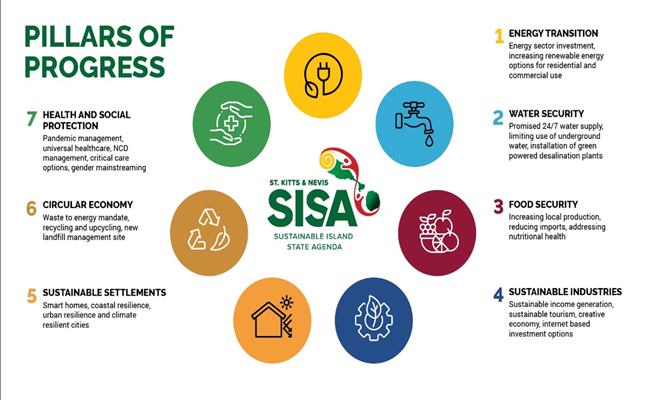
The national strategy is structured around seven mutually reinforcing core pillars that cover every dimension of national development: water security, expanded access to renewable energy, food and nutrition sovereignty, sustainable industrial development, climate-resilient community infrastructure, a transition to a circular economy, and universal health and social protection. Drew emphasized that this initiative is far more than a narrow environmental policy package; it is a whole-of-government national transformation plan designed to boost the federation’s economic independence, bolster its resilience to climate shocks, and lift shared prosperity for all citizens.
Drew went into detail on ongoing investments aligned with the agenda, including expanded development of geothermal and utility-scale solar energy, upgrades to national water distribution and storage infrastructure, expansion of climate-smart agricultural practices, and improvements to public healthcare, affordable housing, public education, digital technology infrastructure, and the creative economy. All these initiatives, he noted, are focused on building a more self-sufficient, robust nation that can thrive amid global economic and climate challenges.
For small island developing states (SIDS) that are disproportionately vulnerable to climate change despite contributing the least to global emissions, the Sustainable Island State Agenda offers a new, people-centered development pathway, Drew argued. The framework prioritizes the well-being of citizens while opening new doors for responsible international investment that delivers mutual benefits for investors and local communities.
“It is not sustainability that stifles growth. It is sustainable, inclusive growth,” Drew said in his address. “This is not development that comes at the expense of the people it is meant to serve; it is development rooted in the needs and aspirations of people.”
The prime minister extended a formal invitation to global investors to partner with Saint Kitts and Nevis across key priority sectors, including renewable energy development, sustainable infrastructure, education innovation, healthcare expansion, eco-tourism, sustainable agriculture, and digital technology. He clarified that the government prioritizes impact investments that generate local employment, transfer critical skills and technical knowledge to domestic workers and institutions, and strengthen the federation’s local economic ecosystems rather than extractive investments that deliver limited benefit to citizens.
Drew highlighted that the federation’s strategy serves as proof that small developing island nations do not have to choose between competitiveness in the global economy and bold climate action. By centering innovation, resilience, and sustainability, SIDS can emerge as global leaders in the transition to a low-carbon, equitable future, he said.
He closed by reaffirming the government of Saint Kitts and Nevis’ unwavering commitment to building a future where economic growth, environmental protection, and social progress work in lockstep to raise living standards and opportunity for every citizen of the federation.