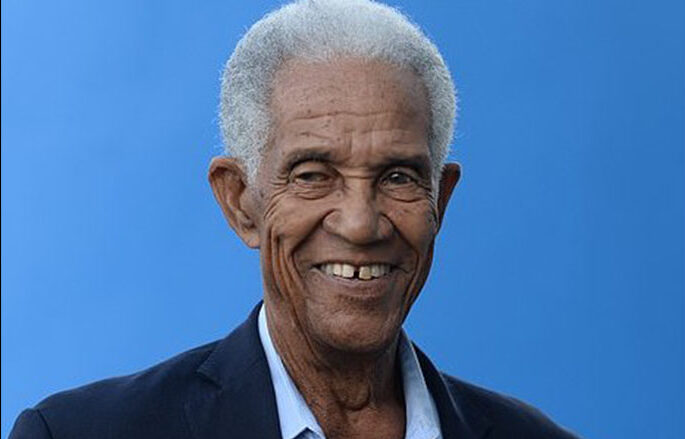
As the global cricket community mourns the passing of the sport’s most iconic all-rounder, Right Excellent Sir Garfield Sobers, Barbados’ top diplomatic representative to the United Kingdom has celebrated the legendary athlete’s far-reaching legacy that extends well beyond the cricket pitch. The Barbadian national hero, universally hailed as the greatest all-round cricketer in the history of the sport, passed away last Friday, just five days before he would have celebrated his 90th birthday.
In a statement released following the news of Sobers’ death, Barbadian High Commissioner to the UK Edmund Hinkson shared the deep sorrow of the entire London-based diplomatic mission, reflecting on the extraordinary arc of the legend’s life and impact. “Born into modest circumstances in Bayland, a tight-knit urban community in Barbados, Sir Garry climbed to the absolute peak of global stardom through unwavering commitment to excellence, innate natural talent, unmatched leadership ability, incredible resilience and unshakable self-confidence,” Hinkson said.
Sobers’ standing in cricket goes far beyond his eye-catching statistical records, Hinkson noted. A masterful batsman, a versatile four-format top-tier bowler, an agile fielder and a reliable catcher, he also captained one of the most dominant West Indies national teams the sport has ever seen in the mid-1960s. Off the pitch, he was equally admired for his consistent generosity to peers and community, and his remarkable humility in the face of unprecedented sporting success – a trait Hinkson said should serve as a model for emerging athletes and public figures across the region.
Most notably, Hinkson emphasized the pivotal cultural role Sobers and his dominant West Indies side played for Caribbean immigrant communities across the United Kingdom during a critical period of post-colonial transition. In the 1960s, as thousands of Caribbean people newly independent from British colonial rule built new lives in the UK, the West Indies team’s consistent test match victories over England transformed cricket into a source of collective pride. “Our English-speaking Caribbean people, just starting to navigate life as citizens of newly independent nations, were able to stand tall and hold their heads high with national and regional pride, even as they faced the daily challenges of building new lives as immigrants in our former colonizing power,” Hinkson explained.
Weeks before his passing, the Barbadian High Commission in London honored Sobers as part of its annual National Heroes Day celebrations on April 25. The event also featured a special lecture delivered by Sir Clive Lloyd, who succeeded Sobers as West Indies captain, that explored the “phenomenal life of this great man.”
Hinkson closed the statement by extending the mission’s deepest condolences to Sobers’ children, grandchildren and entire extended family. “Though he is no longer with us physically, we hope his extraordinary legacy will remain etched in our hearts forever,” he added.