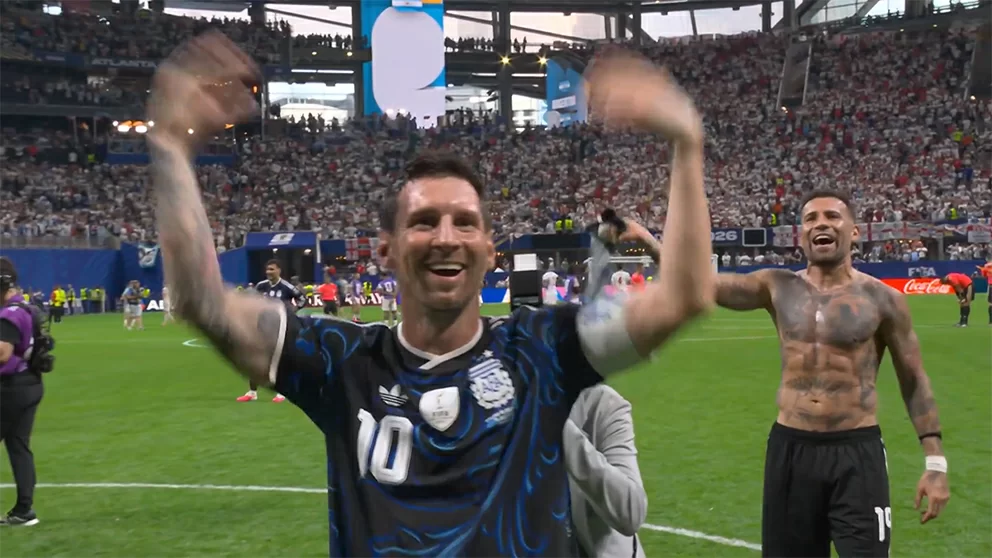
The 2026 FIFA World Cup is set to deliver one of its most anticipated finals in history on July 19, as two contrasting powerhouses of modern football go head-to-head at New Jersey’s MetLife Stadium: defending champion Argentina, led by global icon Lionel Messi, will bring its free-flowing attacking firepower against Spain, a tactically sharp defensive juggernaut captained by teenage sensation Lamine Yamal.
This match carries historic stakes for Argentina, which already claims three World Cup titles. A victory would make it the first nation to win back-to-back World Cup crowns since Brazil achieved the feat in 1958 and 1962, cementing its place among the greatest international teams of all time. Through seven consecutive wins en route to the final, Argentina has already proven its offensive dominance, racking up a tournament-high 19 goals, outscoring every other side by a wide margin. Its unbroken 13-match World Cup winning streak, dating back to its opening loss to Saudi Arabia in 2022, underscores the team’s relentless momentum heading into the title decider.
Standing in Argentina’s path is Spain, the current European champion and second-ranked team in the FIFA global rankings, which has built its tournament run on a foundation of almost unbreakable defense. Through seven unbeaten matches (six wins and one draw), Spain has conceded just one single goal across the entire competition, making it the tightest defensive unit in this 48-nation expanded tournament. The side has already dispatched elite European competitors France and Portugal to earn its place in the final, stretching its overall unbeaten streak across all international matches to an extraordinary 37 games — its last defeat came against Colombia in March 2024.
Beyond the clash of playing styles — all-out attacking spectacle against disciplined tactical defensive solidity — this final also represents a symbolic meeting of football’s present and future. What makes the matchup even more compelling is the decades-old personal connection between the two team leaders: when Yamal was an infant, he was photographed alongside Messi as part of a UNICEF campaign, a full 20 years before the pair would meet on the sport’s biggest global stage.
The historic match will kick off at 16:00 local time inside MetLife Stadium, which holds 82,500 spectators, and will feature a first-of-its-kind halftime show modeled on the popular spectacle of the NFL’s Super Bowl. The 11-minute performance, which could be extended to 30 minutes, will feature global pop superstars Madonna and Justin Bieber. U.S. President Donald Trump will also attend the match and present the World Cup trophy to the winning side, elevating the event beyond a simple sports competition to a major global cultural spectacle.
To contextualize both teams’ roads to the final:
Argentina has recorded seven wins from seven matches, scoring 19 goals and conceding seven. Its group stage run included victories over Algeria (3-0), Austria (2-0), and Jordan (3-1). In the knockout rounds, it edged past Cape Verde (3-2), Egypt (3-2), Switzerland (3-1), and England (2-1) to secure its final spot.
Spain enters the final unbeaten, with six wins and one draw from seven matches, scoring 13 goals and conceding just one. It opened the tournament with a 0-0 draw against Cape Verde, followed by a 4-0 rout of Saudi Arabia and a 1-0 win over Uruguay in the group stage. Knockout wins over Austria (3-0), Portugal (1-0), Belgium (2-1), and France (2-0) sealed its place in the title match.
This 2026 World Cup final, the first of the expanded 48-team format hosted across three North American nations, marks a clear milestone in the evolution of global men’s football. For Argentina, a win would not only etch the nation into World Cup history books but also reinforce Messi’s legacy as one of the greatest players to ever step onto the pitch. For Spain, a victory would validate its long-standing focus on tactical discipline and defensive excellence, while showcasing the potential of the next generation of football talent led by the young Yamal. The symbolic narrative of two connected figures from different generations meeting for football’s biggest prize reminds audiences worldwide that football is far more than a game: it is a shared, universal language that connects generations, continents, and cultures. As the sport looks ahead to the 2030 World Cup co-hosted by Morocco, Spain, and Portugal, this final will stand as a defining celebration of the game’s past, present, and bright future, set to be remembered for decades as an iconic clash of football’s opposing, equally compelling strengths.