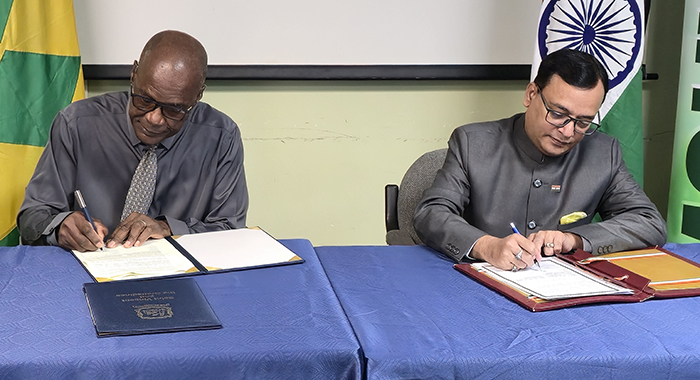
On July 10, in Kingstown, the capital of St. Vincent and the Grenadines (SVG), a landmark public health cooperation agreement was signed between the Caribbean island nation and India, marking a new milestone in bilateral health engagement and expanding India’s growing health partnership with the broader Caribbean Community (CARICOM).
The signing ceremony saw Daniel Cummings, SVG’s Minister of Health, Wellness, Environmental Health and Energy, join Subhash Prasad Gupta, India’s High Commissioner to SVG, to formalize the memorandum of understanding (MoU), which codifies both nations’ shared commitment to advancing global public health through collaborative expertise exchange and harmonized regulatory frameworks.
As outlined in an official press statement issued by India’s High Commission in Suriname, a core provision of the new agreement is SVG’s official recognition of the Indian Pharmacopoeia. This regulatory alignment is expected to deliver widespread practical benefits: it will simplify cross-border import procedures, streamline product registration processes, and strengthen quality assurance protocols for Indian-made pharmaceutical goods entering SVG. Ultimately, these changes will make it far easier for SVG residents to access affordable, high-quality generic medications that meet international safety and efficacy standards.
Beyond regulatory cooperation, the MoU opens the door for SVG to adapt and implement a program modeled after India’s successful Pradhan Mantri Bhartiya Janaushadhi Pariyojana (PMBJP) initiative. Launched by the Indian government, PMBJP operates a network of dedicated outlets across India that provide low-cost generic medications to millions of people, particularly those from low-income and marginalized communities. Replicating this model in SVG would create a sustainable infrastructure for expanding affordable access to essential medicines across the Caribbean nation.
The partnership is rooted in India’s longstanding global health philosophy of Vasudhaiva Kutumbakam, which translates to “the world is one family.” This vision aligns closely with the United Nations Sustainable Development Goals, which prioritize universal access to affordable healthcare and the promotion of well-being for all people across the globe. The agreement also forms part of a broader set of health cooperation commitments that Indian Prime Minister Narendra Modi has outlined for CARICOM, highlighting India’s ongoing efforts to expand equitable health access across developing nations through south-south cooperation.