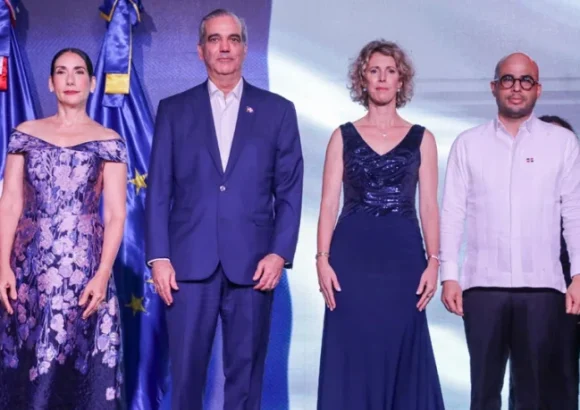
On Monday, a high-profile diplomatic gathering in Santo Domingo brought together top Dominican leadership and French diplomatic representatives to mark France’s National Day, spotlighting the deep, enduring partnership between the Dominican Republic and France. Dominican President Luis Abinader and First Lady Raquel Arbaje were the guests of honor at the event, hosted by Sonia Barbry, France’s ambassador to the Dominican Republic. The occasion served as a platform to both celebrate the longstanding friendship between the two nations and lay out plans for expanded collaboration across a wide range of priority sectors.
Opening her remarks at the celebration, Ambassador Barbry centered her address on the foundational values that have anchored the bilateral relationship for decades. She noted that the bond between France and the Dominican Republic is built on mutually held principles: freedom, equality, democratic governance, respect for international law, recognition of state sovereignty, and a commitment to resolving differences through peaceful dialogue. These shared values, she emphasized, have created a strong framework for consistent, productive engagement between the two governments.
Barbry specifically highlighted the impact of President Abinader’s recent official visit to Paris, crediting the trip with deepening mutual trust between the two administrations and strengthening collective commitment to advancing bilateral ties. She also added a human dimension to the relationship, noting that more than 6,000 Dominican citizens currently make their homes in France, contributing to people-to-people connections that complement official diplomatic cooperation.
One of the key pillars of the existing partnership outlined by the ambassador is development cooperation, delivered through the French Development Agency (AFD). Over the past 20 years, AFD has mobilized over $1.5 billion in funding to support high-priority infrastructure and development projects across the Dominican Republic. These investments span critical sectors: urban transportation infrastructure, improved water access and sanitation systems, renewable and conventional energy development, and regional territorial growth projects. Looking ahead, Barbry confirmed that both countries are in the final stages of preparing to sign a new bilateral cooperation roadmap that will guide joint initiatives for the coming years.
Security cooperation was another key focus of Barbry’s remarks. She praised the ongoing close collaboration between French and Dominican authorities in the fight against drug trafficking, highlighting the productive joint work carried out with the Dominican Republic’s National Drug Control Directorate (DNCD). To further expand this critical work, she officially announced plans to establish a new Regional Training Academy against Drug Trafficking, which will build capacity for anti-narcotics efforts across the broader region.
Finally, Barbry underscored the steady progress of cooperation in soft sectors including education, science, and culture. Current collaborative initiatives include programs for teacher training, joint academic research projects, and targeted support for Dominican arts and cultural expression. She confirmed that both governments are putting the final touches on a new intergovernmental agreement that will formalize and expand cooperation in educational and cultural areas, opening new opportunities for exchange and collaboration between the two peoples.