Two years after Category 5 Hurricane Beryl left a trail of catastrophic destruction across the southern Grenadines, a transformative public-private partnership has been launched to accelerate housing reconstruction and build long-term climate resilience for the storm-battered island chain.
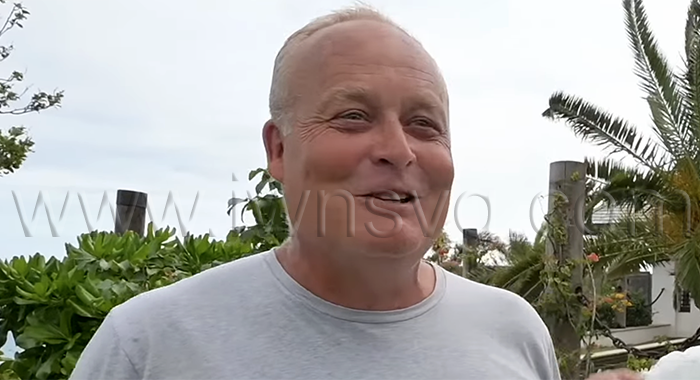
British investor Ian Wace is joining forces with the Government of St. Vincent and the Grenadines (SVG) to deliver the multi-million-dollar initiative, which targets the worst-hit islands of Canouan, Union Island, Mayreau, and will extend community support to neighboring Bequia. The partnership marks a continuation of Wace’s involvement in recovery efforts, even after last November’s general election that removed the Unity Labour Party (ULP) — which Wace publicly endorsed — from power.
When Beryl made landfall in SVG on July 1, 2022, the storm damaged or destroyed an estimated 90% of all structures across the southern Grenadines, displacing hundreds of families and crippling local island economies. Wace first committed $25 million to recovery efforts under the previous ULP administration, with former Prime Minister Ralph Gonsalves securing five times the original contribution Wace had planned to give. Speaking at the hurricane’s first anniversary commemoration, Wace joked about the negotiation, saying, “I stand here having received an anal lobotomy of extraction of money, and I am unbelievably proud for having done so. But most of all, I’m unbelievably proud because we did all of this together.”
Following the election, many observers questioned whether Wace would continue his recovery investment after the administration transition. But Housing Minister Andrew John, who heads the Ministry of Housing, Land Management, Urban Development, and Informal Settlement Upgrading, confirmed that the new New Democratic Party government has finalized a formal agreement with Wace for the new project. “There is an agreement negotiated between our government and himself to do that sort of work again,” John told NBC Radio, adding that Wace has “pledged millions of dollars to come on board” with the expanded program.
Rebuilding the remote southern Grenadines comes with unique steep costs: transporting construction materials from SVG’s mainland to the outer islands drives up overall expenses dramatically, and the national government already faces constrained fiscal space after years of repeated disaster response. John emphasized that the public sector cannot deliver timely reconstruction alone, making private sector partnership critical. “This partnership is intended to push things along much faster and much more quickly than we on our own are able to do,” he explained, noting that the investment will ease pressure on public finances and avoid overreliance on new government borrowing. John also added that officials are already in informal talks with a second potential private investor who has expressed interest in supporting Grenadines housing recovery.
As of the project launch, overall recovery in the southern Grenadines is only around 60% complete, with large swathes of Canouan, Union Island, and Mayreau still waiting for major repairs. Hundreds of displaced residents remain in temporary accommodation on mainland St. Vincent or in private rentals, holding back the revival of local tourism and service-based economies on the outer islands. “If we don’t get the people back, it’s going to be always slow on the economic take-off in Union Island,” John said, noting that key infrastructure like island wharves remains overstretched from storm damage. Already, government work has restocked construction material warehouses across the Grenadines, with more than 50 homes having completed window replacement, door installations set to begin shortly, allowing dozens of families to return to repaired properties in the coming weeks.
Unlike earlier ad-hoc recovery efforts, the new project is designed not just to rebuild homes, but to construct back better with long-term hurricane resilience at its core. A centerpiece of the resilience agenda is the construction of purpose-built, storm-resistant hurricane shelters across the affected islands, with Bequia set to host the first new facility, followed by sites on Union Island, Mayreau, and Canouan. All shelters will be engineered to withstand the strongest severe hurricanes expected in the Atlantic basin.
The initiative also integrates climate-friendly and cost-saving upgrades into all new and reconstructed homes. Ministry officials are currently in negotiations with a major solar energy provider to install rooftop solar systems, leveraging the Grenadines’ abundant year-round sunlight to cut household electricity costs and reduce dependence on expensive imported fossil fuels. The project also prioritizes water security, a persistent challenge for the outer islands that was amplified by severe regional drought earlier this year. All rebuilt homes will be fitted with rainwater harvesting tanks and guttering, while the government explores long-term desalination solutions to reduce the risk of annual water shortages.
The launch of the project comes as SVG enters another Atlantic hurricane season, with the devastation of Beryl still a vivid memory for Grenadine communities. John used the announcement to urge residents to set aside complacency and prepare seriously for the 2024 season, rejecting the local saying that “God is a Vincentian” as a substitute for proactive preparation. He advised residents to trim overhanging trees that threaten properties, reinforce galvanized roofings by checking loose nails and screws, follow all official advisories from the National Emergency Management Organisation (NEMO), and complete preparations early when hurricane watches or warnings are issued. The government is also continuing its distribution of self-help building materials to support household-level preparation, with targeted support for elderly and vulnerable residents who require additional assistance.
John framed the new partnership with Wace as a core commitment of the current administration to support Grenadine communities. “We remain committed to helping you rebuild… This project will support the repair and reconstruction of homes, improve housing in our communities, and help more families return to safe, secure homes,” he said, noting that the overarching goal is for residents to “go back stronger and better, more prepared” for future extreme weather events.