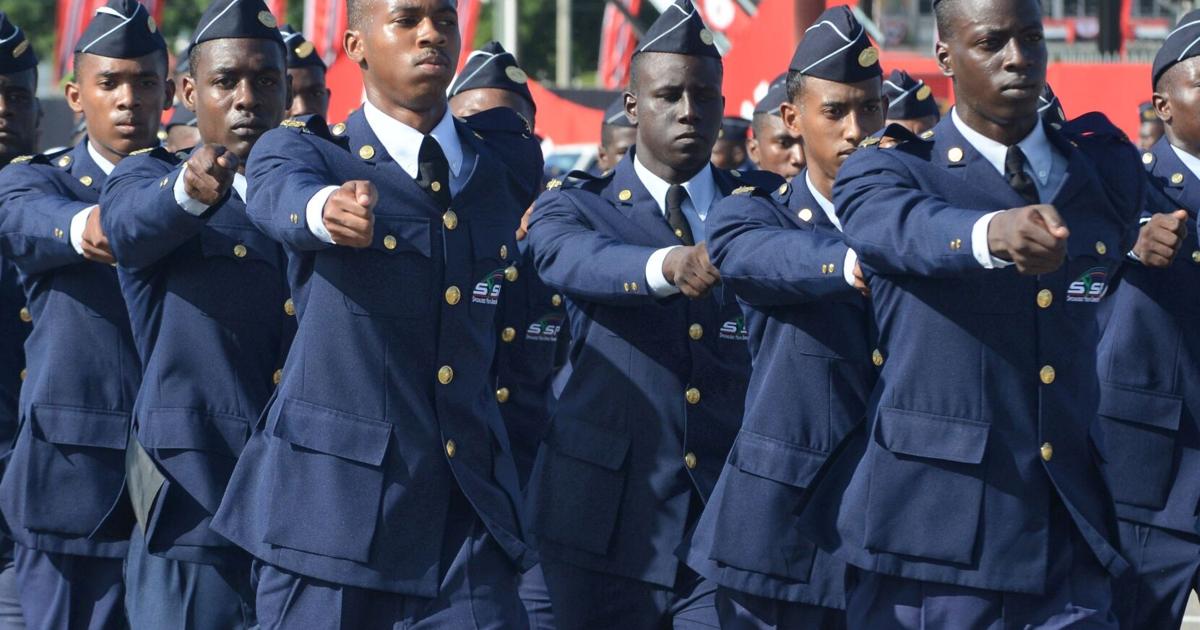
For dozens of young Caribbean men who invested more than a year of their lives into a second-chance education and development programme, the sudden announcement of a temporary suspension has left deep uncertainty and emotional distress, shaking their hopes for academic and personal progress.
The Military-Led Academic Training (MiLAT) programme, a youth development initiative designed to support at-risk young people in completing their secondary education through a structured military-style framework, has been paused indefinitely amid budget shortfalls and planned government reforms, Defence Minister Wayne Sturge has confirmed.
One current participant, Kymani Bailey, spoke publicly about the devastating impact of the announcement, sharing his cohort’s fear that the pause will become permanent, just like other discontinued youth initiatives in the region. Bailey’s group of 58 participants is scheduled to sit their Caribbean Secondary Education Certificate (CSEC) exams next year, a milestone many had worked toward for 15 months after joining the programme to turn their lives around.
“Last Monday night, leadership gathered us and broke the news: the programme was being suspended. All civilian teachers and non-military staff were sent home immediately, and academic classes were scrapped entirely—we were told only military drill activities would continue, before we were sent on an unplanned break,” Bailey explained in an interview with the Express.
For Bailey and many of his peers, MiLAT represented a rare second chance. Many participants had previously dropped out of the traditional education system, and the programme offered structured learning, housing, a small stipend, and the opportunity to earn a full CSEC certification, a critical credential for future employment and higher education in the Caribbean.
“After a year and three months of giving this everything we had, sacrificing everything to build a better future, it just got taken away from us. We’re all traumatized by this,” Bailey said. “I worked so hard to get here, and now I’m back to scrambling for opportunities like I did before. That’s really hard. Most of us were crying yesterday—we’re all heartbroken.”
Bailey acknowledged that the programme had its challenges, noting that every institution faces highs and lows, but emphasized that MiLAT filled a critical gap for young people who had no other options to get their education back on track. He expressed particular concern for peers who were still in the process of turning their lives around, saying many of those young people will have no other support system if the programme is permanently shut down.
Officially, the government notified parents that participants in Bailey’s intake were granted leave from July 1 to July 8, ahead of planned end-of-term assessments. But Bailey and his peers worry the leave will be extended incrementally until the programme is formally scrapped, a pattern that has played out with other defunct youth programmes in the country.
A civilian staff member, who spoke to the Express on condition of anonymity to protect their career, confirmed the shock among non-military employees, saying staff were informed at a last-minute meeting that the programme was suspended, and Tuesday would be their final day of work. The source added that no severance or future employment information was provided, and staff are bracing for the programme to become permanently inactive, drawing direct comparisons to the long-shuttered Civilian Conservation Corps youth initiative.
Affected staff include teachers, culinary workers, and other administrative employees who kept the residential programme running. Most concerning to both participants and staff, the source added, is that no official information has been released about what long-term plans are for the more than 50 young people currently enrolled in the programme, leaving their academic and personal futures hanging in the balance.